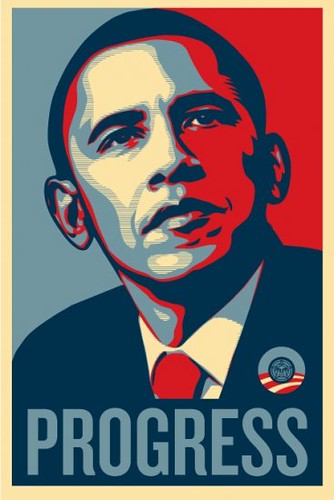
OBAMA '08 - YOU ASKED FOR IT, YOU GOT IT!

Welcome to the Tuque Souq's special coverage of the 2008 U.S. presidential elections.
Barack Obama wins the 2008 U.S. presidential elections.There, we've covered it. It doesn't have much of a catchy "Yes We Can" ring to it, but since we joined the coverage late, we thought we'd call it early.
Barack Obama: a leader
sui generis. He's got it. And now he's got a couple of months to celebrate, work on what is sure to be a goose-bump-raising inaugural address, and think that the economy and the environment can dominate his early days in office.
Then it will be time for him to pick up his predecessors' Middle East baton; it bears the scars and scratches of many a presidential head who's bashed himself with it while facing the futility of resolving the Middle East conflict(s). But we expect Obama to try anyway.
But first, a totally unrelated aside...
McCAIN '08 - COUNTRY FIRST, JOHN A DISTANT SECOND
 We'll always remember him for his "my friends" brand of folksiness coupled with his cute little "I can't believe this kid is beating me" smirk. Alas, John McCain's "Country First" slogan failed to catapult the Arizonan into the White House, and being a failed campaign slogan it is unlikely to be recycled. That puts McCain in the following company of presidential campaign slogans that utterly, utterly failed:
- Bob Dole (1996): "The Better Man for a Better America"
- Walter Mondale (1984): "America Needs a Change"
- Gerald Ford (1976): "He's Making Us Proud Again"
- Barry Goldwater (1964): "In your heart you know he's right"
Of course, Obama's "Change We/You Can Believe In" now gets lumped alongside winning presidential campaign slogans, including Warren G. Harding's "Cox and Cocktails" in 1920, William McKinley's "A Full Dinner Pail" in 1900, and of course Herbert Hoover's "A Chicken in every Pot and a Car in every Garage" in 1928, just before Hoover presided over the stock market crash and the Great Depression.
While McCain can now go back to working on his legacy, Obama inherits a Middle East foreign policy dossier that has been "misoverestimated" over the past 8 years.
Luckily, those old shoes left behind in the White House coat room aren't too big to fill.
THE 'W' STANDS FOR "WHERE IS YOUR PEACE PLAN NOW, DUDE?"
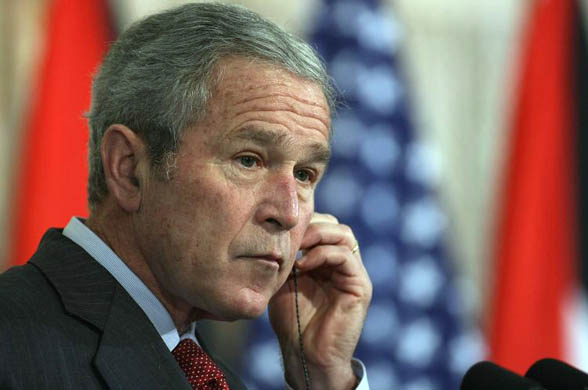
Remember this guy? Few besides Oliver Stone do. Not long ago he said that a comprehensive Middle East peace deal was possible
within a year.
Said he: "We all can do more to build the conditions for peace. So I will call together an international meeting this fall of representatives from nations that support a two-state solution, reject violence, recognize Israel's right to exist and commit to all previous agreements between the parties."
How did it turn out? In its scope, it was as grand as clearing brush at Crawford Ranch. In its execution, it was an exercise in political
meekness. And ultimately the 43rd U.S. President torpedoed his own Middle East peace initiative when the
Israelis changed their minds and objected to it.
All in all, the Annapolis summit was little more than a news diversion during a particularly boring November of 2007. Nothing changed on the ground in the Middle East. Nobody expected Bush to put his tattered legacy on the line in a futilely Clintonian endeavor to cure the political equivalent of cancer.
So, in essence, in order for Obama to be the "change" candidate with respect to the Middle East peace push, he basically just has to show up. But of course, we'll all need him to do more.
And a few other players will be involved in the next attempt at Middle East harmony.
ISRAEL - TOO MANY CHEFS IN THE COALITION KITCHEN; FIRE BURNS DOWN LIVNI'S RESTAURANT BEFORE IT OPENS
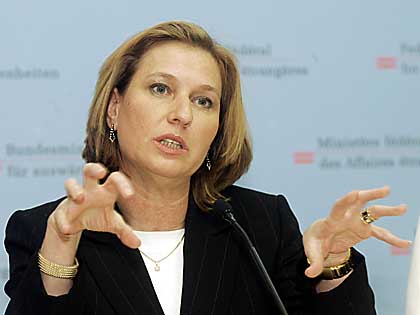
She would have been prime minister of Israel if she had cobbled together a coalition; instead Tzipi Livni must sharper her claws for the coming battle with an old foe.
Coalition efforts broke down just short of the 50%-plus-one of Knesset seats Livni needed on the side of her Kadima party. She got the Labor Party led by former prime minister Ehud Barak, the secular "
Pensioners" party, and the left-wing Meretz-Yachad party led by Peace Now founder
Haim Oron.
With Kadima's 29, Labor's 19, the Pensioners' 4 and Meretz's 5, she was still 4 votes shy of a majority. Livni went after Shas, the main Haredi party and Israel's third-largest party at present with 12 seats. But Shas demanded of any government that it join that the issue of dividing Jerusalem (i.e. partitioning or sharing the city as 2 capitals of two sovereign states - Israel and Palestine - as the result of a comprehensive peace plan) be taken off the negotiating table.
Livni
balked.
Israel has at least 34 active
political parties, 13 of whom currently have seats in the Knesset. Right-wing, nationalist parties such as Likud,
National Union, and Yisrael Beitenu (32 seats combined) dream of forming their own government some day. The so-called Arab parties -
Ra'am,
Balad, and
Hadash (the latter being the part-communist party) which have only 10 seats combined - tend not to join coalition governments but might be counted upon to vote for a peace deal.
Alas, not even Shas's rival Haredi party -
United Torah Judaism - with its 6 seats, was willing to jump in with Livni.
It would have been a tenuous coalition anyway - 5 or more parties ruling together - but no more so than Ehud Barak's
One Israel coalition government in 1999 that beat back Likudnik Benjamin "Bibi" Netanyahu's hard-line approach to peace. Barak and One Israel took the peace process to the brink of obviation at Camp David in 2000, and came within a few miles of a peace deal with Syria up in the Golan Heights. (Of course, they failed to go all the way, but it got our pulses up for awhile there.)
And so, in Israel it's election season again. And speaking of Netanyahu, as the leader of the Likud party he's supremely confident that he can win over disgruntled Kadima party voters who only left Likud to follow Ariel Sharon, and then sing fear-mongering lullabies to the hawkish nationalists and the Haredim about a united Jerusalem, family allowances and getting tough on terror (what terror?).
Expect Barak to try to vulture away Kadima voters, too, with his "At least I've formed a coalition before" experience. But Labor would be lucky see an uptick in results next time around. And enough seats to rule - as they have for 40 of Israel's 60 years? Not gonna happen.
In the meantime, fallen-angel Ehud Olmert can flap yap from his trap about peace, Syria, Lebanon, the Golan Heights and the
Sheba'a Farms, the still-treading-water
2002 Saudi comprehensive Arab-Israel peace initiative, sharing Jerusalem, the Right of Return, land swaps, the separation barrier, water and resource rights, settlements and outposts, a divided Hebron, security cooperation, an economic alliance, and the pesky issue of what to do with Hamastan (aka Gaza Strip)... but he'll have no power to do anything about it. (Funny how Israeli politicians get all
magnanimous and
conciliatory after they lose power.)
In short, Barack Obama may get a pass on Middle East mania until after the polls close in Israel next spring. But when the election is over, Obama might have to put plastic over the linens in the Lincoln bedroom, because Netanyahu has been known to get pissy about peace talk.
PALESTINE - BETWEEN A ROCK, A HARD PLACE, AND 40 OTHER DULL, BLUNTING, CONCUSSION-INDUCING OBJECTS
Depending on whom you ask, the next Palestinian presidential elections will be in 2009, 2010, or never. In the meantime, while we wait for a two-state solution (or, in a perfect world, a one-state solution), the prevailing reality is the 3-sort-of-state non-solution.
President Mahmoud Abbas, with his increasing supply of
U.S.-trained and
-armed Palestinian security forces, rules the still-occupied (don't forget) West Bank under the Fatah/PLO banner. Ismail Haniyeh of Hamas is Prime Minister, for lack of a more fantastical description, of the
poverty-stricken-is-a-generous-term-for-it Gaza Strip.
While just 33 months ago Hamas developed the convenient habit in participating in Palestinian elections, the group is no stranger to meddling in Israeli ones. On the metaphorical eve of the 1996 Israeli polls,
Hamas went bomb-crazy and help drive a suddenly terror-wary electorate into the arms of Netanyahu, killing Oslo then and there.
If karma cared, Hamas would drop dandelions this time round and nudge Israelis leftward, away from Bibi. More likely, the bizarre Likud-Hamas marriage of fear and loathing will leave the peace process as well oiled as a Gaza City gas station.
Abbas will likely stay atop the rubble heap of Palestinian politics for the foreseeable future, which doesn't bode well for the advancement of peace. He'll get to keep
not making promises to his own people, keep
not coming up with new ideas for comprehensive peace, and keep
not expanding his legacy beyond that of caretaker (at best) and viceroy (at worst) of post-Arafat, pre-
Barghouti Palestine.
Obama should have no qualms about
photo-ops with Abbas; the latter has a preternatural inability to surprise and inspire a crowd with his words. But it's unlikely we'll see a meeting between the two before Israel gets its new house in order.
What will be interesting to see is whether Obama or Abbas is more hesitant to feign a smile next to Netanyahu, if and when Bibi wins Israel's elections.
The Tuque Souq is laying 3:1 on Obama, as Abbas has a much longer history of hiding his emotions. Why else would he be the only guy Israel allows to administer its occupation?
MIDDLE EAST CHATTER - GUNS, OIL, & WAR: IN OTHER WORDS, KEEP THAT "CHANGE" BUSINESS AT HOMEAs for other countries in the region, here's what they might be telling President Obama come spring:
Iraq: "Take back your troops (to Kuwait... you know, just in case)."
Saudi Arabia: "Two-for-one barrels of oil, this Sunday only. We're committed to winning back our loyal customers."
Lebanon: "Apparently we're having a
BBQ soon. We'd invite you but... you know."
Jordan: "As a matter of fact, the King is free for a Camp David summit in the summer of 2016. We'll pencil it in. Thanks in advance for the
water pumps."
Iran: "We're still translating '
without preconditions' - we'll get back to you."
Egypt: "Trust us, 'Mubarak' is Arabic for 'He whose leadership is so great it obviates the need for democratic reform.' Now, about that
$13-billion worth of arms."
Syria: "Hezbollah? Never heard of him."
Oman: "Oil for
golf courses."
UAE: "Oil for
indoor skiing."
Bahrain: "Oil for
pearl diving."
Kuwait: "Oil for
funky towers."
Qatar: "Oil for
media empire."
Libya: "Oil for
pink satin robes."
Yemen: "Oil for anything. Wait, you said
fish oil, right?"
HE'S BA-AAACK: DENNIS ROSS WANTS TO PLAY WITH BARACK
Remember this guy? He was President Clinton's Middle East envoy and shuttle diplomat, liaison during the 1994 Israel-Jordan peace treaty talks, architect of the so-called
Oslo II agreement of 1995; the guy who put together most of the Clinton team's policy positions and talking points at Camp David 2000, who was perhaps the one person that the Palestinians trusted as an honest broker on the pro-Israel American side, and who then
blamed the failure of Camp David entirely on Arafat as part of Clinton's strategy to save Ehud Barak's government by villifying the Palestinian negotiators as incompetent and intransigent.*
Well, Dennis Ross is back. He's become a proponent of Barack Obama's Middle East proposals, and is tapping himself to get deeply involved in Obama's administration, and may even be - some are daring to say - a candidate for Secretary of State.
In an
interview with Ha'aretz, Ross said that, "
on the question of Israel, what I saw during his [Obama's] trip to Israel, how I saw his understanding of the relationship with Israel - he would describe it as a commitment of the head and heart. He looks at Israel and sees us as being two countries with common values. But he also looks at Israel and sees that whatever threatens Israel also happens to threaten the United States."
At the end of the day his position is [that] we cannot impose peace, because an imposed peace isn't peace at all. He's more than willing to invest in the process, but, then again, how he does it and in what ways will depend very much on the circumstances, and obviously there are many other issues out there."
After reading the interview, the Tuque Souq was convinced that the entirety of it could have been spoken in 1992 - with all the he/his/him references being to Clinton instead of Obama - and been the same argument.
We thought Obama was the candidate for "change." Dennis Ross isn't change. Isn't there someone else out there who knows anything about the Middle East?* See Ross's book, The Missing Peace, for more of his venomous strikes on Arafat. But you'd best temper it with this book, The Truth About Camp David, by Clayton Swisher.WITH FRIENDS LIKE THESE...

Pastor John Hagee, Christian Zionist #1, who backed John McCain, loves Israel
this much:
"Those [Jews] who came founded Israel; those who did not went through the hell of the holocaust. Then God sent a hunter. A hunter is someone with a gun and he forces you. Hitler was a hunter. And the Bible says -- Jeremiah writing -- '
They shall hunt them from every mountain and from every hill and from the holes of the rocks,' meaning there's no place to hide. And that might be offensive to some people but don't let your heart be offended. I didn't write it, Jeremiah wrote it. It was the truth and it is the truth. How did it happen? Because God allowed it to happen. Why did it happen? Because God said my top priority for the Jewish people is to get them to come back to the land of Israel."
McCain got caught with his pants down on this one, and had to
denounce Hagee. What, you thought getting into bed with Christian Zionists wouldn't lead to a
politically transmitted disease? With Obama, we should get some distance between U.S. policy and the wackiest of the nutjobs pretending to have a stake in the Israeli-Palestinian conflict, though not all of them.
OBAMA'S LOVE AFFAIR WITH THE ISRAEL LOBBY: ONE-NIGHT STAND BUT NOTHING TOO STEAMY
He called Israel a "
stalwart ally" in the first debate and went on to other business, while McCain couldn't slip in the word 'Israel' often enough. In the second debate, asked if he would commit U.S. troops to defend Israel in case of an Iranian nuclear attack, Obama said Israel is our "
strongest ally in the region" and again went on to concrete issues.
With a national audience, Barack Obama remained nuanced and somewhat non-partisan about the Middle East. With special interest groups, he's gotten chummy where necessary. So which is he: pro-Israel or balanced? The answer, of course, is both. That's how one gets elected.
In the past, Obama has stood in front of
AIPAC crowds and told them how his loyalty to and friendship with Israel will
guide his presidency. When accused of associating with the anti-
AIPAC book
The Israel Lobby, Obama's campaign
stiffened and denounced the authors.
With his name, his past associations and his
comments in his pre-politics days, Obama has had to carry a lot of baggage to convince pro-Israel types (or at least the ones who vote Democrat, usually) that he's a friend of Israel. And he's needed help.
US congressman Howard Berman, Democrat of California and chair of the powerful Foreign Relations Committee, thought it necessary to write a
column for the right-of-centre English-daily Jerusalem Post explaining that "Obama is a true friend of Israel" because he has the support of Chicago's pro-Israel community and because he's more likely than McCain to put a solid, pro-Israel advising team around him (see Ross: Dennis, above).
In another paper, it was "
Obama Supports Israel. Period" (after Obama's
AIPAC speech last year).
Yes, in straining to pass the foggy rhetorical benchmarks necessary to placate
AIPAC-types, Obama has over-exerted himself at the expense of fact, even
downplaying the Lebanese civilian casualties inflicted at
Qana during the 'o6 war.
(He'd like to talk more about Palestine, Obama told Electronic Intifada co-founder and Chicago activist Ali Abunimah in January, but "we're in a tough primary race. I'm hoping when things calm down I can be more up front.")
But he has been nuanced on the campaign trail. He
told a Cleveland audience that a pro-Likud (which is exemplified in
AIPAC) approach to Middle East foreign policy and the peace process "can't be the measure of our relationship with Israel." In Iowa he
said, "Nobody's suffering more than the Palestinian people."
Obama to
The Atlantic: "I think that the idea of a secure Jewish state is a fundamentally just idea, and a necessary idea, given not only world history but the active existence of anti-Semitism. That does not mean that I would agree with every action of the state of Israel."
The conclusion to all of
Obama's Israel shuffling is that, in order to get elected President of the United States, one must pander to the powerful. Reagan, Bush Sr. (at least in '88), Clinton, and Bush Jr. all "won over" the Israel lobby. Obama's done it, too. But there's a difference: that lobby isn't as powerful as it once was.
A candidate like Obama, with so many potential pickable nits on Israel, might have done anything short of buying a house in
Kiryat Arba to win over the Israel lobby - if that lobby were indeed as powerful today as 15 years ago.
Bottom line: Obama won the race without fully selling his soul. For those of us in the pro-peace/pro-
Israelestine camp, that ain't bad. (That is, assuming Dennis Ross isn't involved.)
Barack Obama and the Middle East: "Yes He Might."
PARTING SHOT"F*ck the Jews, they don't vote for us anyway." - James Baker, Secretary of State under George H.W. Bush, during the failed 1992 campaign for re-election. Thanks in part to that racist emission, 80% of Jewish voters supported Bill Clinton that year. James Baker
endorsed John McCain in 2008.