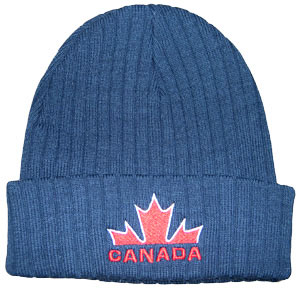
tuque /tūk/ n Canadian English, var. toque [19th c. Canadian French, from the French toque, from the Basque tauka] 1 A close-fitting knitted cap, often with a long tapering end or tassel or pompom. 2 fig Something quintessentially Canadian.
souq /sūk/ n from the Arabic سوق var. souk 1 An open-air marketplace. 2 fig A central meeting place for the circulation of news and ideas.
Showing posts with label tuque. Show all posts

Thursday, January 19, 2012

Explorations in the Apocryphal Spelling of Tuque

Friends, nothing is dearer to this blog than the sanctity of its allonym. So consider us being true to our own self if we stick to our tuque and pan its increasingly common yet wholly unaccredited, malapropistic alternate spelling: touque.

It hit a little close to home this past Christmas.

Christmas gift to the Tuque Souq: Love the mug; loathe the spelling

Alas, alas. It's one thing to be some blogger with an innocent orthographic handicap (like this tumblr blog devoted to the "touque") or this guy with a bug up his arse about "toques."[1]

But if you're going to plant copy on a mug[2], please call us before going to press. At no extra charge, we'll tell you: It's a tuque.

Notwithstanding the Urban Dictionary's sparkling third definition of touque -- "an uncircumcised penis" -- the only legitimate use of the "touque" spelling concerns any reference to the Touque family, a noble Kentish lineage of merry old England with an ancestry stretching to the Norman Conquest.

Touques can wear touques -- that's their English business. And if they're chefs they might don toques. But we wear tuques, especially when drinking our coffee on a cold winter's morn.

[1] Bug or no bug, it's still our second-most read blog post of all time, after this one
[2] Support local artists, like the woman who made this mug, who does some lovely work, all kidding aside

Thursday, December 2, 2010

A Tuque in India

Ah, December. A line of no retreat for Winter. A season of snow and slipperiness. A time for Tuques. In Canada, anyway. 

Your humble Tuque Souq blogger left Canada nine months ago for India with a twosome of tuques in tow; since then Tuque No. 2 has enjoyed hibernation in a desk drawer wrapped around a camera lens. 

Tuque No. 1 had the mildew--omnipresent here in the sauna that is the state of Orissa--washed out of it in September to make the journey north to Himalaya in Sikkim, on a trek up to Goecha La, at the base of Khangchendzonga--"Mountain of the Five Fingers of Snow"--the world's third highest peak.

Khangchendzonga: 8600m (28,000ft) friend of the Tuque
Aside from these adventures, the mighty tuque seems to have little utility in India.

But at long last, Winter has arrived in the coastal jungles of Orissa. It's a nose-numbing 21 degrees Celsius (74F) in the frosty moonlight. At night, now, we sleep with only one fan blowing directly on us. In the dry chill of the early morning we must don t-shirts to survive. One of these days we may get desperate enough to wear socks.

Walking in a Winter Wonderland
Indeed, here in this vale of shiveriness, even our friends and neighbours are wary of Winter's unmerciful blitz. A land that previously we considered--back in the days of 44 degrees C--to be infertile ground for anything fleece or woolen, is in fact coming to life with ripe tuques!


Well, at least one!

Tuesday, June 30, 2009

A Tuque by any other name...

Question from a loyal Tuque Souq reader: "What's with the Tuque Souq? Isn't it supposed to be Toque Souq?"

Well reader, I'll beg your pardon of my customary brevity, for a journey so long in the making as the lifespan of the tuque deserves a tale almost equally enduring (and perhaps somewhat lofty, given its place above our hearts).

Is it a toque or a tuque, or can it be both? Why have a Tuque Souq and confuse people when you can have a Toque Souq and let people go on with their day?

After all, the toque is pretty much enshrined in Canadian English. It's the standard in, for example, the Canadian Press, which pretty much means its the norm in most Canadian print media, certainly outside of Quebec. In Canadian French, on écrit la tuque, except if one is referring to a chef. Are we not all canadiens? Can't we have a single Canadian orthography for this one universal comfort, our beloved knitted hat?

The toque is Canadian. Nobody's arguing that. In America, it's a ski hat, or something similarly wordless, but it's not part of that country's linguistic fibre. In fact, in the unabashedly American Merriam-Webster dictionary, you won't find an entry for ski hat, or stocking cap; for toque, MW says it's a woman's small, brimless hat. This makes perfect sense, of course, given an earlier era of the word's history in Europe. But I'm not sure where you'd find it—the word, that is—in use in America today.

In Canada, the discussion of the hat's spelling is subordinate to the ubiquity of its wearing; nevertheless, its role as a national emblem—such that one would use it as the Canadian representative in a Canadian-Middle Eastern blog title—behooves a certification of a truly Canadian spelling.

As far as this blogger is concerned, that spelling is tuque.

Cue the wordmeisters, please, for a little support:

The dictionary with the most celebrated pedigree (though it was the latest in coming to Canada, and recently rendered editorless) is the Canadian Oxford English Dictionary. The COED enters toque as:

toque noun 1 /tūk/ (also tuque) Cdn a a close-fitting knitted hat, often with a tassel or pompom on the crown. b a long knitted stocking cap. 2 /tōk/ a woman’s small brimless hat. 3 /tōk / a small cap or bonnet for a man or a woman. 4 /tōk/ a tall white hat with a full pouched crown, worn by chefs. [French, apparently = Italian tocca, Spanish toca, of unknown origin; sense 1 by assimilation from Canadian French tuque.]

(Note in particular the different pronunciation of toque in definitions 2-4; the toque meaning knitted hat and the toque meaning chef's hat are not uttered similarly.)

There is also a theory out there that the toque's descent from the Spanish toca—from the verb tocar meaning 'to touch' or 'to knock—far from being unknown as the COED suggests, is substantiated by an etymological hypothesis that the flaps on these knitted hats 'touched' or 'knocked' the back of the neck, at least in medieval Europe.

The Canadian edition of Collins English Dictionary repeats some of the COED’s entries, adding that toque, in Canada, is a variant spelling of tuque (not, it is worth noting, the other way around). On the subject of origin, Collins is a bit more daring, suggesting that the old Spanish toca, meaning ‘headdress’, probably comes from the Basque tauka, or ‘hat’.

I love the Basque reference. Anytime the Basque language comes up in etymology, you know you’ve got an old word on your hand, and a hardy one. Basque is pre-Indo-European; the perpetual onslaught of Romance tongues for the past 2500 years couldn’t dislodge it from the mountains of northern Iberia.

(Canucks take note: the increasingly defunct word eskimo, morphed from the French spelling esquimaux, is also from the Basque: it means ‘raw-meat eaters’, a savage epithet bestowed by 16th-century explorers and fishermen. Hence our belated switch, in politically correct times, to the local inuit.)

More importantly, Collins traces the origin of the word toque—spelled as such, referring to a headpiece of some kind or another—to 16th century France. In other words: pre-Canada.

(At this point as opportune as any other, it would calm this blogger to acknowledge that our indigenous Canadians may sit out this particular debate on Canadianness; however should they disagree with the case for the tuque, as the senior partners in Canadian civilization they should certainly be party to the debate, if so moved. Anybody know the Ojibwe for tuque?)

To wit, the Collins definition of the entry tuque:

tuque /tūk/ n Canad 1 a knitted cap with a long tapering end. 2 Also called toque, a close-fitting knitted hat often with a tassel or pompom [c19 from Canad F, from F: toque].

The Canadian OED grudgingly concurs, even if it stubbornly labels tuque a variant of toque:

tuque noun var. of toque 1 Canadian French, ultimately from a pre-Romance form of tukka, ‘gourd’ or ‘hill’.

So, we have a morphology of tuque that stretches over many centuries and across various languages; its eventual meaning of a very particular kind of hat derives possibly from its shape, as in the pre-Romance tukka which may have influenced the Basque tauka, which may have been a hat that 'knocked' the back of the neck. The early-modern European French toque is another in a long series of localized foreign words, in this case toca and/or tocca from neighbouring Romance tongues which followed the Basque. Sometime later, the English language appropriated toque without changing the spelling. And later still, French Canada came up with tuque, which it then lent to English Canada, albeit probably after the latter had come to some kind of agreement with the toque because of its other definitions.

So while now toque and tuque are English-language lexical cousins, only the latter is truly Canadian. The tuque was firstly Canadian French, and as much as an earlier English took toque from a European French, so Canadian English has taken tuque.

Bottom line, if you’re Canadian—and you're referring to that now quintessential Canadian knitted hat and not a chef's poofy lid—it’s a tuque.

(Now I'm not just making a case that tuque should replace toque as the dominant spelling in Canadian usage; I'm advocating for the complete annihilation of toque as a form that defines our national headdress. Sure, I'm usually a 'live and let live' kind of blogger. But not in this case!)

In the 19th century, French-Canadian voyageurs called their knitted hats tuques. No one knows exactly when the instance of the first such spelling occurred, but we know these folks weren't chefs or dainty broads or old-country blue-bloods. They were Canadians. It's possible they were Canadians who couldn't spell toque correctly, whose subtle modifications in diction predisposed a phonetic spelling patently au courant. It is therefore possible that we owe our single most cherished national garment to the vicissitudes of illiterate beaver trappers.

Yes, we are Canadian! And so is our tuque!

The voyageurs roamed the Quebec backcountry, trapping and trading and logging and pioneering, wearing their tuques with pride, or at least with warmth.

North of a trading junction called Trois-Rivières, they saw a hill that looked exactly like the cap on their heads. They built a pulp mill there. They called their new town La Tuque.

The voyageurs gave way to the Québécois, who in addition to carrying on the tradition of the tuque also donated to their English-Canadian kin another local word turned national: poutine.

(Worthy of note, poutine dates only from the late 1970s, lest any notion that the voyageurs in their tuques scarfed on poutine survive!)

In Canada, we tend to play a lot of defence when it comes to our linguistic neighbourhood; at the centre of our famously robust labour for national identity is a guiding fear that other civilizations will figure us glib, as though we're just cherry-picking lexical strategies in various shades of grey while otherwise preoccupied with our colourful—or sometimes colorful—Canadian lives.

But we are not just all pop and circumstance.

I don't know who thought toque was a good idea for a word pronounced tūk but it's time to give that loony the heave-ho. We didn't invent the tuque, but we did invent the tuque, and it's time to register our one, truly lingua canada idiom not just with history's great etymological detours but with our own national consciousness.

Well, I hope that answers your question, reader. But please go ahead and make your case for toque, or touque, or wiiwikwaan. After all, the Tuque Souq is a marketplace of ideas, a this-and-that mélange of histories and perspectives, a metaphor for Canada, if you will, like a bolder, hardier e pluribus unum, a multis e gentibus vires. Or whatever.
—The Tuque Souq

***

With this posting, the Tuque Souq is pointing its compass east and going on summer hiatus until September. Très bon été à tous!

Sunday, February 22, 2009

Big Dance for Waltz with Bashir? [Update: No]

The much-celebrated, must-see animated documentary Waltz with Bashir--an Israeli film by Ari Folman about one man's journey to reconstruct his memory of war--is expected to land the honour of Best Foreign-Language Film at tonight's Oscar bash, the 81st Academy Awards.

On its way to the Oscars, Waltz with Bashir has picked up the U.S. Writer's Guild award for Best Documentary, Best Foreign Film at the Golden Globes, and Best Picture by the U.S. Society of Film Critics (a tough bunch to impress). It also won 6 Israeli Ophir awards (the Israeli Academy Awards).

Despite its surface topic--the Israeli invasion of Lebanon in 1982 and Israel's oversight of the massacres at Sabra and Shatilla--the film was received well and thoughtfully in Israel.

The Tuque Souq enthusiastically gives it 2 thumbs up (though I'm still of two minds about the stylistic decision made at the end of the film, which I won't spoil), and highly recommends pairing the film with the legendary narrative journey into a memory of the Lebanon War, Mahmoud Darwish's Memory for Forgetfulness--a classic and unforgettable book!

Waltz with Bashir is Israeli cinema's eighth nomination for Best Foreign-Language Film; the previous seven all came up short, including Joseph Cedar's Beaufort last year (a film also about the Lebanon War).

Only 1 Arab or Middle Eastern film has ever won even half of this award: the Academy considers Z, the 1969 winner for Best Foreign-Language Film, a French/Algerian film. Algeria has had 3 other nominations. Iran (Children of Heaven; 1998) and Palestine (Paradise Now; 2005) have had 1 each.

[Oscar Update 1: Waltz with Bashir did not win at tonight's Oscars. Um, I hope I didn't jinx it.]

[Oscar Update 2: Yes, Philip Seymour Hoffman was wearing a tuque tonight. More on this development as it develops.]

Monday, January 21, 2008

Welcome to the Tuque Souq… what’s a tuque souq?

What is a Tuque Souq? Sadly, there isn’t such a thing, which is not to say I’ve given up looking. (Still waiting to hear from Chicoutimi, Trois Rivières, and of course the town of La Tuque, in Quebec; plus the Comoros Islands, Mauritania, Oman… so many places to explore.)

A “tuque” (pl. tuques; alt.sp. touque) is, of course, the quintessential Canadian winter stocking cap. A “souq” (Arabic sūq, pl. aswāq; alt.sp. souk) is the quintessential Arabic marketplace.


When yet another winter was descending on southern Ontario last November, my partner and I were out shopping for tuques. Our heads still bare and cold after a frustrating hour of fruitless shopping in boutique-land on Queen Street West, Toronto, I remarked that if we were in the Middle East we could just head to the tuque souq, and all of our problems of choice (or lack thereof) would be solved.


(Yes, I realize that in most places in the Middle East, wearing a tuque is superfluous at best and downright hazardous at worst; but try spending a January night in Jordan’s Wadi Rum desert without one and then tell me I’m the Canadian equivalent of cultural imperialism.)


In ten years visiting and living in the Arab world, I came to admire the idea of the souq. Need a pair shoes? Head for the shoes souq. Gold bracelet? The gold souq. Spices? Cookware? A dishdasha? You got it. In a classical souq, all of the merchandise for a particular product is centralized; as a merchant, your twelve closest competitors are also your twelve closest neighbours.


One of the most phenomenal souqs I’ve ever seen is the carpentry souq in the Old City of Sfax in Tunisia. I hadn’t come looking for a wooden spoon – I was taking a long holiday weekend away from my teaching job in Sousse – but as I turned the corner from Rue de la Grande Mosque (the cobblers’ souq, by the way), there they were: 40,000 nearly identical carved wooden spoons, spilling out from the shops in long shadows onto the cobblestone street. Dozens of woodshops, thousands of spoons, one souq.


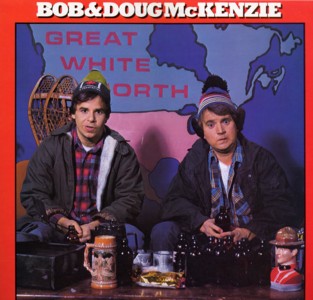
The tuque is an icon of Canada, a knit hat to keep us warm in winter. Invented, some say, by 18th-century French-Canadian trappers. Worn famously, others note, by Bob & Doug McKenzie. And infamously difficult to find – at least in adequate numbers and styles – on Queen Street West in Toronto.


Ergo, if I were starting a city tomorrow, I’d definitely go with the souq structure. Thanks to so-called multiculturalism and an appetite for low-skilled labour in a high-priced economy, in Toronto we’re not terribly inadequate in the souq department: we already have the Chinese-import-and-Dim-Sum souq on Spadina Avenue; the Linguiça-and-other-Portuguese-pork-products souq on Ossington Street; the Things-I’ll-never-afford souq at Bay and Bloor…


But I digress. The point of this blog is not to create a literal tuque souq (my tuque supply is now generous, souqs notwithstanding). Rather, to create a kind of a virtual intersection between things Canadian and the Middle East/Arab World. People, places, ideas, (bad ideas)… explorations in Arabic news, language, media, and philia.


The Tuque Souq also aims to be a collaborative effort. Your humble blogger is working on a couple of projects for which he needs to become better versed in the stories of Canada and Canadians in the Middle East (and vice versa). Got something to share under this broad topical umbrella? Ahlan wa sahlan. The souq is open. Send an email to:
tuquesouq[at]canadazone[dot]com.


- The Tuque Souq