tuque /tūk/ n Canadian English, var. toque [19th c. Canadian French, from the French toque, from the Basque tauka] 1 A close-fitting knitted cap, often with a long tapering end or tassel or pompom. 2 fig Something quintessentially Canadian.
souq /sūk/ n from the Arabic سوق var. souk 1 An open-air marketplace. 2 fig A central meeting place for the circulation of news and ideas.
Showing posts with label Lebanon. Show all posts

Tuesday, January 5, 2010

Even TSN loves Nazem Kadri, as long as he's more Canadian than Muslim

Nazem Kadri, the Lebanese-Canadian hockey star, whose name loosely translates as Sublime One Who Submits to the Will of Fate, is on his way home to London (Ontario) with a silver medal around his neck, after Team Canada dropped the championship game in overtime to the Americans tonight at the World Juniors in Saskatchewan.

The debacle in the gold-medal game notwithstanding, the Canucks excelled on the ice and Kadri in particular shone with 3 goals, 3 assists, and 472 hits principally of the bone-crushing variety.

TSN's television coverage was predictably patriotic. They ran regular featurettes on Canada's stars, and it was finally Kadri's turn for a profile tonight. Naturally, TSN played up the immigrant angle. The clip of the piece can be found here.

At the outset, the narrator tells us that Nazem Kadri's father, Sam, was "four years old when civil war broke out, prompting the family to move to Canada in 1968." (Note to TSN fact-checking department: the Lebanese Civil War in fact began in 1975.)

Later, we learn that Sam's decision to encourage his son to play hockey met with disapproval from "some members of the Lebanese community." (Note to TSN editing department: Please locate some stock footage less stereotypical than Muslims praying in a mosque to depict "some members of the Lebanese community.")

And, at the end of the clip, Sam says of his talented son that "at the end of the day, he's just another Canadian kid doing what Canadians do." (Note to TSN producer: Please don't encourage the use of pallid idiomatic expressions. At the end of the day we're just fed up with that saying.)

TSN also treated us to footage of a trio of Arab-Canadian former hockey players. They left out at least one other part-Arab who is in the NHL right now. Justin Abdelkader, a second-round pick of the Detroit Red Wings in 2005, is a Michigander whose parternal grandfather hailed from Jordan. The 22-year-old left-winger has 3 goals and 3 assists in 38 games this season.

However, you wouldn't guess his pedigree from the way his name is spoken. Far from an Arabic pronunciation, CBC Hockey Night in Canada announcers pronounce Justin's last name as something close to abdicator. Telling? (To be fair, Justin's bleach-blond hair doesn't exactly make him look like King Abdullah.)

Sunday, December 13, 2009

Ladies and Gentlemen, the P-P-Prime Minister of L-L-Lebanon


What's got Sa'ad al-Hariri all sweaty under the collar? The newly sworn in Lebanese prime minister delivered a speech to parliament last week during which he choked on more words than Peter MacKay at a torture tribunal.

Doing his best impersonation of Ken from A Fish Called Wanda, Mr. al-Hariri stumbled through his address, finally reaching the point where the whole chamber was splitting at the seams as the prime minister self-effacingly laughed off his own awkwardness. Finally, parliamentary speaker Nabih Berri came to his aid and finished the speech.

Why was the PM so nervous that he could not deliver a simple speech with the text right there in his hand? Is it that tough to run Lebanon? Oh right, it is.

Related post: Syria to open embassy in Beirut, BBQ planned for opening night

Wednesday, December 2, 2009

Hezbollah dumps old manifesto for younger, hipper model

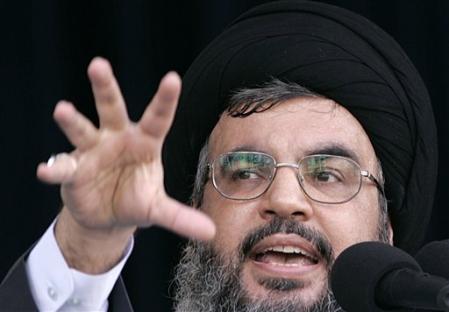
Hezbollah leader and reclusive former socialite Sheikh Hassan Nasrallah made a shrewd return to the public eye this week at the launch party for the new Hezbollah manifesto, dubbed Hezbofest 2009.

Sheikh Nasrallah, who was recently re-elected to a sixth term as Hezbollah secretary general from an undisclosed bunker where he's been hiding since the 2006 war with Israel, dropped a bomb--no, no, figuratively speaking--when he announced that "People evolve, Lebanon has changed. The whole world order changed over the past 24 years [since Hezbollah's first manifesto was proclaimed in 1985]."

By engaging in one of Lebanon's most cherished national pastimes--public manifesto reading--Sheikh Nasrallah demonstrated that he is serious about a live-and-let-live political policy that, for example, no longer seeks to subject the country's large Christian and Sunni-Muslim populations to a Shi'ite theocratic republic.

He offered assurances that Hezbollah will continue supporting parliamentary democracy in Lebanon and has no immediate plans to use its massive arsenal of Iranian weapons to destabilize the country.

Hezbollah's original manifesto, proclaimed on February 16, 1985 from the al-Ouzai mosque in suburban Beirut, was a standard, Mad-Lib style document of contemporary political zeitgeist urging perpetual armed resistance to everything and everyone in the name of God and high-yield returns on weapons smuggling and money laundering.

The new document is softer, happier and less Persian. While still affirming the group's self-proclaimed inalienable right to shit on Israel, the new Hezbofest calls for a new era of inclusivity and tolerance within Lebanese borders: consensual democracy, the end of sectarianism, rights for Palestinian refugees, freedom for all under the protective umbrella of Hezbollah's surface-to-surface missiles.

Or, as the Sheikh himself put it nicely, "cohabitation between a strong [Lebanese] army and popular [armed Hezbollah] resistance."

So the new Hezbollah is a check-and-balance on the system. How delightfully Jeffersonian!

[Read the entire Hezbollah manifesto, translated into English by Hezbollah media itself!]

Wednesday, October 28, 2009

Israel facing hollow cost of hummus

The Israeli ministry of preemptive strikes has warned the government that the country is falling dangerously behind its rivals in the Middle East's newest arms race, known as the Hummus War.

Over the weekend, Lebanon put on a show of force, announcing to the world that it had added to its arsenal a 2056-kilogram bowl of hummus and a 3557-kilogram bowl of tabbouleh.

Both dishes are world records; previously America held the hummus record at a mere 363 kilos. The tabbouleh included 1600 kilos of parsley, a forest roughly the size of the Negev.

Thousands of Lebanese nationalists marched through the streets of downtown Beirut behind the parade of oversized mezze, singing and chanting provocative slogans aimed squarely at their country's rival.

"Our aim is clear," said one Lebanese chef who asked not to be named Suleiman. "These dishes should be exclusively Lebanese, with an appellation similar to Greek feta, Scotch whisky, and Canadian bacon."

Israel remains in a state of high alert and extreme hunger (a southerly wind carried the aroma across the border from Lebanon).

"It's a new cold war," said an aide to Israel's minister of offensive food, "insofar as most of these dishes are served cold. Okay, some of them are better at room temperature. But I think I've made my point, which is that Israel will not be wiped off the map."

Indeed, many outside observers note that because the Israeli military has invested only in tanks and razor wire and nuclear weapons, the country is ill-equipped to match weaponry in this new theatre of war.

The government of Lebanon has maintained that these colossal plates of hummus and tabbouleh are defensive deterrents, existing to keep the country safe (and very, very regular). But at the sight of all those pureed chick peas, Lebanon's masses are primed for war.

One thing appears certain: If Israel tries to break the record, Lebanon will have the garbanzos to fight back.

Wednesday, September 30, 2009

Nazem Kadri, like Leafs fans, submits to fate

Guileless Toronto Maple Leafs fans will buy almost anything you're selling, including--and this is especially frustrating--tickets to see the Toronto Maple Leafs.

We are also prone to a seasonal recurrence of a delusion that a return to glory is just one more player away.

We've bought overhyped imports named Lindros, Peca, Kubina, O'Neill, Blake, Grabovsky and Andrew flippin' Raycroft, and held onto them well past their sell-by date.

We've believed in guys like Tucker, McCabe, Belak, Ponikarovsky, Wellwood, Antropov, and Toskala longer than Jesus would have.

Just recently we purchased a whopper of a tall tale that General Manager Brian Burke could harness the moon and trade it for John Tavares; so credulous are we that when Tavares morphed into a gimpy Phil Kessel we actually said, "John who?"

We're hopelessly optimistic and simultaneously predictably fatalistic. So, as shadows grow long with autumn's arrival indicating the return of hockey season, is this year any exception to Leaf Nation delusion?

LEBANONYMOUSLY TALENTED
All of those names on the Leafs' wall of recent shame share two things in common: None of them has laced up his skates for a playoff game at the ACC since the Lockout; and not one of them is Lebanese.

That was supposed to change this year. With their first-round pick at this summer's NHL draft, the Toronto Maple Leafs selected Nazem Kadri, a Lebanese-Canadian phenom from London, Ontario (whose photograph, apparently, the Leafs' web editor hasn't found yet).

Kadri is coming off back-to-back 25-goal seasons for the Kitchener Rangers and the London Knights (where he teamed with John Tavares) of the OHL. He turns 19 next week. He's hyped to be an explosive skater who plays with a hard edge.

Leafs fans will buy anything. A screen door for a submarine? We'll take two. The Brooklyn Bridge? Just set it over there next to Kaberle. An explosive Lebanese hockey player. Oh geez, why not?

But little did we know that the never-before-tried combination of Canadian hockey prowess and Lebanese, well, something or other, would produce such jaw-dropping results. Over the past few weeks Nazem Kadri has had Leafs fans partying like it's 1967.

At his peak, Kadri willed the team to a preseason victory over the Stanley-Cup-laden Pittsburgh Penguins; he scored the tying goal in the waning moments of regulation and the winner in the shootout.


The Leafs wasted no time in inking him to a three-year entry-level contract. Then, they promptly put him on a bus back to London. Thanks for packing in the preseason fans, now go enjoy more of the OHL.

WHY? BECAUSE IT'S WRITTEN, THAT'S WHY
It was fate that Kadri should tantalize us with his talents for a few weeks and then be banished for another year in the junior leagues. No really, even his last name [ قدرى ] derives from the Arabic meaning "one who submits to the will of fate."

The Arabic of his first name [ ناظم ] originally meant a kind of classical Arabic versifier or poet; a man who transformed the ho-hum into the sublime.

Sigh, go the Leafs fans. At least one more year of cheering for mediocrity... and the London Knights!

And on that note, here is the Tuque Souq's fearless 37-second NHL preview:

EASTERN CONFERENCE: 1-Bruins; 2-Penguins; 3-Caps; 4-Flyers; 5-Canes; 6-Senators; 7-Lightning; 8-Habs; 9-Devils; 10-Panthers; 11-Sabres; 12-Rangers; 13-Thrashers; 14-Leafs; 15-Islanders.

CONFERENCE TITLE: B's over Caps in 7.

WESTERN CONFERENCE: 1-Sharks; 2-Blackhawks; 3-Flames; 4-Ducks; 5-Wings; 6-Preds; 7-Canucks; 8-Blues; 9-Wild; 10-Blue Jackets; 11-Oilers; 12-Kings; 13-Stars; 14-Avs; 15-Coyotes.

CONFERENCE TITLE: Flames over Ducks in 7.

STANLEY CUP: Bruins over Flames in 6.

The puck drops on the 2009-2010 season tomorrow evening at 7pm. We Leafs fans are never less fatalistic than right before opening night. After that, we are Nazem Kadri.

Tuesday, June 9, 2009

Lebanon votes March 14 on June 7, McFalafel expansion safe

Lebanon's March 14 movement defeated the March 8 movement by six days, er... points, in Sunday's elections, ushering in the country's first ever peaceful transition from status quo ante to status quo.

Somewhere in the shadows, reclusive Hezbollah chief Hassan Nasrallah breathes a sigh of relief. No wait, there he is giving a press conference.

A contrite Sheikh Nasrallah accepted the defeat of his majority Shi'ite party Amal--which is aligned with other parties including that of pro-Syrian Christian general Michel Aoun in a bloc known as the March 8 movement--in the Lebanese parliamentary elections. The combined March 8 bloc took only 57 seats out of 128, a surprisingly low total.

The remaining 71 seats were scooped up by the dozen parties that comprise the March 14 movement led by Saad al-Hariri, son of slain former Prime Minister Rafik al-Hariri, whose bloc is decidedly pro-Western, patently anti-Syrian, and ambivalently pro-McFalafel.

Analysts suggest that the Lebanese swung decisively to March 14 out of fear that Hezbollah would set up an Islamic Republic if victorious. More likely, Hezbollah never really wanted to lead anyhow.

After all, leadership means making decisions, being accountable, forging compromises, and a whole host of other things that lead inevitably to declining poll numbers, restless and implacable constituents, scandal, and finally death by electoral stampede in the next vote.

Why the hell would Hezbollah want that, especially as long as they get to keep all their guns whether they win or lose?

McFALAFEL? SERIOUSLY?
In fact wholly unrelated to the Lebanese elections, the McFalafel is a sandwich first introduced in Egyptian McDonald's restaurants in 2000; it has since spread to McDonald's in Lebanon and Israel.

McFalafel is also the name of a new fast-food joint that opened recently in a Hasty Market convenience store in Toronto's Islington Village. Dundas and Islington is a wee bit far from the Tuque Souq's home, especially since we have Ali Baba's just a block away. Anybody out there try the new McFalafel yet?

Sunday, February 22, 2009

Big Dance for Waltz with Bashir? [Update: No]

The much-celebrated, must-see animated documentary Waltz with Bashir--an Israeli film by Ari Folman about one man's journey to reconstruct his memory of war--is expected to land the honour of Best Foreign-Language Film at tonight's Oscar bash, the 81st Academy Awards.

On its way to the Oscars, Waltz with Bashir has picked up the U.S. Writer's Guild award for Best Documentary, Best Foreign Film at the Golden Globes, and Best Picture by the U.S. Society of Film Critics (a tough bunch to impress). It also won 6 Israeli Ophir awards (the Israeli Academy Awards).

Despite its surface topic--the Israeli invasion of Lebanon in 1982 and Israel's oversight of the massacres at Sabra and Shatilla--the film was received well and thoughtfully in Israel.

The Tuque Souq enthusiastically gives it 2 thumbs up (though I'm still of two minds about the stylistic decision made at the end of the film, which I won't spoil), and highly recommends pairing the film with the legendary narrative journey into a memory of the Lebanon War, Mahmoud Darwish's Memory for Forgetfulness--a classic and unforgettable book!

Waltz with Bashir is Israeli cinema's eighth nomination for Best Foreign-Language Film; the previous seven all came up short, including Joseph Cedar's Beaufort last year (a film also about the Lebanon War).

Only 1 Arab or Middle Eastern film has ever won even half of this award: the Academy considers Z, the 1969 winner for Best Foreign-Language Film, a French/Algerian film. Algeria has had 3 other nominations. Iran (Children of Heaven; 1998) and Palestine (Paradise Now; 2005) have had 1 each.

[Oscar Update 1: Waltz with Bashir did not win at tonight's Oscars. Um, I hope I didn't jinx it.]

[Oscar Update 2: Yes, Philip Seymour Hoffman was wearing a tuque tonight. More on this development as it develops.]

Thursday, December 11, 2008

Old Damascus, light on coke, gets high on hotels

Coca-Cola is banned, but apparently Holiday Inn is okay in Syria.

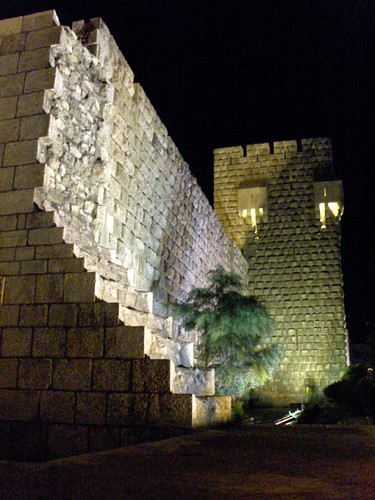
According to a story from Al-Arabiya, the Syrian minister of tourism Saadallah Agha al-Qalaa has just laid the ceremonial foundation stone on a new $35-million five-star luxury hotel to be built (egad!) inside the old city walls of Damascus - right in the neighbourhood of that most historic and beautiful of souqs, al-Hamidiyeh. (Quite near the Umayyad Mosque, pictured.)

Why oh why? Ya salaam, there's plenty of open space in Syria. Hell they just found a church in the desert that no one had seen for 1200 years.

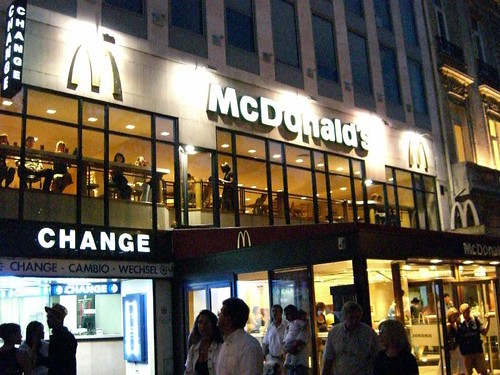
We can only hope that the hotel's design, when the structure is finally completed in 2011, ranks somewhere better on the Eyesore Rankings than the McDonald's on the Champs Elysees, the Hard Rock Cafe in Beirut, the new AGO in Toronto, Starbucks (in general), or these pointy things in Kuwait.

[Okay, that was an unfair dig at the AGO, Toronto's new Frank Gehry thing. We like the new AGO, we just don't like where it is. You can imagine the artist's rendering of the corner of Dundas & McCaul streets all you want, but the area really looks like this. If you're going to build a monstrosity, have the courtesy to do as they do in Doha: put it on a fake island.]

Monday, November 24, 2008

"Historic" Egypt appoints first woman mayor

With that most overused and underwhelming of clichés, al-Arabiya reported that Eva Habil Kerolos has "made history" by becoming the first woman mayor in Egypt.

Ms. Kerolos, a Coptic Christian, was appointed mayor of the village of Kambuha, located along the Nile in central Egypt near the city of Asyut. Her father was once mayor, too - for 40 years.

A member of Egypt's ruling al-Watani party and long an advocate of women's issues, especially literacy, she has pledged to improve her village's infrastructure and the environment of the countryside.

It's a historic moment for Egypt, but Ms. Kerolos is not the first female executive in the modern Arab Middle East. Palestine has two. Fathiya Barghouti Rheime was the first woman mayor of a Palestinian municipality, chosen mayor of the village of Beit Rima in January 2005. Her win helped pave the way for Janet Mikhail, elected mayor of Ramallah later that same year. Ms. Mikhail is the first woman mayor of a major city in the Middle East. Lebanon has three woman mayors, and Jordan one.

Monday, November 10, 2008

Hezbollah, Jay-C 'n Naked Barbie (& other updates from the art scene)

ROUNDUP OF NEWS FROM THE ARAB WORLD ART SCENE:
A gallery in Beirut dismantled a photography exhibit by renowned Lebanese artist Jocelyne Saab, well after her show had been well-received by local critics. Among her latest works were photographs that featured the likenesses of Jesus Christ, Hezbollah leader Sheikh Hassan Nasrallah, and (sometimes topless) Barbie dolls. Oddly enough, no complaint was issued by Hezbollah.

Lebanese-British author, artist and fashion designer Rana Salam's new book, The Secret Life of Syrian Lingerie, needs no further introduction. But you can read more about it at the Los Angeles Times' oft-good blog, Babylon and Beyond.

The brand new Contemporary Art Museum - Artsawa - opened in Dubai; with over 3,000 linear feet of display wall space, it is said to be the new hub of contemporary art in the Gulf.

Tunisia's most famous painter and spokesman for the arts, octogenarian Zoubeir Turki, was granted the November 7 Prize by President Zine el-Abidine ben Ali. One of Tunisia's highest cultural honours, the prize is named for the November 7, 1987 bloodless coup during which ben Ali "retired" his predecessor, the father of modern Tunisia Habib Bourguiba.

Finally, fresh off our blitz of hugely successful Toronto Palestine Film Festival, the Tuque Souq stumbled upon this great resource: The Palestine Film Foundation now has an online synopsis archive of many, many dozens of Palestinian feature films and documentaries. Enjoy.

Monday, October 20, 2008

Hezbollah lines up new leadership (in Israel's crosshairs)

The application process for the job of Hezbollah deputy leader/corpse-in-waiting is now closed. The job description includes: Running guns across borders; bribing Syrian officials; must be camera shy; bushy salt-and-pepper beard recommended; Farsi-speaker preferred; Sunnis need not apply.

Seriously, though. Amid reports that both Iran and Syria are gently tugging its reins, and facing the omnipresent threat of Israel's targeted assassinations, the radical Shi'ite redemptive social movement/political party/terrorist group (take your pick) is getting its leadership affairs in order.

Mohammed Rida Zahidi is now Hezbollah's "Number Two," replacing Imad Mughniyah [pictured above], who was killed in a massive car bomb in February in Damascus that was almost indisputably attributed to Israel's Mossad spy agency. Taking over for Mughniyah means Zahidi will be in charge of running weapons and munitions from Syria into Hezbollah's strongholds in Lebanon, and liaising with the Iranians who, it is said, supply those weapons. Oh, it might be worth mentioning that Zahidi [no photo is available] is Iranian.

In related news, Hezbollah supreme leader Sheikh Hassan Nasrallah [also pictured] has appointed his cousin, Hashim Safi al-Din [also not pictured], as chairman of the group's Executive Council, which effectively means that al-Din would succeed Nasrallah should the latter meet the wrong end of an Israeli missile.

Nasrallah was formerly the chairman of the Executive Council. He moved up to become Hezbollah's supreme leader when his predecessor, Sheikh Abbas al-Mousawi, met the wrong end of an Israeli missile in February, 1992.

In al-Arabiya's coverage of Who Killed Mughniyah?, is it noted that after Israel took out al-Mousawi in 1992, Hezbollah responded by blowing up the Israeli embassy in Buenos Aires, Argentina, killing 29. The world has been bracing for Hezbollah's response to Mughniyah's death (so far there's been nothing that we know of).

The Tuque Souq wonders: Who's next?

Wednesday, October 15, 2008

Syria to open embassy in Beirut, BBQ planned for opening night

Syria's recent presidential decree that it will open up an embassy in Beirut is kind of like the arsonist who burned down your house then inviting himself over for a barbecue afterward.

[That's Syria's decreer, President Bashar al-Assad, pictured.]

Some analysts see it as a sign that al-Assad is growing moderate, and that he's willing to live and let Lebanon live, per se.

For those of you just joining the Syrian-Lebanese political mini-series, here's a quick recap of previous episodes:

Syria invaded Lebanon in 1976 to help save Lebanon from itself and its bloody civil war and simultaneous war against the PLO and the Israeli invasion and the American intervention and... well, it was a mess.

Syria's military occupation of Lebanon, backed by 27,000 Syrian troops on Lebanese soil, lasted from 1976 until 2005. It ended not coincidentally just after the assassination of former Lebanese Prime Minister Rafik al-Hariri - seen by many as the one man who could keep Lebanon's fractious political society from imploding on itself - which most people blamed on Syria.

After the death of al-Hariri and the departure of Syrian forces came a string of other assassinations in Lebanon:
  • anti-Syria journalist Samir Qassir (June 2005);
  • George Hawi, a Lebanese communist and anti-Syria activist (June 2005);
  • Gibran Tueni, the publisher of the major newspaper An-Nahar, often critical of Syria (December 2005);
  • Abu Hamza, an Islamic Jihad leader (May 2006);
  • Pierre Gemayel, anti-Syria parliamentarian and son of former Lebanese President Amin Gemayel (November 2006);
  • Walid Eido, anti-Syria MP (June 2007);
  • Antoine Ghanem, anti-Syria MP (September 2007);
  • Wissam Eid, a police captain leading the investigation of the assassination of Rafik al-Hariri (January 2008).
With the exception of Abu Hamza, who was almost certainly killed by the Israelis, the rest of this body count lies with Syria's clandestine guns, which haven't yet been found smoking.

So, with Syria inviting itself over to Lebanon once again, the Tuque Souq wonders: Are bygones really bygones, or will the new Syrian embassy in Beirut re-ignite the fire?

Tuesday, October 14, 2008

Israel, Lebanon back to war - this time over Hummus

In a Middle East dispute that - for a change - has nothing to do with Hezbollah, the head of a consortium of Lebanese food companies is planning to file an international lawsuit against Israel for a violation of food copyright.

The children of this gastronomical custody battle include such traditional Middle Eastern fare as Hummus, Falafel, Baba Ghanouj, Fattoush, Kibbeh and Tabbouleh. Fadi Aboud, president of the Lebanese Industrialists Association, claims that Israel is marketing the intellectual property of its neighbour as its own, costing the Lebanese millions of dollars in lost revenue and brand (mis-)identity.

"The Israelis are marketing such Lebanese delicacies under the same [Lebanese] names and ingredients around the world," Mr. Aboud said (quoted in Ha'aretz). "This is harming and causing great losses to Lebanon."

The lawsuit - which apparently is no joke - will seek to make these Middle Eastern dishes exclusively "Lebanese."

The great legal lynchpin in the case has to be the precedent of Feta, the Greek cheese which, after a successful 2002 lawsuit between Greece and Denmark, is now officially a Greek Cheese. It seems the Greeks were able to demand that the appellation "Feta" only apply to the stuff originating in Greece and from Greek sheep; all knockoffs must be called something like Farmer Murray's Salty White Crumbly Curds.

In the same way, those alimental autocrats in France have lobbied for exclusive rights to the term "champagne" (being a sparkling white from the Champagne region of France). Make a champagne in Napa and you have to use a euphemism.

Back to the mezze. Why should Lebanon get naming rights to what is eaten from Cairo to Baghdad, Istanbul to Tel Aviv to Sana'a (and around the world)? Much as Beirut is (or was once) the Paris of the Middle East, so Lebanon is the Champagne of Arab cuisine, with the best restaurants, the best chefs, and the best marketing. (The Tuque Souq has visited "Lebanese" restaurants in many cities, including Arab ones like Amman, Jerusalem and Ramallah.)

Yet much as they can claim to be the best at Middle Eastern fare, the Lebanese can hardly claim to be the originators. Falafel may have been invented in Egypt, and has already been the subject of dispute between Israel and Palestine. Syria could claim Tabbouleh. Hummus is at least 900 years old in the region (Lebanon is 150 years old), and the staple Chick Pea probably originated in eastern Turkey. (And Australia of all places is now the world's second-largest exporter of Garbanzos.) We've seen "Israeli couscous" marketed all over the place, but we know couscous came from North Africa.

Then again, the tomato's origin is nowhere near southern Italy, but we generally credit the Italians with perfecting its use in the pursuit of gustatory ecstasy. So why not give the Lebanese credit for all things chick pea?

Unfortunately, there's likely no pure justice in this dispute. The Tuque Souq believes that if you polled Middle Eastern countries on who should get culinary rights to hummus, the final tally would be:

Lebanon: 1 vote
Israel: 1 vote
Palestine: 1 vote
Syria: 1 vote
Egypt: 1 vote
Jordan: 1 vote

Hence, it seems (Hummus) War is the only option.