tuque /tūk/ n Canadian English, var. toque [19th c. Canadian French, from the French toque, from the Basque tauka] 1 A close-fitting knitted cap, often with a long tapering end or tassel or pompom. 2 fig Something quintessentially Canadian.
souq /sūk/ n from the Arabic سوق var. souk 1 An open-air marketplace. 2 fig A central meeting place for the circulation of news and ideas.
Showing posts with label Algeria. Show all posts

Friday, December 4, 2009

World Cup draw: Algeria becomes world's most popular team

If you're looking for a Cinderella World Cup team on whose bandwagon to jump, the Tuque Souq recommends you look no further than Algeria. Just hours ago at the official World Cup 2010 draw, the Algerians were put into Group C with the hated Americans, the reviled English, and the happy-to-be-here Slovenes.

Les fennecs--the desert foxes--as the Algerian national team are nicknamed, had a remarkable run through the World Cup qualifying rounds in Africa, culminating with a sudden-death playoff with nemesis Egypt that nearly resulted in a United Nations peacekeeping mission.

Following Algeria's 1-0 playoff win over Egypt in Khartoum, which followed Egypt's desperation 2-0 win over Algeria in Cairo that forced the playoff, which followed a sordid bout of hooliganism when Egyptian fans attacked the Algerians' team bus upon arrival in Egypt that left many of the Algerian players bloodied, and which followed Egyptian fans tearing apart their own hometown vandalizing Algerian-owned businesses and property, it is fair to say that Algerian-Egyptian relations are at an all-time low.

Alaa Mubarak, son of Egyptian president Hosni, went as far as to question the Algerians' very identity: "When Algerians learn how to speak Arabic, they can then come and say that they are Arabs." (Colloquial Algerian Arabic dialects are heavily influenced by Berber and French loanwords and often do not sound very Arabic. Then again, Egyptian Arabic is nothing to wax your ears for, either.)

You know things are bad when Israel offers to resolve your dispute. You know things are worse when the only other offer of mediation comes from Qaddafi. But it seems the sore losers in Egypt prefer to be grumpy, and Algeria have the moral high ground until they meet again.

WHAT IS THE ARABIC FOR KARMA?
But that's not the only reason to cheer on les fennecs. Algeria have qualified for the World Cup twice before--in '82 and '86--but have never advanced beyond the group stage. And back in '82, they were the victims of the most egregious incident of match-fixing in World Cup history, an event that is known in German as Schande von Gijón, or the "Shame of Gijon."

In the '82 World Cup prelims, Algeria shocked West Germany and also beat Chile, losing only to Austria. As a result, Algeria were ahead of the West Germans in the standings as the latter went into their final group match against Austria, which was already assured a spot in the quarterfinals. In that game, both sides knew that a German victory by the score of 1-0 would allow West Germany to advance to the quarterfinals and not affect Austria's standing.

So it is widely perceived that both teams covertly agreed to allow that exact score to prevail, a teutonic collusion that eliminated Algeria from the World Cup.

During the Germany-Austria match, the Germans scored 10 minutes into the game. For the remaining 80 minutes, the two teams did not attack each other; they simply kicked the ball back and forth until the whistle blew. The TV announcer was so disgusted he refused to continue calling the match. Disgraced German fans burned their own flag in the stands in protest.

But FIFA, soccer's international governing body, never could prove any fraudulent intent on the part of the players. So Karma took over, as Austria lost to France in the quarterfinals. West Germany went on to reach the championship game, losing to Italy.

It would've been grand had Algeria drawn Germany this time, but the Group C lineup is still enticing. There is no bandwagon for USA or England; either you love 'em or you hate 'em. So unless you're one of the statistically insignificant few people who feel a preternatural bond with Slovenia, then Algeria should be your team next summer.

Full World Cup draw and schedule.

WE GOT NEXT?
In vaguely related news, Qatar has announced it will bid on hosting the 2018 World Cup finals. Qatar. FIFA will announce the 2018 host one year from today. (Yes, I did say Qatar.)

Tuesday, November 17, 2009

Egypt-Algeria III: Balls of Fury

Bitter and literally bloodied rivals Egypt and Algeria meet Wednesday for a one-game playoff in Khartoum to decide which national soccer team will advance to the World Cup finals. The two teams finished level in their qualifying group after Egypt's miracle win on Saturday in Cairo. (Algeria won the first match in Algiers.)

[UPDATE NOV 18: Algeria defeated Egypt 1-0 in the playoff, and will advance to the World Cup for the first time since 1986.]

The love between these two teams? Colder than a camel in the arctic.

Check out this incredible video of the Algerian team's bus being attacked by Egyptian fans as it travels from the airport to the hotel in Cairo last Friday. Algerian players emerge from the bus bloodied by the rocks thrown through the windows.

Then there's this video, of the shocked Algerian players as they're being treated by medics at the hotel:


That was before the game. Rioting continued afterward, as delirious Egyptian fans clashed with distraught Algerian supporters well into the night, and the Little Algeria 'hood of Cairo was laid waste.

And that incident will not go down as the worst between these two teams. As reported in The New York Times Lede blog:

"The last time the national soccer teams of Egypt and Algeria met in Cairo for a game to decide which nation would qualify for the World Cup, in 1989, the conflict on and off the pitch was so violent that it ended with an Egyptian supporter losing an eye and an Interpol arrest warrant being issued for an Algerian player.

"The already tense atmosphere that day got worse when the Algerian team concluded that Egypt’s winning goal was scored by a player in an offside position (although video of the goal available on the Internet today seems to show that it was correctly allowed). After the match, the Algerians surrounded and harassed the referee and then fought with Egyptian supporters — one of whom was blinded by broken glass."

Is another such incident looming for the playoff? Sudan officials did not not confirm that janjaweed militias were being redirected to the capital to provide security.

Friday, November 13, 2009

Algeria invades Egypt, and other clashes

The World Cup of football and/or soccer is more than just a quadrennial reminder that Italians are a bunch of ref-baiting crybaby floppers, Englishmen are spineless, Frenchmen are rude, Germans are offensive, Americans are weak at heart, Canadians are polite enough not to show up, and Brazilians are genetically superior to us in every way.

More than a latent platform for gross mischaracterizations of national identity, the World Cup is also exciting for reasons of pure sport: cheering for that lovable underdog, who represents on the soccer pitch the underdog all of us are in relation to the universe.

One of the last boats to South Africa leaves tomorrow, and the Tuque Souq is desperately cheering for 3 great underdogs to be on it, so that when one of 'em upsets Spain or Holland at next year's World Cup, we can all feel that much better about ourselves.


BAHRAIN DANCE?

In the first leg of the home-and-home Asia/Oceania playoff finale last month in Manama, Bahrain played New Zealand to a goalless draw, so the second match on Saturday is winner-take-all.

Bahrain are ghost-writing the same Cinderella story they penned for the 2006 World Cup qualifying round.

Four years ago, the Islanders stood at this very same threshold: in a two-legged playoff against Trinidad & Tobago to qualify for the last spot in the 2006 World Cup finals, Bahrain earned a draw in the Caribbean and needed only the same result or better at home to book a trip to Germany. Instead, they crashed out in front of their own fans.

For Bahrain, the formula this time is as simple as it is familiar: Win, or tie the game and score at least one goal. Bahrain's imported coach is ready to "live the dream" for his adopted country. Will Bahrain qualify for their first-ever World Cup?

AL-DELIRIA?
Egypt are the reigning African champions. Earlier this year they rose as high as 15th in the FIFA world rankings. Their 90,000-capacity (including shabaab standing in the aisles) home stadium is almost as scary for opposing teams as it is for the home fans. So why do they find themselves needing a desperation win--by at least two goals--in the qualifying finale versus underdog Algeria to book a ticket to South Africa?

To be sure, Egypt have only themselves to blame for that inexcusable home draw versus Zambia back in March. But Algeria deserve most of the credit here. Were it not for a draw with Rwanda they'd have an umblemished record and would already be through to South Africa. They dispatched the Egyptians with ease in their first meeting in Algiers. The Desert Foxes are primed for a celebration, and need only play Egypt close to humiliate their rivals and qualify.

Algeria haven't reached the World Cup finals since 1986; they debuted in 1982, where they shocked eventual finalists West Germany in the preliminary round. Nearly half the country's population today wasn't yet alive when that game was played. Suffice to say, Algeria are ready to celebrate. Captain Yazid Mansouri (pictured above) is positively pushy: "We won't go to Cairo to defend. We'll do everything we can to take our chances. I know we can score over there."

Egypt captain Ahmed Hassan is ready to answer the challenge, and he's calling on the rowdy Cairo faithful to cheer the team to a badly needed victory. "I call on all our supporters to come and back us for the full 90 minutes, whatever the score happens to be. I expect lots of twists and turns in the game."

Here's the real twist: If Egypt win the game by exactly 2 goals, the two sides will finish with identical standings (wins, losses, goal differential, and head-to-head matchup). In that case, a one-game, neutral-site playoff would be needed, and it would be held in Khartoum next Wednesday.

EAGLES LANDING?
Wee Tunisia, beloved of the Tuque Souq, are on the cusp of qualifying for their fourth consecutive World Cup finals. In Africa's Group B, they lead group favourites Nigeria by two points heading into the final day of qualifying. Les aigles de Carthage head to Mozambique in control of their own destiny. But a draw might not be enough, not if Nigeria defeat Kenya (in which case Nigeria would win the tiebreaker with Tunisia based on a superior goal differential).

With a victory Tunisia will equal Cameroon's record of consecutive World Cup appearances by an African nation. They are on a nine-game unbeaten run against fellow African opponents. Their trajectory over the last decade shows that the Tunisians are, out of obscurity, now one of the premier squads on the continent.

OTHER GAMES
Fans of Morocco, your team is out of the running for the World Cup finals. But the disappointing side has a chance to finish the qualifying session on a high note and send a fourth colossal underdog to South Africa in the process. Morocco play at home Saturday against Africa Group A leaders Cameroon, arguably the strongest team on the continent right now. Should Morocco win, they'll allow lowly Gabon the chance to edge past the Indomitable Lions and into the World Cup finals, provided Gabon defeat Togo.

All games are Saturday at 13:00 GMT. The Tuque Souq will have the results.

Tuesday, April 7, 2009

Y Chromosome no longer required for Algerian presidential candidates

The ruling Front de Libération Nationale (FLN) will be looking to extend its run of electoral triumph as Algeria votes in a presidential election this Thursday, April 9.

Heading into the campaign season earlier this year, nationwide bated breath greeted President Abdelaziz Bouteflika's long-rumoured decision to seek re-re-election after having served 10 years already at the helm. [That's Bouteflika in an AFP photo at left, gesturing to a crowd to "keep it real."]

Taking a page from Hugo Chavez, Bouteflika deftly navigated through the Athenian murk that is "legislated term limits" and managed to put himself on the ballot for a third term, which he is likely to win. Last time around he won with a mere 85% of the vote.

But there are 5 other contenders vying for the podium in Algiers, none of whom is more interesting than Louisa Hanoune, who two days past her 55th birthday is on the ballot for the Trotskyist Algeria Worker's Party trying to become the Arab World's first female leader.

If she does somehow win, her presence will certainly alter the optics of the League of Arab States, whose all-male leaders are pictured together at left during a recent pan-Arab summit. [Note: Bouteflika, if you can't recognize him, is by far the shortest guy in this photo.]

Ms. Hanoune has been taking her populist message for political and economic reform around the country, hosting more than 40 rallies which have attracted especially large crowds of Algerian youth. She wants to reform (i.e. liberate from cronyism) the political-party system and the civil service in Algeria, regulate the emerging private economy, and institute long-overdue land-ownership reforms.

But she probably won't win. Violence has marred this election season, which seems certain to ensure a more carefully orchestrated "free" election by the ruling FLN, as well as a surge in support for the military-backed Bouteflika who seems to many voters like the go-to guy for keeping Algeria out of further civil war.

Still, Ms. Hanoune has a growing popularity and a strong, unifying leftist-nationalist agenda (which attracts that emerging demographic in Algeria that is both tired of the FLN and ever wary of the Islamists). One can hope.

[Update Apr 10: Bouteflika wins 3rd term with 90% of vote.]

Monday, March 30, 2009

Tuque Souq Spring Break

The Tuque Souq is on a Spring Break this week. But we'll be back soon, in fact just in time for coverage of the Algerian presidential elections. [Spoiler Alert: Louisa Hanoune, leader of the Algeria Worker's Party, attempting to become the first female head of state in the Arab World, will not win.]

And to distract you from reading any real news in our absence, we've compiled a list of the Top Ten (subjectively) funniest Israelestine-related Onion articles from the past 20 years.

10. Bin Laden sends belated threat to Israel for 60th birthday
June 3, 2008
9. Israel agrees to the creation of a Palestinian homeroom
April 2, 1997
8. God re-floods Middle East
May 1, 2002
7. Israel intercepts massive Palestinian rock shipment
November 5, 1996
6. Israelis, Palestinians agree to share headline
July 16, 2003
5. Palestine appoints new Minister of Rubble
November 19, 2003
4. Conflict ends as Israel returns lawnmower to Palestine
December 3, 2008
3. Hamas calls for 'Giant Summit' with all Israelis
Feb 15, 2006
2. War talks begin at Camp Goliath
July 26, 2000
1. Sexual tension between Arafat, Sharon reaches breaking point
May 29, 2002

Sunday, February 22, 2009

Big Dance for Waltz with Bashir? [Update: No]

The much-celebrated, must-see animated documentary Waltz with Bashir--an Israeli film by Ari Folman about one man's journey to reconstruct his memory of war--is expected to land the honour of Best Foreign-Language Film at tonight's Oscar bash, the 81st Academy Awards.

On its way to the Oscars, Waltz with Bashir has picked up the U.S. Writer's Guild award for Best Documentary, Best Foreign Film at the Golden Globes, and Best Picture by the U.S. Society of Film Critics (a tough bunch to impress). It also won 6 Israeli Ophir awards (the Israeli Academy Awards).

Despite its surface topic--the Israeli invasion of Lebanon in 1982 and Israel's oversight of the massacres at Sabra and Shatilla--the film was received well and thoughtfully in Israel.

The Tuque Souq enthusiastically gives it 2 thumbs up (though I'm still of two minds about the stylistic decision made at the end of the film, which I won't spoil), and highly recommends pairing the film with the legendary narrative journey into a memory of the Lebanon War, Mahmoud Darwish's Memory for Forgetfulness--a classic and unforgettable book!

Waltz with Bashir is Israeli cinema's eighth nomination for Best Foreign-Language Film; the previous seven all came up short, including Joseph Cedar's Beaufort last year (a film also about the Lebanon War).

Only 1 Arab or Middle Eastern film has ever won even half of this award: the Academy considers Z, the 1969 winner for Best Foreign-Language Film, a French/Algerian film. Algeria has had 3 other nominations. Iran (Children of Heaven; 1998) and Palestine (Paradise Now; 2005) have had 1 each.

[Oscar Update 1: Waltz with Bashir did not win at tonight's Oscars. Um, I hope I didn't jinx it.]

[Oscar Update 2: Yes, Philip Seymour Hoffman was wearing a tuque tonight. More on this development as it develops.]

Monday, December 22, 2008

The Tuque Souq Year in Review


Reporters sans frontières (RSF) recently released its sixth annual World Press Freedom Index for 2008.

The World Press Freedom Index measures press freedom in countries around the world by assessing such factors as censorship, self-censorship, harassment of journalists (or worse), intervention by governmental or extra-governmental parties, and the legal infrastructure for protecting the freedom of the press.

And for the sixth year in a row, Iceland has the world's freest press. (Can ya spot him?) Canada rose to the 13th spot this year (not that we deserve it), highest among G8 countries, but aside from us and New Zealand, the top 20 spots are occupied by European nations, mostly of the Nordic and Baltic variety.

As for the Middle East, well, you won't find these countries hobnobbing with the likes of Jamaica (#21), Ghana (#31), or Cape Verde (#36). So as a way of wrapping up the year with a glimpse at all the countries in the region, the Tuque Souq presents:

THE MIDDLE EAST AND NORTH AFRICA PRESS UNFREEDOM INDEX
(listed in order from least unfree to most unfree)
(warning: may contain self-referencing links)

46. Israel (regular Israel*)
So, Israeli press that is reporting in Israel (not the Palestinian territories) is the freest press in the region. Not bad, but that's a pretty glaring asterisk, considering that "the territories" is what most of the news is generally concerned with.


61. Kuwait
69. United Arab Emirates

After remaining unchanged in the rankings for a couple of years, these 2 Gulf countries of similar size and demography have started to separate, with Kuwait rising 2 spots and U.A.E. falling 4 spots. This is probably because the Emirates suffer from what pressreference.com calls the "practice of self-censorship" by the media, whereby journalists willingly print just the happy news. Kuwaiti journalists, while apparently freer than Emiratis, are still not as free as us to poke fun at these pointy things.

66. Lebanon
Up an impressive 30 spots in the rankings after 2008 saw a huge drop in the number of high-profile killings of journalists and activists in Lebanon. Starting a food fight with Israel was also a step in the right direction.


74. Qatar
Home to gajillion-dollar media empire al-Jazeera, Qatar still ranks below Haiti and Burkina Faso in press freedom.

89. Comoros
Tiny archipelago nation with an Arab government nabs nondescript 89th place in the rankings, and this hereby fulfills the Tuque Souq's pledge to write something about Comoros before the year is up. Actually, according to the democracy watchgroup Freedom House, Comoros is the only real "electoral democracy" in the Arab world, although one of its islands, Anjouan, questionably re-elected its president recently.

96. Bahrain
Little island with big football dreams is up 22 spots this year
.

105. Mauritania
Having risen an impressive 88 spots between 2004-2007 to a high of #50 last year (which was highest among all Arab states), Mauritania plummeted 55 spots this year after a nasty coup put a plug in democratization in this Saharan nation.


121. Algeria
122. Morocco

123. Oman
Arch press-unfreedom rivals Algeria and Morocco battled to a near draw, with Algeria edging out its neighbour at the tape. The on-again, off-again Algerian civil war remains one of the deadliest for journalists in history. Monarchical Morocco doesn't always approve of journalists criticising the king. Meanwhile, Oman is debuting on the index this year, which can only mean that Omanis just got press this year.

128. Jordan
King Abdullah II of Jordan, fresh off his YouTube campaign, recently met with Jordan's media community to promise more reform and more freedom. We have to applaud His Excellency for once again circumventing the bureaucracy of democracy and simply decreeing more freedom.

134. Djibouti
The country whose appellation makes it an easy target for unquestionably urbane puns, Djibouti is always a tough call for World Press Index gamblers. From a high of 96 in 2002 to a low of 145 three years ago, there seems to be an awful lot of scrutiny for a country whose president likes to be referred to only by his initials.

135. Sudan
Sudan, a country with a north vs. south civil war and and east vs. west civil war (that one's more of a genocide), and a country consistently rated as having one of the world's most corrupt governments, is actually rising in the rankings. Sudan now ranks better than Mexico (#140).

149. Israel (extra-territorial)
Referring to Israeli press freedom in the Occupied Palestinian Territories, this 'second Israel' fell 46 spots from last year thanks to increased Israeli military harassment of journalists. Hmm, if only there were strings attached.


155. Yemen
Sure, having near-total state control over the media might seem blasé to some autocracies, but Yemen is known for being a bit retro.

143. Tunisia
159. Syria
160. Libya

161. Saudi Arabia

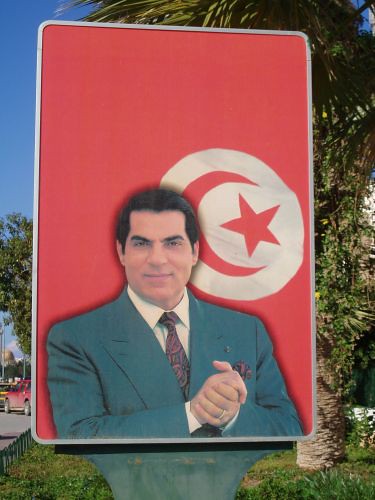
From the 2008 report: "In Zine el-Abidine Ben Ali’s Tunisia, Muammar Gaddafi’s Libya, [and] Bashar el-Assad’s Syria, the leader’s ubiquitous portrait on the streets and front pages of the newspapers is enough to dispel any doubt about the lack of press freedom. Other dictatorships do without a personality cult but are just as suffocating. Nothing is possible [for the press] in... Saudi Arabia if it does not accord with government policy."

146. Egypt
Egypt languished in 146th place as the report made special note of that country's crackdown on bloggers, including Kareem Amer, who was imprisoned for blogging negatively about Egyptian president Hosni Mubarak. Egyptian bloggers are an important part of the newsgathering in that country, while even high-profile editors are not immune from government crackdown.

153. Somalia
Unprecedented access to Somalia's pirate community probably contributed to this country's 6-point gain in the index.


158. Iraq
Iraq actually outranks a number of seemingly better-off countries. Though climbing to 158th place on the list, Iraq is singled out for the fact that over 200 journalists have been killed since the U.S.-led war and occupation began in 2003.

163. Palestine
About Palestine, last year's WPF index report had this to say: "The battle raging between Hamas and Fatah is the main cause of the large number of serious press freedom violations in the Palestinian Territories. Hostage-taking, arrests, physical attacks and ransacking of news organisations - the Palestinian media and the few visiting journalist are threatened from all sides." This year, with Hamas fully in control of Gaza, Palestine dropped another 5 spots, as journalists are harassed and accused of taking political sides or of being spies.

So that makes Palestine, which of course is not a country, the most unfree Arab country for the press. But we're still missing someone in the general area...

166. Iran
First off, the countries whose press is more unfree than Iran: China, Vietnam, Cuba, Burma, Turkmenistan, North Korea and Eritrea. Secondly, one must wonder why the Ahmedinejad government spends so much time harassing bloggers when Iran's own clerics are bloggers. Thirdly, you have to reserve some respect for the achievement of a government so cunning that it has succeeded in convincing much of its public to be wary of its own media.

Finally, shouldn't any country that bans The DaVinci Code get an automatic ten-point bump in the index?

Ladies and gentlemen, your 2008 Middle East and North Africa press!

See you in 2009.

Thursday, October 9, 2008

Stephen Harper's Algerian Wine Collection

The folksy news-gatherers at Canadian Press compiled a partial list of all the gifts and freebies that PM Stephen Harper has received from foreign dignitaries since taking office, as the federal ethics commissioner is investigating whether Harper properly declared their value.

Among the goodies underneath the prime ministerial Xmas tree:
  • Cowboy boots embossed with Harper's initials and the Canadian and American flags, from George W. Bush;
  • A box of silk ties from Italy's Silvio Berlusconi;
  • A Blackberry from Uganda's Yoweri Museveni;
  • A tea set from Russia's Viktor Zubkov;
  • A leather case full of dates from Tunisia's Zine al-Abedine ben Ali;
  • 2 cases of Algerian wine from Algeria's Abdelaziz Bouteflika.
Harper should be so lucky. Algerian wine, once upon a time, had a fabulous reputation for its quality. Production has diminished since the end of brutal French colonial rule, and nowadays it's virtually impossible to find a bottle outside of France. But a couple of sources note that Algeria's coastal wine regions are making a comeback. Check out more at AlgeriaWines.com.