tuque /tūk/ n Canadian English, var. toque [19th c. Canadian French, from the French toque, from the Basque tauka] 1 A close-fitting knitted cap, often with a long tapering end or tassel or pompom. 2 fig Something quintessentially Canadian.
souq /sūk/ n from the Arabic سوق var. souk 1 An open-air marketplace. 2 fig A central meeting place for the circulation of news and ideas.
Showing posts with label Hezbollah. Show all posts

Monday, January 25, 2010

Loose lips sink dictatorships


[Illustration from Bendib via Arabist]

The so-called Arab Satellite Charter is a proposal to create an Arab-wide media "monitoring" (a.k.a. censorship) outfit to police programming on Arab satellite TV. The proposal is being discussed today at a summit of the Ministers of Information of the 22 members states of the Arab League

Specifically, the three main (and privately owned) satellite stations the charter will target are: Al-Manar (the satellite mouthpiece of Hezbollah); Al-Aqsa (the satellite mouthpiece of Hamas); and Al-Jazeera (the Arab world's first and only independent satellite news network).

In unquestionably related news, these three satellite networks are among the most critical of Arab regimes and dictatorships, especially Egypt and Saudi Arabia, whose Ministers of Information hatched this censorship proposal so that they might be spared the daily criticism from popular media beyond their well-censored borders.

Qatar, in whose capital city Al-Jazeera is based, and Lebanon, home to Al-Manar, are said to be among the few Arab countries who oppose the proposal.

Sunday, December 13, 2009

Ladies and Gentlemen, the P-P-Prime Minister of L-L-Lebanon


What's got Sa'ad al-Hariri all sweaty under the collar? The newly sworn in Lebanese prime minister delivered a speech to parliament last week during which he choked on more words than Peter MacKay at a torture tribunal.

Doing his best impersonation of Ken from A Fish Called Wanda, Mr. al-Hariri stumbled through his address, finally reaching the point where the whole chamber was splitting at the seams as the prime minister self-effacingly laughed off his own awkwardness. Finally, parliamentary speaker Nabih Berri came to his aid and finished the speech.

Why was the PM so nervous that he could not deliver a simple speech with the text right there in his hand? Is it that tough to run Lebanon? Oh right, it is.

Related post: Syria to open embassy in Beirut, BBQ planned for opening night

Wednesday, December 2, 2009

Hezbollah dumps old manifesto for younger, hipper model

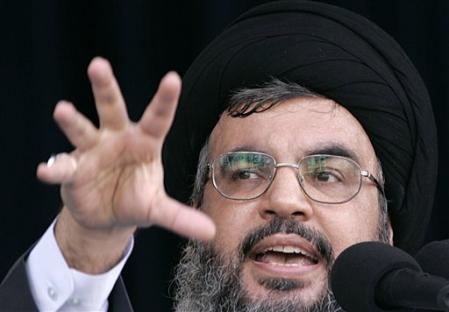
Hezbollah leader and reclusive former socialite Sheikh Hassan Nasrallah made a shrewd return to the public eye this week at the launch party for the new Hezbollah manifesto, dubbed Hezbofest 2009.

Sheikh Nasrallah, who was recently re-elected to a sixth term as Hezbollah secretary general from an undisclosed bunker where he's been hiding since the 2006 war with Israel, dropped a bomb--no, no, figuratively speaking--when he announced that "People evolve, Lebanon has changed. The whole world order changed over the past 24 years [since Hezbollah's first manifesto was proclaimed in 1985]."

By engaging in one of Lebanon's most cherished national pastimes--public manifesto reading--Sheikh Nasrallah demonstrated that he is serious about a live-and-let-live political policy that, for example, no longer seeks to subject the country's large Christian and Sunni-Muslim populations to a Shi'ite theocratic republic.

He offered assurances that Hezbollah will continue supporting parliamentary democracy in Lebanon and has no immediate plans to use its massive arsenal of Iranian weapons to destabilize the country.

Hezbollah's original manifesto, proclaimed on February 16, 1985 from the al-Ouzai mosque in suburban Beirut, was a standard, Mad-Lib style document of contemporary political zeitgeist urging perpetual armed resistance to everything and everyone in the name of God and high-yield returns on weapons smuggling and money laundering.

The new document is softer, happier and less Persian. While still affirming the group's self-proclaimed inalienable right to shit on Israel, the new Hezbofest calls for a new era of inclusivity and tolerance within Lebanese borders: consensual democracy, the end of sectarianism, rights for Palestinian refugees, freedom for all under the protective umbrella of Hezbollah's surface-to-surface missiles.

Or, as the Sheikh himself put it nicely, "cohabitation between a strong [Lebanese] army and popular [armed Hezbollah] resistance."

So the new Hezbollah is a check-and-balance on the system. How delightfully Jeffersonian!

[Read the entire Hezbollah manifesto, translated into English by Hezbollah media itself!]

Tuesday, June 9, 2009

Lebanon votes March 14 on June 7, McFalafel expansion safe

Lebanon's March 14 movement defeated the March 8 movement by six days, er... points, in Sunday's elections, ushering in the country's first ever peaceful transition from status quo ante to status quo.

Somewhere in the shadows, reclusive Hezbollah chief Hassan Nasrallah breathes a sigh of relief. No wait, there he is giving a press conference.

A contrite Sheikh Nasrallah accepted the defeat of his majority Shi'ite party Amal--which is aligned with other parties including that of pro-Syrian Christian general Michel Aoun in a bloc known as the March 8 movement--in the Lebanese parliamentary elections. The combined March 8 bloc took only 57 seats out of 128, a surprisingly low total.

The remaining 71 seats were scooped up by the dozen parties that comprise the March 14 movement led by Saad al-Hariri, son of slain former Prime Minister Rafik al-Hariri, whose bloc is decidedly pro-Western, patently anti-Syrian, and ambivalently pro-McFalafel.

Analysts suggest that the Lebanese swung decisively to March 14 out of fear that Hezbollah would set up an Islamic Republic if victorious. More likely, Hezbollah never really wanted to lead anyhow.

After all, leadership means making decisions, being accountable, forging compromises, and a whole host of other things that lead inevitably to declining poll numbers, restless and implacable constituents, scandal, and finally death by electoral stampede in the next vote.

Why the hell would Hezbollah want that, especially as long as they get to keep all their guns whether they win or lose?

McFALAFEL? SERIOUSLY?
In fact wholly unrelated to the Lebanese elections, the McFalafel is a sandwich first introduced in Egyptian McDonald's restaurants in 2000; it has since spread to McDonald's in Lebanon and Israel.

McFalafel is also the name of a new fast-food joint that opened recently in a Hasty Market convenience store in Toronto's Islington Village. Dundas and Islington is a wee bit far from the Tuque Souq's home, especially since we have Ali Baba's just a block away. Anybody out there try the new McFalafel yet?

Tuesday, May 26, 2009

Iranian Booze Cruise crashes in Saudi Arabia

An Iranian cargo ship with 6 sailors and 1500 cans of beer got lost in a storm in the Persian Gulf and crash landed in Saudi Arabia, where a local rescue team saved the sailors from further danger with emergency rations of nuts, pretzels and turmus.

Saudi authorities reported that the Iranian crew of the vessel were at least "17 sheets to the wind"; the legal limit in Saudi Arabia is 3.

Once the crew were safe, authorities seized the ship’s cargo, which included approximately 2000 bottles of hard liquor and mixes, as well as 1500 beer cans. Many more were blown ashore.

Saudi authorities quickly and humanely destroyed all the booze, though no detail was given as to the method of disposal.

Alcoholic beverages are officially banned in Iran, where every year dozens die from ingesting moonshine. Saudi Arabia also enforces prohibition; in 2006 twenty Saudis died from drinking cologne as a substitute for booze.

WIRE ACT

Since we've been offline for a week, here's a freshly distilled flask of the latest headlines from around the Middle East:

Leaked information from a UN report suggested that Hezbollah killed former Lebanese Prime Minister Rafik al-Hariri... but Syria Comment sees a conspiracy... a Jewish Israeli woman in Holland borrowed an Arab nom de plume to win an Arabic poetry contest... Bahrain finally caught the Swine Flu... a bill before the Israeli Knesset would make it a crime to be Palestinian... an Egyptian millionaire was sentenced to death for arranging the murder of Lebanese pop singer Suzanne Tamim [pictured]... Iran launched a surface-to-air missile at Facebook... hmmm, another Libyan dissident died mysteriously... the government of Oman denied that the local temperature reached 47 degrees... Yemen is troubled by a surge in pesticide smuggling.

And, just as the Tuque Souq predicted in March, Sheikh Nasser al-Mohammad al-Sabah has been named Prime Minister of Kuwait for the 784th time.

Thursday, January 15, 2009

Nasrallah: Israel has naughty plans for Hamas, Hezbollah


Some double entendre going on in the translation of Sheikh Hassan Nasrallah's latest speech about the Gaza war. I won't ruin it for you (it comes at about the 2:00 mark of the video), but it suffices to say that the perfectly good verb that Nasrallah uses with respect to what Israel hopes to do with Hamas and Hezbollah -- نقل which means 'to displace' or 'transfer,' 'translocate,' -- is translated a bit more creatively by the subtitlist.

Tuesday, December 30, 2008

That elephant in the bathtub? He speaks Persian

Q: How can you tell if there's an elephant in the bathtub with you?
A: By the smell of peanuts on his breath.

It's starting to smell like peanuts in the Middle East tub. So who's the elephant?

Israel's brutal attacks on Gaza have prompted some in the Arab media to start looking around the room.

Writing in al-Hayat, Mohammad Salah points his finger in the general direction of the elephant, arguing that ever since Hamas went down the road of dividing Palestine, the result has not been to the gain of only Israel:
"[When] Hamas took over the Gaza Strip... things became even worse; Palestinian disunity became a reality and there was no longer one Palestine, but two... Whoever hopes for the Palestinians to re-unite or rally behind a single leadership for the Palestinian people in its confrontation with Israel, peacefully or militarily, is deluded... Hamas will [not] relinquish its control over Gaza under any conditions, the PA has [no] authority to return the Gaza Strip to the rest of what remains of Palestine. Moreover, regional parties with influence over the Palestinian cause have not united behind the PA or Hamas; rather, they are divided between the two."
Who are these "regional parties"?

Jihad al-Khazen, sometimes a Hamas supporter, goes on:
"I still do not understand the reasons why Hamas - being the government - turned on itself and created an emirate for the Muslim Brotherhood in the Strip instead of trying to free the whole land then see what kind of rule people wanted in an election. Politics is not worthy of its name if it is not the politics of the possible. Hamas' policy in Gaza is suicidal."
The Arab world is becoming more divided, writes Jonathan Wright in the Egyptian Gazette, making eye contact with the elephant in the room:
"There is an Iranian plan, with Hamas and some of the Muslim Brotherhood, to stir up trouble in Palestine and Egypt. The Muslim Brotherhood, [Egypt's] banned-yet-influential group with one fifth of the seats in parliament, is in close alliance with Hamas, which began as a Brotherhood offshoot."
As usual, asharq alawsat editor-in-chief Tariq Almohayed draws a complete picture, pointing out that Hezbollah leader Sheikh Hassan Nasrallah spent half his recent speech - ostensibly delivered to criticize the Israeli assault on Gaza - inciting Egyptians to turn against their government, and the other half of his speech stirring up the usual bitterness dividing Lebanon.

Comparing the course that Hamas has taken with that of Hezbollah, Almohayed suggests:
"Shouldn’t Hamas turn away from Iranian assistance to strengthen it when all this does is torture the people of Gaza and subject them to brutal Israeli force?"
What is the emerging trend here? Let's go down the list of current events:
  • Lebanon: divided (Hezbollah with Syrian elements vs nationalist factions; and factions vs factions as a result)
  • Iraq: divided (ethnic and religious factions vs each other)
  • Palestine: divided (Hamas vs Fatah vs common sense and democratization)
Who gains with this kind of division in the Arab world? Israel of course. But just Israel?

What we're increasingly seeing from the Arab media is portrayal of the fact that Iranian support of the Muslim Brotherhood, of Hezbollah, of Hamas, of certain Shi'ite groups in Iraq, is ripping up the region.

And ironically, Israel's bloodletting only helps Iran achieve its goal of permanent destabilization. Because, of course, Israel has the same objective. The Arab media is quite practised at criticizing Israel - justifiably, for the most part - but not at identifying Iran as complicit in, for example, the emerging Israel-Hamas war.

As the scope of the bloody Gaza war becomes clearer, this is changing. That elephant in the bathtub? It's Iran.

Monday, November 10, 2008

Hezbollah, Jay-C 'n Naked Barbie (& other updates from the art scene)

ROUNDUP OF NEWS FROM THE ARAB WORLD ART SCENE:
A gallery in Beirut dismantled a photography exhibit by renowned Lebanese artist Jocelyne Saab, well after her show had been well-received by local critics. Among her latest works were photographs that featured the likenesses of Jesus Christ, Hezbollah leader Sheikh Hassan Nasrallah, and (sometimes topless) Barbie dolls. Oddly enough, no complaint was issued by Hezbollah.

Lebanese-British author, artist and fashion designer Rana Salam's new book, The Secret Life of Syrian Lingerie, needs no further introduction. But you can read more about it at the Los Angeles Times' oft-good blog, Babylon and Beyond.

The brand new Contemporary Art Museum - Artsawa - opened in Dubai; with over 3,000 linear feet of display wall space, it is said to be the new hub of contemporary art in the Gulf.

Tunisia's most famous painter and spokesman for the arts, octogenarian Zoubeir Turki, was granted the November 7 Prize by President Zine el-Abidine ben Ali. One of Tunisia's highest cultural honours, the prize is named for the November 7, 1987 bloodless coup during which ben Ali "retired" his predecessor, the father of modern Tunisia Habib Bourguiba.

Finally, fresh off our blitz of hugely successful Toronto Palestine Film Festival, the Tuque Souq stumbled upon this great resource: The Palestine Film Foundation now has an online synopsis archive of many, many dozens of Palestinian feature films and documentaries. Enjoy.

Monday, October 20, 2008

Hezbollah lines up new leadership (in Israel's crosshairs)

The application process for the job of Hezbollah deputy leader/corpse-in-waiting is now closed. The job description includes: Running guns across borders; bribing Syrian officials; must be camera shy; bushy salt-and-pepper beard recommended; Farsi-speaker preferred; Sunnis need not apply.

Seriously, though. Amid reports that both Iran and Syria are gently tugging its reins, and facing the omnipresent threat of Israel's targeted assassinations, the radical Shi'ite redemptive social movement/political party/terrorist group (take your pick) is getting its leadership affairs in order.

Mohammed Rida Zahidi is now Hezbollah's "Number Two," replacing Imad Mughniyah [pictured above], who was killed in a massive car bomb in February in Damascus that was almost indisputably attributed to Israel's Mossad spy agency. Taking over for Mughniyah means Zahidi will be in charge of running weapons and munitions from Syria into Hezbollah's strongholds in Lebanon, and liaising with the Iranians who, it is said, supply those weapons. Oh, it might be worth mentioning that Zahidi [no photo is available] is Iranian.

In related news, Hezbollah supreme leader Sheikh Hassan Nasrallah [also pictured] has appointed his cousin, Hashim Safi al-Din [also not pictured], as chairman of the group's Executive Council, which effectively means that al-Din would succeed Nasrallah should the latter meet the wrong end of an Israeli missile.

Nasrallah was formerly the chairman of the Executive Council. He moved up to become Hezbollah's supreme leader when his predecessor, Sheikh Abbas al-Mousawi, met the wrong end of an Israeli missile in February, 1992.

In al-Arabiya's coverage of Who Killed Mughniyah?, is it noted that after Israel took out al-Mousawi in 1992, Hezbollah responded by blowing up the Israeli embassy in Buenos Aires, Argentina, killing 29. The world has been bracing for Hezbollah's response to Mughniyah's death (so far there's been nothing that we know of).

The Tuque Souq wonders: Who's next?

Monday, September 22, 2008

Canadian Ambassador to deliver UN Speech

Canada's ambassador to the United Nations, John McNee, will deliver our country's address before the world body's annual summit tomorrow - instead of Prime Minister Stephen Harper, who is busy trying to get re-elected.

McNee, you may recall, was the mouthpiece for Canada's notable intransigence to the Declaration on the Rights of Indigenous Peoples in the UN General Assembly last year.

McNee's posting as UN Ambassador came during the 2006 Israel-Hezbollah war, where he helped refine the Harper government's inarticulate position that Hezbollah was the sole party responsible for instigating the conflict. "The key to ending this violence lies with Hezbollah."

(What is even more noteworthy from this statement on the Middle East is that McNee claimed that the solution to the crisis in Gaza "begins with the ceasing of the launching of Qassam rockets into Israeli towns..." Hezbollah an aggressor? Absolutely. But occupied Gazans? Let's not forget where the real problem lies.)

In short, McNee has been complicit in if not a co-author of Canada's shift - under Prime Minister Harper - to one-sidedness (the hawkish, Neo-con, Likud-esque side) with respect to the Middle East conflict(s).

From 1993-1997, McNee was Canada's ambassador to Syria, and concurrently its representative for Lebanon. Prior to that, he served as a diplomat in Tel Aviv, where he was reportedly chummy with now fallen-from-grace Israeli Prime Minister Ehud Olmert.

Thursday, February 21, 2008

Cluster Love, Not Bombs

A five-day conference in Wellington, New Zealand was held this week to organize a global effort to ban cluster bombs. The Conference on Cluster Munitions (official website) hosted representatives from more than one hundred countries and various human rights and nongovernmental organizations, as well as technical experts and survivors of cluster bomb attacks. The goal: a comprehensive treaty, by the end of 2008, to make cluster munitions illegal under international law.


(The conference circulated a sobering video press release on YouTube here.)


Canada is being represented, in a matter of speaking, by Paul Hannon, executive director of Mines Action Canada (MAC), the Canadian wing of the Geneva-based International Campaign to Ban Landmines (ICBM). On its website, MAC notes:


“Some governments are trying to weaken a treaty by calling for exemptions based on dubious technical fixes. The Cluster Munition Coalition, of which Mines Action Canada is a founding member, is calling for the strongest possible ban on cluster bombs.”


Canadians should take note: Canada is one of the 94 countries pledged to the 2007 Oslo Process to ban cluster bombs (not to be confused with that other Oslo Process). And it was in Ottawa, of course, that the landmark landmine (ban) treaty was signed in 1997.


The conference comes on the heels of a Human Rights Watch (HRW) report, released February 17, on the use of cluster bombs during the 2006 Israel-Hezbollah war. (Press release; full report.)


According to HRW, Israel dropped from planes or fired from ground-based Multiple Launch Rocket Systems more than 4.6 million cluster “submunitions,” including many that hit civilian areas in southern Lebanon. As many as 1 million of these did not explode on impact, and are therefore still a threat to people in the region. The report says that at least 200 civilians have been killed or maimed from tardily exploding cluster bombs since the war ended. Hezbollah also fired cluster bombs on Israel during the war, killing at least one and injuring 12.


Also according to the report: Canada is one of several countries to possess cluster bombs (the so-called “Rockeye” anti-tank bombs), although the Canadian military did announce (in 2004) a project to decommission and destroy all of these munitions in its arsenal.


However, according to HRW Canada is still one of 34 cluster-munitions producing countries.


Other links:

  • The recently launched Arabic website of the International Campaign to Ban Landmines.
  • Landmine Action details the cleanup effort of unexploded cluster munitions in Western Sahara, used by both sides in the 1975-1988 war between Morocco and Saharawi separatists.