tuque /tūk/ n Canadian English, var. toque [19th c. Canadian French, from the French toque, from the Basque tauka] 1 A close-fitting knitted cap, often with a long tapering end or tassel or pompom. 2 fig Something quintessentially Canadian.
souq /sūk/ n from the Arabic سوق var. souk 1 An open-air marketplace. 2 fig A central meeting place for the circulation of news and ideas.
Showing posts with label Qatar. Show all posts

Monday, January 25, 2010

Loose lips sink dictatorships


[Illustration from Bendib via Arabist]

The so-called Arab Satellite Charter is a proposal to create an Arab-wide media "monitoring" (a.k.a. censorship) outfit to police programming on Arab satellite TV. The proposal is being discussed today at a summit of the Ministers of Information of the 22 members states of the Arab League

Specifically, the three main (and privately owned) satellite stations the charter will target are: Al-Manar (the satellite mouthpiece of Hezbollah); Al-Aqsa (the satellite mouthpiece of Hamas); and Al-Jazeera (the Arab world's first and only independent satellite news network).

In unquestionably related news, these three satellite networks are among the most critical of Arab regimes and dictatorships, especially Egypt and Saudi Arabia, whose Ministers of Information hatched this censorship proposal so that they might be spared the daily criticism from popular media beyond their well-censored borders.

Qatar, in whose capital city Al-Jazeera is based, and Lebanon, home to Al-Manar, are said to be among the few Arab countries who oppose the proposal.

Friday, November 27, 2009

Jazeera to Canadians: You can call me Al

Mothers, hide your children. Dads, disable your remote controls. Al Jazeera is coming to town. The swarthy, menacing cable news network based in Qatar has cleared the last CRTC hurdle and, after a five-year struggle, is now available for distribution in Canada.

Having received its CRTC licensing Al Jazeera English (AJE) can now be picked up by Canadian cable distributors. The news giant is also planning to open a Canadian bureau as part of the process of gaining a toehold in North America. (BBC doesn't even have a bureau here. They've long been too polite to disturb Canadians.)

Oh me, oh my! Is Canada ready for this? Is Canada prepared to receive its daily serving of news with a side of global perspective? Can Canada find Qatar on a map?

Some Canadians* are skeptical. Al Jazeera is propaganda ("Give us Fox News!"). Al Jazeera is terrorist journalism ("Give us a CNN embed!"). Al Jazeera doesn't even sound Canadian ("We only watch acronyms!").

Alas, opponents of AJE are off the mark. Al Jazeera is nothing more than a guy named Al with a foreign-sounding last name. Surely nothing is more Canadian than a visible minority with an assimilated name.


View Larger Map

AJE is well known (elsewhere) for its in-depth coverage of global events, in the model of BBC World. Recent feature reporting includes the evaporation of South America's Lake Titicaca, Catholic-church child-abuse scandal in Ireland, and the celebration of Thanksgiving in American Indian communities.

So what kind of frightening programming will Canadians be subjected to? If you're watching AJE today, for example, you'll get:
A debate about race and recession in the US;
Reporting from India on the one-year anniversary of the Mumbai attacks;
An interview with the prime minister of Thailand;
A feature on Panama's small Muslim community making the hajj;
A round-table discussion of the strength of the new European Union.

Chilling stuff.

[Related post: "Walrus tackles Al Jazeera"]

* Actually only 2% of Canadians are unsure, according to the CRTC, which said that 98% of letters it received from the public during a 30-day feedback window before granting AJE a license were supportive of the network broadcasting in Canada.

Monday, November 16, 2009

Global shortages threaten Shoe Intifada

Last month in Montreal, former US president George W. Bush survived another volley of missiles, as over a thousand demonstrators protested his $100,000-speaking engagement at the Queen Elizabeth hotel by throwing their shoes at or at least near him. The protesters bravely sacrificed their precious footwear to demean Mr Bush, in spite of the looming annual Quebec apocalypse known as hiver.

While the protest was important in that it kept Dubya from sneaking into Canada under the radar to collect a fat cheque from the Montreal Chamber of Commerce for speaking candidly about how he was proud of starting two wars against the Islamic world, the Tuque Souq couldn't help but notice that the actual volume of ammunition in the protesters' arsenal was noticeably less than at last winter's anti-Bush, shoe-throwing demonstration in Montreal.

This leads us to ask a critical and obviously underasked question of one of our most precious global resources: Has the world of protesting reached Peak Shoe?

As this blog has covered obsessively, the Shoe Intifada has leathered its way from a small press conference in Baghdad last December into a globally laced anti-war movement.

Tens of thousands, maybe billions, of shoes have flown, in opposition to everything from the global economic crisis to transit-fare hikes. But have we wantonly tapped out a resource that is not as renewable as we thought? Or perhaps is some conspiratorial counter movement trying to untie those shoes, to trip up the movement?

This man may know: A 48-year-old Egyptian man was recently released from prison after serving a year for stealing $1500-worth of shoes from a mosque in Qatar. While he committed his crime before the Shoe Intifada began, perhaps his conspirators knew that a worldwide shoe-throwing movement would start, and he was hoarding shoes for future sale on the black market.

Or this man: An amputee in Belgium was recently picked up for stealing only a left shoe from a store in the town of Maldegem. Is there a connection between him, shoes, and the Left?

If there is a conspiracy afoot to deplete protesters of their sole ammunition, the Tuque Souq is on the trail. Stay tuned.

[Keep current on all the shoe throwing at the Tuque Souq's Shoe Intifada bureau.]

Monday, December 22, 2008

The Tuque Souq Year in Review


Reporters sans frontières (RSF) recently released its sixth annual World Press Freedom Index for 2008.

The World Press Freedom Index measures press freedom in countries around the world by assessing such factors as censorship, self-censorship, harassment of journalists (or worse), intervention by governmental or extra-governmental parties, and the legal infrastructure for protecting the freedom of the press.

And for the sixth year in a row, Iceland has the world's freest press. (Can ya spot him?) Canada rose to the 13th spot this year (not that we deserve it), highest among G8 countries, but aside from us and New Zealand, the top 20 spots are occupied by European nations, mostly of the Nordic and Baltic variety.

As for the Middle East, well, you won't find these countries hobnobbing with the likes of Jamaica (#21), Ghana (#31), or Cape Verde (#36). So as a way of wrapping up the year with a glimpse at all the countries in the region, the Tuque Souq presents:

THE MIDDLE EAST AND NORTH AFRICA PRESS UNFREEDOM INDEX
(listed in order from least unfree to most unfree)
(warning: may contain self-referencing links)

46. Israel (regular Israel*)
So, Israeli press that is reporting in Israel (not the Palestinian territories) is the freest press in the region. Not bad, but that's a pretty glaring asterisk, considering that "the territories" is what most of the news is generally concerned with.


61. Kuwait
69. United Arab Emirates

After remaining unchanged in the rankings for a couple of years, these 2 Gulf countries of similar size and demography have started to separate, with Kuwait rising 2 spots and U.A.E. falling 4 spots. This is probably because the Emirates suffer from what pressreference.com calls the "practice of self-censorship" by the media, whereby journalists willingly print just the happy news. Kuwaiti journalists, while apparently freer than Emiratis, are still not as free as us to poke fun at these pointy things.

66. Lebanon
Up an impressive 30 spots in the rankings after 2008 saw a huge drop in the number of high-profile killings of journalists and activists in Lebanon. Starting a food fight with Israel was also a step in the right direction.


74. Qatar
Home to gajillion-dollar media empire al-Jazeera, Qatar still ranks below Haiti and Burkina Faso in press freedom.

89. Comoros
Tiny archipelago nation with an Arab government nabs nondescript 89th place in the rankings, and this hereby fulfills the Tuque Souq's pledge to write something about Comoros before the year is up. Actually, according to the democracy watchgroup Freedom House, Comoros is the only real "electoral democracy" in the Arab world, although one of its islands, Anjouan, questionably re-elected its president recently.

96. Bahrain
Little island with big football dreams is up 22 spots this year
.

105. Mauritania
Having risen an impressive 88 spots between 2004-2007 to a high of #50 last year (which was highest among all Arab states), Mauritania plummeted 55 spots this year after a nasty coup put a plug in democratization in this Saharan nation.


121. Algeria
122. Morocco

123. Oman
Arch press-unfreedom rivals Algeria and Morocco battled to a near draw, with Algeria edging out its neighbour at the tape. The on-again, off-again Algerian civil war remains one of the deadliest for journalists in history. Monarchical Morocco doesn't always approve of journalists criticising the king. Meanwhile, Oman is debuting on the index this year, which can only mean that Omanis just got press this year.

128. Jordan
King Abdullah II of Jordan, fresh off his YouTube campaign, recently met with Jordan's media community to promise more reform and more freedom. We have to applaud His Excellency for once again circumventing the bureaucracy of democracy and simply decreeing more freedom.

134. Djibouti
The country whose appellation makes it an easy target for unquestionably urbane puns, Djibouti is always a tough call for World Press Index gamblers. From a high of 96 in 2002 to a low of 145 three years ago, there seems to be an awful lot of scrutiny for a country whose president likes to be referred to only by his initials.

135. Sudan
Sudan, a country with a north vs. south civil war and and east vs. west civil war (that one's more of a genocide), and a country consistently rated as having one of the world's most corrupt governments, is actually rising in the rankings. Sudan now ranks better than Mexico (#140).

149. Israel (extra-territorial)
Referring to Israeli press freedom in the Occupied Palestinian Territories, this 'second Israel' fell 46 spots from last year thanks to increased Israeli military harassment of journalists. Hmm, if only there were strings attached.


155. Yemen
Sure, having near-total state control over the media might seem blasé to some autocracies, but Yemen is known for being a bit retro.

143. Tunisia
159. Syria
160. Libya

161. Saudi Arabia

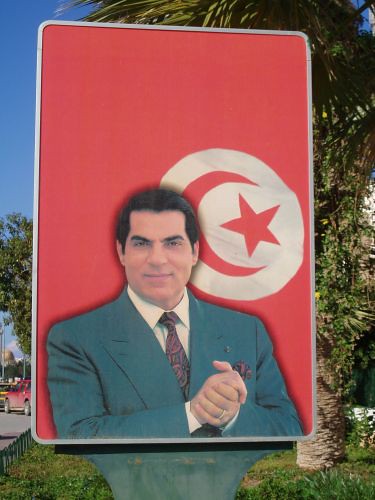
From the 2008 report: "In Zine el-Abidine Ben Ali’s Tunisia, Muammar Gaddafi’s Libya, [and] Bashar el-Assad’s Syria, the leader’s ubiquitous portrait on the streets and front pages of the newspapers is enough to dispel any doubt about the lack of press freedom. Other dictatorships do without a personality cult but are just as suffocating. Nothing is possible [for the press] in... Saudi Arabia if it does not accord with government policy."

146. Egypt
Egypt languished in 146th place as the report made special note of that country's crackdown on bloggers, including Kareem Amer, who was imprisoned for blogging negatively about Egyptian president Hosni Mubarak. Egyptian bloggers are an important part of the newsgathering in that country, while even high-profile editors are not immune from government crackdown.

153. Somalia
Unprecedented access to Somalia's pirate community probably contributed to this country's 6-point gain in the index.


158. Iraq
Iraq actually outranks a number of seemingly better-off countries. Though climbing to 158th place on the list, Iraq is singled out for the fact that over 200 journalists have been killed since the U.S.-led war and occupation began in 2003.

163. Palestine
About Palestine, last year's WPF index report had this to say: "The battle raging between Hamas and Fatah is the main cause of the large number of serious press freedom violations in the Palestinian Territories. Hostage-taking, arrests, physical attacks and ransacking of news organisations - the Palestinian media and the few visiting journalist are threatened from all sides." This year, with Hamas fully in control of Gaza, Palestine dropped another 5 spots, as journalists are harassed and accused of taking political sides or of being spies.

So that makes Palestine, which of course is not a country, the most unfree Arab country for the press. But we're still missing someone in the general area...

166. Iran
First off, the countries whose press is more unfree than Iran: China, Vietnam, Cuba, Burma, Turkmenistan, North Korea and Eritrea. Secondly, one must wonder why the Ahmedinejad government spends so much time harassing bloggers when Iran's own clerics are bloggers. Thirdly, you have to reserve some respect for the achievement of a government so cunning that it has succeeded in convincing much of its public to be wary of its own media.

Finally, shouldn't any country that bans The DaVinci Code get an automatic ten-point bump in the index?

Ladies and gentlemen, your 2008 Middle East and North Africa press!

See you in 2009.

Wednesday, December 10, 2008

New museum of Islamic Art opens in Qatar

Qatar's new museum of Islamic Art is a treasure of treasures.

The $300-million project, designed by I.M. Pei (he of the Louvre's pyramid), was built on a man-made island off of Doha's busy commercial harbour.

What a great idea for a giant blocky monstrosity of modern architecture: put it out on the water, just like Sydney did with the Opera House, and what Toronto didn't do with the ROM.

[Click here for an audio-photo tour of the Doha museum.]

Friday, November 14, 2008

Gulf countries vie for World Cup qualification

The Asia regional World Cup qualifying has entered the final round; 2 groups of 5 teams are competing for 4 automatic berths to South Africa 2010 (the top 2 teams in each group qualify). The 3rd place teams in each group will play a home-and-away playoff to determine the 5th place team overall, and that team will then play a home-and-away playoff against Oceania regional champs New Zealand for an at-large berth to the World Cup.

In Group 1, the Arab reps are Bahrain and Qatar, who are matched up with runaway co-favourites Australia and Japan, as well as minnowy Uzbekistan, in what is sure to be a heated battle for 3rd place.
Qatar and Bahrain are natural rivals, staring at each other from across the narrow Gulf of Bahrain, owners of a testy border/island dispute, trying to mend fences with bridges, and similarly inspired in flag-making.

Both national squads feature foreign-born stars. Qatar are led by Uruguayan-born midfielder Sebastian Quintana, while one of Bahrain's top young players is Nigerian-born Jaycee Okwunwanee.

Fittingly, the 2 teams opened this final group qualifying stage by playing each other to a 1-1 draw in Doha. The return leg won't be until April 1 in Manama, at which time the game will likely determine 3rd place in the standings and a playoff position.

Both squads have tough home matches this week against the Group 1 powerhouses, with Qatar hosting Japan and Bahrain Australia.

Over in Group 2, the battle for automatic qualification figures to be a three-horse race between South Korea, Iran and Saudia Arabia, which currently all sit tied for first after just 2 matches.
The Saudis have made 4 straight World Cups, managing a combined 2-2-9 record (with both of those wins coming during the 1994 World Cup when they reached the quarterfinals). A balanced team known for stingy defence, Saudi Arabia are still climbing back from their all-time worst FIFA ranking of 81, just after their goalless '06 WC. Despite their pedigree, the Saudis are no shoe-ins to make it to South Africa.

The United Arab Emirates, reigning Arabian Gulf Cup champions but considered long shots to qualify, sit fifth in the Group 2 table at 0-0-3 (including a tough loss to Saudi Arabia to open the final round). Wednesday's home clash with Iran is therefore a must-win game. But hope remains, especially with their talisman striker Ismael Matar (check out this sweet goal of his from the AGC tourney) in fine form with 5 goals so far.

The UAE have one World Cup finals on their resume, qualifying for the 1990 Italy WC where they finished 0-0-3.

Other Gulf and Middle Eastern states (not counting North Africa) to qualify for the World Cup in the past: Iraq in 1986 (finished 0-0-3); and Kuwait in 1982 (actually managed a draw against Czechoslovakia).

How did the other Middle Eastern countries - Syria, Jordan, Oman et al - fare in the earlier qualification rounds? Check it out here.

In other Middle East football news, we congratulate Palestine for recently playing its first-ever international soccer game on home soil, drawing 1-1 with Jordan.

The Tuque Souq will keep tabs on the World Cup qualifying in the months ahead, including a preview of the Africa region showdown involving hopefuls Egypt, Tunisia and Morocco. And we'll check in with the European qualifying, where Israel have a favourable group draw that could see them in their first World Cup finals.