tuque /tūk/ n Canadian English, var. toque [19th c. Canadian French, from the French toque, from the Basque tauka] 1 A close-fitting knitted cap, often with a long tapering end or tassel or pompom. 2 fig Something quintessentially Canadian.
souq /sūk/ n from the Arabic سوق var. souk 1 An open-air marketplace. 2 fig A central meeting place for the circulation of news and ideas.
Showing posts with label Oman. Show all posts

Wednesday, June 17, 2009

Israeli Prime Minister heads off to Fantasy Camp

Israeli prime minister Benjamin "Bibi" Netanyahu delivered a little fairy tale of a speech [full text] last weekend at Bar Ilan University in Tel Aviv, specifically timed as a sort of response to U.S. president Barack Obama's earlier speech in Cairo.

Netanyahu had promised to speak "honestly and courageously" about the future of the Middle East peace process. What he was, in fact, honest and courageous about was the fact that he has been living in fantasy land for most of the past 16 years.

No, seriously. After delivering the speech, in which he seemed to have no grasp of any progress made in Israeli-Palestinian negotiatons in recent memory, Netanyahu got back on the bus to Middle East Fantasy Camp, where apparently he's been spending most of his time since 1993.

Recently, the Tuque Souq intercepted an email that Benjamin Netanyahu sent home to his family from his fantasy world:

Hello mother, hello father,
It's great to be back here at Fantasy Camp after my exhausting journey into reality. I hope the speech went over well. One of the
counsellors here helped me with it.

It was a great day here at the camp. We built another 3 new settlements in Samaria this morning, and some of the kids from from the Kedumim section put up some outposts in the Judean hills. They're really getting good at it now.

Yup, Fantasy Israel is really turning out to be a great place to be. It's so nice not having any Arabs around... or what are they calling them these days... 'Palestinians'? Whatever. I've never heard of 'Palestinia'. Sounds made up, like that other imaginary place, Canadia.


Of course, we're still building a
Separation Wall here. But just for fun. This morning me and Goldie went for a walk in the hills. We thought we got lost for awhile, but luckily some nice friendly settlers helped us find our way back. Who needs a Road Map when you've got settlers?!

I think I mentioned in my speech how totally awesome the settlers are, and how I hope they just keep growing and growing, naturally... you know, with the storks bringing them more settler babies.

And how cool is it that there are no more Arabs anywhere, including Jerusalem, so Israel can be a totally Jewish place? I mean, sure there were some Arabs here before 1948. But then they left, and we haven't seen them since.

You can't really imagine it until you are here. I mean, all that stuff you have to deal with--occupation, an Apartheid-like situation, international law, the peace process, human dignity--they totally don't exist here. We built the
Third Temple last week. Heck, next week we'll build a fourth, right on the beach in Gaza. Why not?!

Oh sure, Fantasy Iran got a little upset and threatened us with Fantasy nukes, but we just nuked 'em first! Then we nuked Oman, just because we can.


Anyway, I'd better end this letter soon. Tonight me and some friends are going down to the Jordan river to skip stones. Then there's a bonfire in what used to be Jericho. Now it's a playground.

Lots of love,
Bibi

(Sigh.)

Friday, May 29, 2009

Middle East wipes itself off the map

Once upon a time, Iran's president said he wanted to wipe Israel off the map. Last month, British budget airline BMI beat him to it; the low-cost, no-frills airline caused a stir among London-Tel Aviv passengers who noticed that the map in the plane's in-flight brochure had omitted their country of destination. In its place: "Mecca."

Well, Israel is no stranger to massive relaliation: last week the Israeli ministry of tourism launched an advertising campaign in Britain whose accompanying maps do not delineate the occupied Palestinian territories, but rather show a bright yellow Israel from sea to Dead Sea.

Poof! Israel, gone. Palestine, gone.

So with both Israel and Palestine wiped off the map, the political geography of the Middle East is undergoing a transformation not seen since the Sykes-Picot conspiracy drew wide arcing lines all over the sand in 1916.

First, a group of development investors from Dubai swooped in on the now-wiped Holy Land and claimed it; they plan to call it "Dubai West" and fill in the Dead Sea with islands in the shapes of an olive tree and a Magen David.

Iran, vexed at missing the opportunity to wipe Israel off the map itself, had to settle for wiping the Sinai off the map instead. As an upside, this now settles the debate about whether Egypt is African or Asian.

Kuwait settled its old score with Iraq, wiping it off the map and replacing it with the glib "Kuwait II".

The United States, seeing the chaos ensue in its favourite oil garden, quickly moved to annex Saudi Arabia as the 51st state; they had to tweak the name a bit so it sounded more Native American.

Oman sold out to the highest corporate bidder, wiping itself off the map. And Lebanon finally threw in the towel versus its rival Syria; if you can't beat 'em, join 'em.

Ladies and gentlemen, here it is: your new Middle East map.


Unless there's more map-wiping to come.

Tuesday, May 26, 2009

Iranian Booze Cruise crashes in Saudi Arabia

An Iranian cargo ship with 6 sailors and 1500 cans of beer got lost in a storm in the Persian Gulf and crash landed in Saudi Arabia, where a local rescue team saved the sailors from further danger with emergency rations of nuts, pretzels and turmus.

Saudi authorities reported that the Iranian crew of the vessel were at least "17 sheets to the wind"; the legal limit in Saudi Arabia is 3.

Once the crew were safe, authorities seized the ship’s cargo, which included approximately 2000 bottles of hard liquor and mixes, as well as 1500 beer cans. Many more were blown ashore.

Saudi authorities quickly and humanely destroyed all the booze, though no detail was given as to the method of disposal.

Alcoholic beverages are officially banned in Iran, where every year dozens die from ingesting moonshine. Saudi Arabia also enforces prohibition; in 2006 twenty Saudis died from drinking cologne as a substitute for booze.

WIRE ACT

Since we've been offline for a week, here's a freshly distilled flask of the latest headlines from around the Middle East:

Leaked information from a UN report suggested that Hezbollah killed former Lebanese Prime Minister Rafik al-Hariri... but Syria Comment sees a conspiracy... a Jewish Israeli woman in Holland borrowed an Arab nom de plume to win an Arabic poetry contest... Bahrain finally caught the Swine Flu... a bill before the Israeli Knesset would make it a crime to be Palestinian... an Egyptian millionaire was sentenced to death for arranging the murder of Lebanese pop singer Suzanne Tamim [pictured]... Iran launched a surface-to-air missile at Facebook... hmmm, another Libyan dissident died mysteriously... the government of Oman denied that the local temperature reached 47 degrees... Yemen is troubled by a surge in pesticide smuggling.

And, just as the Tuque Souq predicted in March, Sheikh Nasser al-Mohammad al-Sabah has been named Prime Minister of Kuwait for the 784th time.

Monday, December 22, 2008

The Tuque Souq Year in Review


Reporters sans frontières (RSF) recently released its sixth annual World Press Freedom Index for 2008.

The World Press Freedom Index measures press freedom in countries around the world by assessing such factors as censorship, self-censorship, harassment of journalists (or worse), intervention by governmental or extra-governmental parties, and the legal infrastructure for protecting the freedom of the press.

And for the sixth year in a row, Iceland has the world's freest press. (Can ya spot him?) Canada rose to the 13th spot this year (not that we deserve it), highest among G8 countries, but aside from us and New Zealand, the top 20 spots are occupied by European nations, mostly of the Nordic and Baltic variety.

As for the Middle East, well, you won't find these countries hobnobbing with the likes of Jamaica (#21), Ghana (#31), or Cape Verde (#36). So as a way of wrapping up the year with a glimpse at all the countries in the region, the Tuque Souq presents:

THE MIDDLE EAST AND NORTH AFRICA PRESS UNFREEDOM INDEX
(listed in order from least unfree to most unfree)
(warning: may contain self-referencing links)

46. Israel (regular Israel*)
So, Israeli press that is reporting in Israel (not the Palestinian territories) is the freest press in the region. Not bad, but that's a pretty glaring asterisk, considering that "the territories" is what most of the news is generally concerned with.


61. Kuwait
69. United Arab Emirates

After remaining unchanged in the rankings for a couple of years, these 2 Gulf countries of similar size and demography have started to separate, with Kuwait rising 2 spots and U.A.E. falling 4 spots. This is probably because the Emirates suffer from what pressreference.com calls the "practice of self-censorship" by the media, whereby journalists willingly print just the happy news. Kuwaiti journalists, while apparently freer than Emiratis, are still not as free as us to poke fun at these pointy things.

66. Lebanon
Up an impressive 30 spots in the rankings after 2008 saw a huge drop in the number of high-profile killings of journalists and activists in Lebanon. Starting a food fight with Israel was also a step in the right direction.


74. Qatar
Home to gajillion-dollar media empire al-Jazeera, Qatar still ranks below Haiti and Burkina Faso in press freedom.

89. Comoros
Tiny archipelago nation with an Arab government nabs nondescript 89th place in the rankings, and this hereby fulfills the Tuque Souq's pledge to write something about Comoros before the year is up. Actually, according to the democracy watchgroup Freedom House, Comoros is the only real "electoral democracy" in the Arab world, although one of its islands, Anjouan, questionably re-elected its president recently.

96. Bahrain
Little island with big football dreams is up 22 spots this year
.

105. Mauritania
Having risen an impressive 88 spots between 2004-2007 to a high of #50 last year (which was highest among all Arab states), Mauritania plummeted 55 spots this year after a nasty coup put a plug in democratization in this Saharan nation.


121. Algeria
122. Morocco

123. Oman
Arch press-unfreedom rivals Algeria and Morocco battled to a near draw, with Algeria edging out its neighbour at the tape. The on-again, off-again Algerian civil war remains one of the deadliest for journalists in history. Monarchical Morocco doesn't always approve of journalists criticising the king. Meanwhile, Oman is debuting on the index this year, which can only mean that Omanis just got press this year.

128. Jordan
King Abdullah II of Jordan, fresh off his YouTube campaign, recently met with Jordan's media community to promise more reform and more freedom. We have to applaud His Excellency for once again circumventing the bureaucracy of democracy and simply decreeing more freedom.

134. Djibouti
The country whose appellation makes it an easy target for unquestionably urbane puns, Djibouti is always a tough call for World Press Index gamblers. From a high of 96 in 2002 to a low of 145 three years ago, there seems to be an awful lot of scrutiny for a country whose president likes to be referred to only by his initials.

135. Sudan
Sudan, a country with a north vs. south civil war and and east vs. west civil war (that one's more of a genocide), and a country consistently rated as having one of the world's most corrupt governments, is actually rising in the rankings. Sudan now ranks better than Mexico (#140).

149. Israel (extra-territorial)
Referring to Israeli press freedom in the Occupied Palestinian Territories, this 'second Israel' fell 46 spots from last year thanks to increased Israeli military harassment of journalists. Hmm, if only there were strings attached.


155. Yemen
Sure, having near-total state control over the media might seem blasé to some autocracies, but Yemen is known for being a bit retro.

143. Tunisia
159. Syria
160. Libya

161. Saudi Arabia

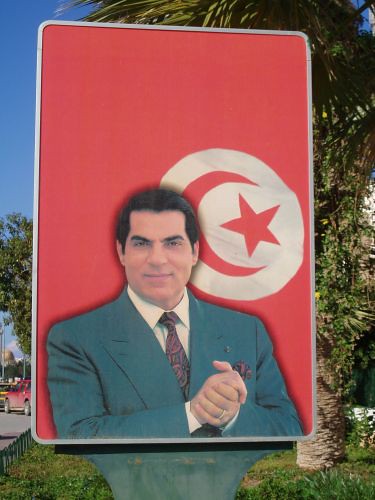
From the 2008 report: "In Zine el-Abidine Ben Ali’s Tunisia, Muammar Gaddafi’s Libya, [and] Bashar el-Assad’s Syria, the leader’s ubiquitous portrait on the streets and front pages of the newspapers is enough to dispel any doubt about the lack of press freedom. Other dictatorships do without a personality cult but are just as suffocating. Nothing is possible [for the press] in... Saudi Arabia if it does not accord with government policy."

146. Egypt
Egypt languished in 146th place as the report made special note of that country's crackdown on bloggers, including Kareem Amer, who was imprisoned for blogging negatively about Egyptian president Hosni Mubarak. Egyptian bloggers are an important part of the newsgathering in that country, while even high-profile editors are not immune from government crackdown.

153. Somalia
Unprecedented access to Somalia's pirate community probably contributed to this country's 6-point gain in the index.


158. Iraq
Iraq actually outranks a number of seemingly better-off countries. Though climbing to 158th place on the list, Iraq is singled out for the fact that over 200 journalists have been killed since the U.S.-led war and occupation began in 2003.

163. Palestine
About Palestine, last year's WPF index report had this to say: "The battle raging between Hamas and Fatah is the main cause of the large number of serious press freedom violations in the Palestinian Territories. Hostage-taking, arrests, physical attacks and ransacking of news organisations - the Palestinian media and the few visiting journalist are threatened from all sides." This year, with Hamas fully in control of Gaza, Palestine dropped another 5 spots, as journalists are harassed and accused of taking political sides or of being spies.

So that makes Palestine, which of course is not a country, the most unfree Arab country for the press. But we're still missing someone in the general area...

166. Iran
First off, the countries whose press is more unfree than Iran: China, Vietnam, Cuba, Burma, Turkmenistan, North Korea and Eritrea. Secondly, one must wonder why the Ahmedinejad government spends so much time harassing bloggers when Iran's own clerics are bloggers. Thirdly, you have to reserve some respect for the achievement of a government so cunning that it has succeeded in convincing much of its public to be wary of its own media.

Finally, shouldn't any country that bans The DaVinci Code get an automatic ten-point bump in the index?

Ladies and gentlemen, your 2008 Middle East and North Africa press!

See you in 2009.

Saturday, November 22, 2008

Omani adventurer might be the first Arab to reach the North Pole

Omani adventurer Nabil al-Buseidi will participate in the biannual Polar Challenge next April and will attempt to be the first Arab to set foot on the (magnetic) North Pole.

Al-Buseidi is apparently known more commonly by his nickname "Nabs" - except in Germany, where he claims the media (rather glibly, we gather) dubbed him "der Sultan Auf Schnee," or the Sultan of Snow, for his combination of biathlon prowess and Arabness.

The 700-kilometre Polar Challenge begins at Resolute Bay on the mainland of Nunavut, where challengers acclimatize to the Arctic by skiing 105km to the official starting line on Little Cornwallis Island. The formal race then runs in 4 stages over Bathurst Island, across the frozen Northwest Passage to King Christian Island, and then over more iced sea to the Magnetic North Pole at 78° 35.7'N by 104° 11.9'W, or just off the coast of Ellesmere Island. The finish line is at an airstrip near Issachen Mine.

Competitors may travel by foot or ski, facing challenges involving constant sub-zero temperatures and roving polar bears. (The Polar Challenge's FAQ page highlights the degree of difficulty facing the adventurers.) The record time, from the 2003 race - the first held - is 10 days, 9 hours and 45 minutes. In 2007, a total of 6 teams comprising 15 people completed the challenge.

Nabs the Omani and his fellow competitors will set off next April. Stay tuned.