tuque /tūk/ n Canadian English, var. toque [19th c. Canadian French, from the French toque, from the Basque tauka] 1 A close-fitting knitted cap, often with a long tapering end or tassel or pompom. 2 fig Something quintessentially Canadian.
souq /sūk/ n from the Arabic سوق var. souk 1 An open-air marketplace. 2 fig A central meeting place for the circulation of news and ideas.
Showing posts with label Morocco. Show all posts

Thursday, October 22, 2009

Royal immunity includes germs, says Morocco

Kings don't get sick. That's the message that thick-headed Moroccan journalists just can't seem to get. Last week a court in Rabat ordered the editor of the weekly al-Michaal newspaper imprisoned for a year for publishing articles questioning the health of King Mohamed VI.

Police stormed the Casablanca office of al-Michaal and hauled away its editor, Driss Chahtan. Prison terms were also handed down to two offending journalists, Rachid Mahameed and Mostafa Hiran, who wrote a series of articles in September claiming that the king might be sicker than the government is letting on.

The court decision follows a series of reported investigations by Moroccan authorities of independent media outlets which are critical of Morocco's royal family. Last month two editors of the independent daily al-Jarida al-Oula were detained and interrogated also for publishing articles that questioned the political motivations behind what appears to be a conspiracy to conceal the health of the king.

He's only 46, what could be wrong with him? (He suffered a reportedly severe gastrointestinal infection in August and had to spend a week in convalescence. Last year rumors surfaced that he took a secret trip to France for surgery of an unknown nature. The exact cause of his father's death was never investigated. Denying it all just makes the whole Moroccan government look ill. Whoops, did I say all that out loud?)

In general, Morocco's judiciary has not been kind to Morocco's media. This past summer a court upheld a ruling in the case of Libyan leader Muammar Qaddafi versus three Moroccan papers, and ordered the publications--which had published articles critical of Qaddafi--to pay punitive damages amounting to one million dirhams (roughly $125,000) to Muammar himself.

Qaddafi reportedly spent the money on a new sound system for his rocket car.

Monday, June 8, 2009

Life in a Riad: Travels in Morocco

Husband and wife world travellers and Tuque Souq cousins Dean and Vicki Bradley (no, they're not each others' cousins; inbreeding in our family has been banned for at least 2 generations) just finished up a three-week trek through Morocco as part of their year-long, round-the-world expedition.

A common setting for their travel dispatches, the riad: a type of Moroccan manor whose splendor includes a central, interior garden or atrium. They're quite often turned into little hotels and/or restaurants these days.

Riad [ رياد ] is from an old Arabic word for garden and is also closely related to the word riyaada [Arabic: ريادة ] which means, coincidentally for our travellers, pathfinding or exploration.

From Dean's blog, Backpack Adventures, he writes of an adventure to find a riad:

A little skeptical about whether we were actually being taken to the Riad, or if he was leading us around aimlessly, we followed him along the narrow and twisting alleyways. The further along we walked the worse the pathway became, with broken sidewalk pieces and stones scattered on the ground. We finally arrived at a large wooden door and the young boy rang the doorbell. There was no sign indicating that we were at the correct place, so we just hoped that the staff knew who we were. [Read more...]

On her blog, Stories by Vicki, she imagines an alternative story of holiday life in a riad:
Aliana slipped through the grand stone-carved doorway into the back kitchen to prepare mint leaves for Madame Monjée’s tea. It was 8:00am, which meant the patisserie driver should be there soon to drop off the croissants, baguettes and sweet pastries. As one of their premium guests at Riad Belle, Madame Monjée had very specific requests for her petit déjeuner, however the large tips more than made up for her high demands. Aliana felt grateful for her job at the Riad, and especially to the owner, Ms. Lacroix, for giving her the opportunity to work at such a beautiful hotel. [Read more...]
Having tasted the sweet pleasures of life in Morocco, the intrepid couple are now trekking through Spain. alhamdullillah ala salaama, you two.

Monday, December 22, 2008

The Tuque Souq Year in Review


Reporters sans frontières (RSF) recently released its sixth annual World Press Freedom Index for 2008.

The World Press Freedom Index measures press freedom in countries around the world by assessing such factors as censorship, self-censorship, harassment of journalists (or worse), intervention by governmental or extra-governmental parties, and the legal infrastructure for protecting the freedom of the press.

And for the sixth year in a row, Iceland has the world's freest press. (Can ya spot him?) Canada rose to the 13th spot this year (not that we deserve it), highest among G8 countries, but aside from us and New Zealand, the top 20 spots are occupied by European nations, mostly of the Nordic and Baltic variety.

As for the Middle East, well, you won't find these countries hobnobbing with the likes of Jamaica (#21), Ghana (#31), or Cape Verde (#36). So as a way of wrapping up the year with a glimpse at all the countries in the region, the Tuque Souq presents:

THE MIDDLE EAST AND NORTH AFRICA PRESS UNFREEDOM INDEX
(listed in order from least unfree to most unfree)
(warning: may contain self-referencing links)

46. Israel (regular Israel*)
So, Israeli press that is reporting in Israel (not the Palestinian territories) is the freest press in the region. Not bad, but that's a pretty glaring asterisk, considering that "the territories" is what most of the news is generally concerned with.


61. Kuwait
69. United Arab Emirates

After remaining unchanged in the rankings for a couple of years, these 2 Gulf countries of similar size and demography have started to separate, with Kuwait rising 2 spots and U.A.E. falling 4 spots. This is probably because the Emirates suffer from what pressreference.com calls the "practice of self-censorship" by the media, whereby journalists willingly print just the happy news. Kuwaiti journalists, while apparently freer than Emiratis, are still not as free as us to poke fun at these pointy things.

66. Lebanon
Up an impressive 30 spots in the rankings after 2008 saw a huge drop in the number of high-profile killings of journalists and activists in Lebanon. Starting a food fight with Israel was also a step in the right direction.


74. Qatar
Home to gajillion-dollar media empire al-Jazeera, Qatar still ranks below Haiti and Burkina Faso in press freedom.

89. Comoros
Tiny archipelago nation with an Arab government nabs nondescript 89th place in the rankings, and this hereby fulfills the Tuque Souq's pledge to write something about Comoros before the year is up. Actually, according to the democracy watchgroup Freedom House, Comoros is the only real "electoral democracy" in the Arab world, although one of its islands, Anjouan, questionably re-elected its president recently.

96. Bahrain
Little island with big football dreams is up 22 spots this year
.

105. Mauritania
Having risen an impressive 88 spots between 2004-2007 to a high of #50 last year (which was highest among all Arab states), Mauritania plummeted 55 spots this year after a nasty coup put a plug in democratization in this Saharan nation.


121. Algeria
122. Morocco

123. Oman
Arch press-unfreedom rivals Algeria and Morocco battled to a near draw, with Algeria edging out its neighbour at the tape. The on-again, off-again Algerian civil war remains one of the deadliest for journalists in history. Monarchical Morocco doesn't always approve of journalists criticising the king. Meanwhile, Oman is debuting on the index this year, which can only mean that Omanis just got press this year.

128. Jordan
King Abdullah II of Jordan, fresh off his YouTube campaign, recently met with Jordan's media community to promise more reform and more freedom. We have to applaud His Excellency for once again circumventing the bureaucracy of democracy and simply decreeing more freedom.

134. Djibouti
The country whose appellation makes it an easy target for unquestionably urbane puns, Djibouti is always a tough call for World Press Index gamblers. From a high of 96 in 2002 to a low of 145 three years ago, there seems to be an awful lot of scrutiny for a country whose president likes to be referred to only by his initials.

135. Sudan
Sudan, a country with a north vs. south civil war and and east vs. west civil war (that one's more of a genocide), and a country consistently rated as having one of the world's most corrupt governments, is actually rising in the rankings. Sudan now ranks better than Mexico (#140).

149. Israel (extra-territorial)
Referring to Israeli press freedom in the Occupied Palestinian Territories, this 'second Israel' fell 46 spots from last year thanks to increased Israeli military harassment of journalists. Hmm, if only there were strings attached.


155. Yemen
Sure, having near-total state control over the media might seem blasé to some autocracies, but Yemen is known for being a bit retro.

143. Tunisia
159. Syria
160. Libya

161. Saudi Arabia

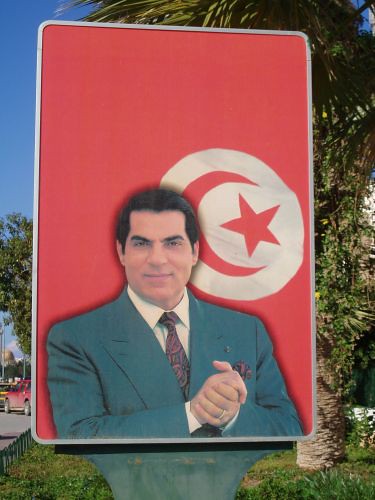
From the 2008 report: "In Zine el-Abidine Ben Ali’s Tunisia, Muammar Gaddafi’s Libya, [and] Bashar el-Assad’s Syria, the leader’s ubiquitous portrait on the streets and front pages of the newspapers is enough to dispel any doubt about the lack of press freedom. Other dictatorships do without a personality cult but are just as suffocating. Nothing is possible [for the press] in... Saudi Arabia if it does not accord with government policy."

146. Egypt
Egypt languished in 146th place as the report made special note of that country's crackdown on bloggers, including Kareem Amer, who was imprisoned for blogging negatively about Egyptian president Hosni Mubarak. Egyptian bloggers are an important part of the newsgathering in that country, while even high-profile editors are not immune from government crackdown.

153. Somalia
Unprecedented access to Somalia's pirate community probably contributed to this country's 6-point gain in the index.


158. Iraq
Iraq actually outranks a number of seemingly better-off countries. Though climbing to 158th place on the list, Iraq is singled out for the fact that over 200 journalists have been killed since the U.S.-led war and occupation began in 2003.

163. Palestine
About Palestine, last year's WPF index report had this to say: "The battle raging between Hamas and Fatah is the main cause of the large number of serious press freedom violations in the Palestinian Territories. Hostage-taking, arrests, physical attacks and ransacking of news organisations - the Palestinian media and the few visiting journalist are threatened from all sides." This year, with Hamas fully in control of Gaza, Palestine dropped another 5 spots, as journalists are harassed and accused of taking political sides or of being spies.

So that makes Palestine, which of course is not a country, the most unfree Arab country for the press. But we're still missing someone in the general area...

166. Iran
First off, the countries whose press is more unfree than Iran: China, Vietnam, Cuba, Burma, Turkmenistan, North Korea and Eritrea. Secondly, one must wonder why the Ahmedinejad government spends so much time harassing bloggers when Iran's own clerics are bloggers. Thirdly, you have to reserve some respect for the achievement of a government so cunning that it has succeeded in convincing much of its public to be wary of its own media.

Finally, shouldn't any country that bans The DaVinci Code get an automatic ten-point bump in the index?

Ladies and gentlemen, your 2008 Middle East and North Africa press!

See you in 2009.

Thursday, February 21, 2008

Cluster Love, Not Bombs

A five-day conference in Wellington, New Zealand was held this week to organize a global effort to ban cluster bombs. The Conference on Cluster Munitions (official website) hosted representatives from more than one hundred countries and various human rights and nongovernmental organizations, as well as technical experts and survivors of cluster bomb attacks. The goal: a comprehensive treaty, by the end of 2008, to make cluster munitions illegal under international law.


(The conference circulated a sobering video press release on YouTube here.)


Canada is being represented, in a matter of speaking, by Paul Hannon, executive director of Mines Action Canada (MAC), the Canadian wing of the Geneva-based International Campaign to Ban Landmines (ICBM). On its website, MAC notes:


“Some governments are trying to weaken a treaty by calling for exemptions based on dubious technical fixes. The Cluster Munition Coalition, of which Mines Action Canada is a founding member, is calling for the strongest possible ban on cluster bombs.”


Canadians should take note: Canada is one of the 94 countries pledged to the 2007 Oslo Process to ban cluster bombs (not to be confused with that other Oslo Process). And it was in Ottawa, of course, that the landmark landmine (ban) treaty was signed in 1997.


The conference comes on the heels of a Human Rights Watch (HRW) report, released February 17, on the use of cluster bombs during the 2006 Israel-Hezbollah war. (Press release; full report.)


According to HRW, Israel dropped from planes or fired from ground-based Multiple Launch Rocket Systems more than 4.6 million cluster “submunitions,” including many that hit civilian areas in southern Lebanon. As many as 1 million of these did not explode on impact, and are therefore still a threat to people in the region. The report says that at least 200 civilians have been killed or maimed from tardily exploding cluster bombs since the war ended. Hezbollah also fired cluster bombs on Israel during the war, killing at least one and injuring 12.


Also according to the report: Canada is one of several countries to possess cluster bombs (the so-called “Rockeye” anti-tank bombs), although the Canadian military did announce (in 2004) a project to decommission and destroy all of these munitions in its arsenal.


However, according to HRW Canada is still one of 34 cluster-munitions producing countries.


Other links:

  • The recently launched Arabic website of the International Campaign to Ban Landmines.
  • Landmine Action details the cleanup effort of unexploded cluster munitions in Western Sahara, used by both sides in the 1975-1988 war between Morocco and Saharawi separatists.