tuque /tūk/ n Canadian English, var. toque [19th c. Canadian French, from the French toque, from the Basque tauka] 1 A close-fitting knitted cap, often with a long tapering end or tassel or pompom. 2 fig Something quintessentially Canadian.
souq /sūk/ n from the Arabic سوق var. souk 1 An open-air marketplace. 2 fig A central meeting place for the circulation of news and ideas.
Showing posts with label Bahrain. Show all posts

Saturday, November 14, 2009

World Cup underdogs overachieve underwhelmingly

Today's 11th-hour World Cup qualifiers were dramatic and, for the Tuque Souq, mostly disappointing. As we reported yesterday, Egypt needed a two-goal win over Algeria to stay alive, which they got in stupefying fashion when substitute striker Emad Moteab connected his head to a long cross and put the ball in the back of the net in the 5th minute of stoppage time, literally seconds before the final whistle blew. Algeria, hoping to complete the huge upset, were stunned, and now must face Egypt again in four days in a playoff to be held in Khartoum.

New Zealand notched a gritty, deserved 1-0 win over lil' Bahrain in front of 35,000 ripe kiwis. Victory was secured when Bahrain striker Sayed Mohamed Adnan telegraphed a penalty kick straight into the arms of the All Whites' goalkeeper in the 50th minute, which proved to be Bahrain's closest chance at a goal. New Zealand advance to the World Cup finals for the first time since 1982.

Dear Tunisia played as though under the influence of Triazolam in falling 0-1 to an overmatched but fully conscious Mozambique side. A draw wouldn't have been enough anyway, but the game was headed that way until Dario Khan netted a goal for the home side in the 84th minute, devastating the Tunisian faithful. The result allowed rivals Nigeria, 3-2 winners over Kenya, to edge Les aigles in Africa Group B and qualify for South Africa. It will be Nigeria's 4th trip to the World Cup, their first since 2002.

Morocco, already eliminated from contention, dropped a 2-0 decision to Cameroon, and so the latter will join Ghana, Côte d'Ivoire, Nigeria and the Algeria/Egypt winner, along with hosts South Africa, as Africa's representatives in the World Cup next summer.

Friday, November 13, 2009

Algeria invades Egypt, and other clashes

The World Cup of football and/or soccer is more than just a quadrennial reminder that Italians are a bunch of ref-baiting crybaby floppers, Englishmen are spineless, Frenchmen are rude, Germans are offensive, Americans are weak at heart, Canadians are polite enough not to show up, and Brazilians are genetically superior to us in every way.

More than a latent platform for gross mischaracterizations of national identity, the World Cup is also exciting for reasons of pure sport: cheering for that lovable underdog, who represents on the soccer pitch the underdog all of us are in relation to the universe.

One of the last boats to South Africa leaves tomorrow, and the Tuque Souq is desperately cheering for 3 great underdogs to be on it, so that when one of 'em upsets Spain or Holland at next year's World Cup, we can all feel that much better about ourselves.


BAHRAIN DANCE?

In the first leg of the home-and-home Asia/Oceania playoff finale last month in Manama, Bahrain played New Zealand to a goalless draw, so the second match on Saturday is winner-take-all.

Bahrain are ghost-writing the same Cinderella story they penned for the 2006 World Cup qualifying round.

Four years ago, the Islanders stood at this very same threshold: in a two-legged playoff against Trinidad & Tobago to qualify for the last spot in the 2006 World Cup finals, Bahrain earned a draw in the Caribbean and needed only the same result or better at home to book a trip to Germany. Instead, they crashed out in front of their own fans.

For Bahrain, the formula this time is as simple as it is familiar: Win, or tie the game and score at least one goal. Bahrain's imported coach is ready to "live the dream" for his adopted country. Will Bahrain qualify for their first-ever World Cup?

AL-DELIRIA?
Egypt are the reigning African champions. Earlier this year they rose as high as 15th in the FIFA world rankings. Their 90,000-capacity (including shabaab standing in the aisles) home stadium is almost as scary for opposing teams as it is for the home fans. So why do they find themselves needing a desperation win--by at least two goals--in the qualifying finale versus underdog Algeria to book a ticket to South Africa?

To be sure, Egypt have only themselves to blame for that inexcusable home draw versus Zambia back in March. But Algeria deserve most of the credit here. Were it not for a draw with Rwanda they'd have an umblemished record and would already be through to South Africa. They dispatched the Egyptians with ease in their first meeting in Algiers. The Desert Foxes are primed for a celebration, and need only play Egypt close to humiliate their rivals and qualify.

Algeria haven't reached the World Cup finals since 1986; they debuted in 1982, where they shocked eventual finalists West Germany in the preliminary round. Nearly half the country's population today wasn't yet alive when that game was played. Suffice to say, Algeria are ready to celebrate. Captain Yazid Mansouri (pictured above) is positively pushy: "We won't go to Cairo to defend. We'll do everything we can to take our chances. I know we can score over there."

Egypt captain Ahmed Hassan is ready to answer the challenge, and he's calling on the rowdy Cairo faithful to cheer the team to a badly needed victory. "I call on all our supporters to come and back us for the full 90 minutes, whatever the score happens to be. I expect lots of twists and turns in the game."

Here's the real twist: If Egypt win the game by exactly 2 goals, the two sides will finish with identical standings (wins, losses, goal differential, and head-to-head matchup). In that case, a one-game, neutral-site playoff would be needed, and it would be held in Khartoum next Wednesday.

EAGLES LANDING?
Wee Tunisia, beloved of the Tuque Souq, are on the cusp of qualifying for their fourth consecutive World Cup finals. In Africa's Group B, they lead group favourites Nigeria by two points heading into the final day of qualifying. Les aigles de Carthage head to Mozambique in control of their own destiny. But a draw might not be enough, not if Nigeria defeat Kenya (in which case Nigeria would win the tiebreaker with Tunisia based on a superior goal differential).

With a victory Tunisia will equal Cameroon's record of consecutive World Cup appearances by an African nation. They are on a nine-game unbeaten run against fellow African opponents. Their trajectory over the last decade shows that the Tunisians are, out of obscurity, now one of the premier squads on the continent.

OTHER GAMES
Fans of Morocco, your team is out of the running for the World Cup finals. But the disappointing side has a chance to finish the qualifying session on a high note and send a fourth colossal underdog to South Africa in the process. Morocco play at home Saturday against Africa Group A leaders Cameroon, arguably the strongest team on the continent right now. Should Morocco win, they'll allow lowly Gabon the chance to edge past the Indomitable Lions and into the World Cup finals, provided Gabon defeat Togo.

All games are Saturday at 13:00 GMT. The Tuque Souq will have the results.

Friday, October 9, 2009

Tunisia and Bahrain plan to get lucky this weekend

The Tuque Souq's very masculine love affair with Tunisian football is primed for another romantic escapade this weekend as Les Aigles de Carthage--as Tunisia's national team is nicknamed--play their penultimate World Cup qualifying match on Sunday versus Kenya.

In last month's critical Africa Group B match, Tunisian midfielder Oussama Darragi scored a stunning goal 3 minutes into extra time to draw his side into a 2-2 tie with Nigeria in Abuja, leaving the shocked and heavily favoured Super Eagles still two points adrift of the North Africans with two matches remaining.

Check out the replay of this incredible goal--Darragi collects a pass chipped over the defence and beats the goalie at a tight angle.

Sunday at Stade du 7 Novembre, Tunisia's home turf, Les Aigles with a win over Kenya can clinch their fourth consecutive World Cup finals berth if Nigeria fail to win against Mozambique.

A HARD BAHRAIN'S GONNA FALL
In other World Cup news, wee Bahrain enter the final stage of their Disneyesque quest for a World Cup finals debut.

After their shock defeat of Saudi Arabia last month, the diminutive islanders have reached the final playoff round of World Cup qualifying, which owing to FIFA's pro-Occidental regime of continent-based qualifying, sees Asia's fifth-place team (Bahrain) play Oceania's best team (New Zealand) for one, lottery-like at-large berth in the World Cup finals.

New Zealand, for those of you who weren't aware that Oceania was a continent, got to this stage of World Cup qualifying by beating the snot out of countries like Fiji (population 849,000), New Caledonia (population 249,000) and the offshore tax-haven of Vanuatu (population 240,000).

Given that New Zealand have a stellar record beating up on small islands, the Kiwis are fairly confident they can eliminate Bahrain. Thus the latter are hoping the overconfidence of the down-under cousins will be Bahrain's boon.

Game 1 of the home-and-home playoff is tomorrow in Manama. The second leg will be in New Zealand on November 14.

UPDATE OCTOBER 12
Tunisia 1-0 Kenya
Nigeria 1-0 Mozambique
Bahrain 0-0 New Zealand

Les Aigles won but so did Nigeria, so it all comes down the final day, November 14, when Tunisia travel to Mozambique and Nigeria to Kenya. On the same day, in Africa Group C, Egypt will host Algeria, the former needing a win to qualify and avoid a huge upset. And Bahrain will need a win or at least a goal-scoring draw to edge the Kiwis. Stay tuned.

Wednesday, September 9, 2009

Bahrain wins Coupe de Ramadan 2009

In an epic battle in which the opposing sides pitted not just their soccer skills but also their piety, humility, reverence, atonement and self-purification against each other, Bahrain eliminated Saudi Arabia in a World Cup qualification match with a 2-2 draw in Riyadh.

The match started at well past 10pm local time due to Ramadan--the ninth and holiest month of the Islamic calendar during which many Muslims fast and pray by day and feast and (according to some interpretations) play soccer by night.

Bahrain's substitute midfielder Ismail Abdullatif proved to be the holiest, most reverent player on the pitch, as his diving header just seconds from the final whistle shocked the host Saudis and sent them crashing out of the two-legged elimination match on the away goals rule.

The two sides drew 0-0 in the first leg at Bahrain's National Stadium in Manama last week, a game in which the Saudis' stellar goalkeeper Waleed Abdullah showed off his piety and atonement by making save after gilded save.

The victory for Bahrain now means the tiny island nation is just one small step away from its first ever World Cup finals berth--a home-and-away playoff versus New Zealand in November for the right to book a ticket to South Africa. Meanwhile, after qualifying for 5 straight World Cup finals, the Saudis are out.

In related news, this year marked the very first time ever that the Saudi Council of Senior Scholars--the country's arbiters of all things religious and one of the most important authorities in the Sunni Muslim world--permitted the use of telescopes to determine the start of Ramadan (sighting the crescent after a new moon).

On the other hand, Bahrain--a mostly Muslim country two-thirds of whom are Shi'ite--not only still relies on the naked eye to determine the start of Ramadan, it often relies on two or three naked eyes which don't always see the same thing. Very often, the country's Shia and Sunni communities do not begin the holy month at the same time!

However, this year proved to be a rare harmony of naked-eye moon sightings, as Bahrain's two Muslim communites actually agreed on the start date for Ramadan. Clearly Bahrain's subsequent triumph on the soccer field shows us just what Allah thinks of telescopes.

And speaking of atonement, no one is gearing up for Yom Kippur quite like the Israeli national soccer team. After a humiliating 1-0 home loss to Latvia last week that saw them all but eliminate themselves from qualification, the Team of David atoned with a 7-0 thumping of lowly Luxembourg at Ramat Gan stadium, after which they remain infinitesimally mathematically alive to qualify with two games remaining.

Tuesday, May 26, 2009

Iranian Booze Cruise crashes in Saudi Arabia

An Iranian cargo ship with 6 sailors and 1500 cans of beer got lost in a storm in the Persian Gulf and crash landed in Saudi Arabia, where a local rescue team saved the sailors from further danger with emergency rations of nuts, pretzels and turmus.

Saudi authorities reported that the Iranian crew of the vessel were at least "17 sheets to the wind"; the legal limit in Saudi Arabia is 3.

Once the crew were safe, authorities seized the ship’s cargo, which included approximately 2000 bottles of hard liquor and mixes, as well as 1500 beer cans. Many more were blown ashore.

Saudi authorities quickly and humanely destroyed all the booze, though no detail was given as to the method of disposal.

Alcoholic beverages are officially banned in Iran, where every year dozens die from ingesting moonshine. Saudi Arabia also enforces prohibition; in 2006 twenty Saudis died from drinking cologne as a substitute for booze.

WIRE ACT

Since we've been offline for a week, here's a freshly distilled flask of the latest headlines from around the Middle East:

Leaked information from a UN report suggested that Hezbollah killed former Lebanese Prime Minister Rafik al-Hariri... but Syria Comment sees a conspiracy... a Jewish Israeli woman in Holland borrowed an Arab nom de plume to win an Arabic poetry contest... Bahrain finally caught the Swine Flu... a bill before the Israeli Knesset would make it a crime to be Palestinian... an Egyptian millionaire was sentenced to death for arranging the murder of Lebanese pop singer Suzanne Tamim [pictured]... Iran launched a surface-to-air missile at Facebook... hmmm, another Libyan dissident died mysteriously... the government of Oman denied that the local temperature reached 47 degrees... Yemen is troubled by a surge in pesticide smuggling.

And, just as the Tuque Souq predicted in March, Sheikh Nasser al-Mohammad al-Sabah has been named Prime Minister of Kuwait for the 784th time.

Monday, December 22, 2008

The Tuque Souq Year in Review


Reporters sans frontières (RSF) recently released its sixth annual World Press Freedom Index for 2008.

The World Press Freedom Index measures press freedom in countries around the world by assessing such factors as censorship, self-censorship, harassment of journalists (or worse), intervention by governmental or extra-governmental parties, and the legal infrastructure for protecting the freedom of the press.

And for the sixth year in a row, Iceland has the world's freest press. (Can ya spot him?) Canada rose to the 13th spot this year (not that we deserve it), highest among G8 countries, but aside from us and New Zealand, the top 20 spots are occupied by European nations, mostly of the Nordic and Baltic variety.

As for the Middle East, well, you won't find these countries hobnobbing with the likes of Jamaica (#21), Ghana (#31), or Cape Verde (#36). So as a way of wrapping up the year with a glimpse at all the countries in the region, the Tuque Souq presents:

THE MIDDLE EAST AND NORTH AFRICA PRESS UNFREEDOM INDEX
(listed in order from least unfree to most unfree)
(warning: may contain self-referencing links)

46. Israel (regular Israel*)
So, Israeli press that is reporting in Israel (not the Palestinian territories) is the freest press in the region. Not bad, but that's a pretty glaring asterisk, considering that "the territories" is what most of the news is generally concerned with.


61. Kuwait
69. United Arab Emirates

After remaining unchanged in the rankings for a couple of years, these 2 Gulf countries of similar size and demography have started to separate, with Kuwait rising 2 spots and U.A.E. falling 4 spots. This is probably because the Emirates suffer from what pressreference.com calls the "practice of self-censorship" by the media, whereby journalists willingly print just the happy news. Kuwaiti journalists, while apparently freer than Emiratis, are still not as free as us to poke fun at these pointy things.

66. Lebanon
Up an impressive 30 spots in the rankings after 2008 saw a huge drop in the number of high-profile killings of journalists and activists in Lebanon. Starting a food fight with Israel was also a step in the right direction.


74. Qatar
Home to gajillion-dollar media empire al-Jazeera, Qatar still ranks below Haiti and Burkina Faso in press freedom.

89. Comoros
Tiny archipelago nation with an Arab government nabs nondescript 89th place in the rankings, and this hereby fulfills the Tuque Souq's pledge to write something about Comoros before the year is up. Actually, according to the democracy watchgroup Freedom House, Comoros is the only real "electoral democracy" in the Arab world, although one of its islands, Anjouan, questionably re-elected its president recently.

96. Bahrain
Little island with big football dreams is up 22 spots this year
.

105. Mauritania
Having risen an impressive 88 spots between 2004-2007 to a high of #50 last year (which was highest among all Arab states), Mauritania plummeted 55 spots this year after a nasty coup put a plug in democratization in this Saharan nation.


121. Algeria
122. Morocco

123. Oman
Arch press-unfreedom rivals Algeria and Morocco battled to a near draw, with Algeria edging out its neighbour at the tape. The on-again, off-again Algerian civil war remains one of the deadliest for journalists in history. Monarchical Morocco doesn't always approve of journalists criticising the king. Meanwhile, Oman is debuting on the index this year, which can only mean that Omanis just got press this year.

128. Jordan
King Abdullah II of Jordan, fresh off his YouTube campaign, recently met with Jordan's media community to promise more reform and more freedom. We have to applaud His Excellency for once again circumventing the bureaucracy of democracy and simply decreeing more freedom.

134. Djibouti
The country whose appellation makes it an easy target for unquestionably urbane puns, Djibouti is always a tough call for World Press Index gamblers. From a high of 96 in 2002 to a low of 145 three years ago, there seems to be an awful lot of scrutiny for a country whose president likes to be referred to only by his initials.

135. Sudan
Sudan, a country with a north vs. south civil war and and east vs. west civil war (that one's more of a genocide), and a country consistently rated as having one of the world's most corrupt governments, is actually rising in the rankings. Sudan now ranks better than Mexico (#140).

149. Israel (extra-territorial)
Referring to Israeli press freedom in the Occupied Palestinian Territories, this 'second Israel' fell 46 spots from last year thanks to increased Israeli military harassment of journalists. Hmm, if only there were strings attached.


155. Yemen
Sure, having near-total state control over the media might seem blasé to some autocracies, but Yemen is known for being a bit retro.

143. Tunisia
159. Syria
160. Libya

161. Saudi Arabia

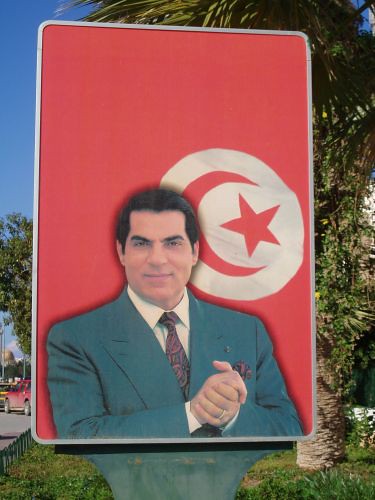
From the 2008 report: "In Zine el-Abidine Ben Ali’s Tunisia, Muammar Gaddafi’s Libya, [and] Bashar el-Assad’s Syria, the leader’s ubiquitous portrait on the streets and front pages of the newspapers is enough to dispel any doubt about the lack of press freedom. Other dictatorships do without a personality cult but are just as suffocating. Nothing is possible [for the press] in... Saudi Arabia if it does not accord with government policy."

146. Egypt
Egypt languished in 146th place as the report made special note of that country's crackdown on bloggers, including Kareem Amer, who was imprisoned for blogging negatively about Egyptian president Hosni Mubarak. Egyptian bloggers are an important part of the newsgathering in that country, while even high-profile editors are not immune from government crackdown.

153. Somalia
Unprecedented access to Somalia's pirate community probably contributed to this country's 6-point gain in the index.


158. Iraq
Iraq actually outranks a number of seemingly better-off countries. Though climbing to 158th place on the list, Iraq is singled out for the fact that over 200 journalists have been killed since the U.S.-led war and occupation began in 2003.

163. Palestine
About Palestine, last year's WPF index report had this to say: "The battle raging between Hamas and Fatah is the main cause of the large number of serious press freedom violations in the Palestinian Territories. Hostage-taking, arrests, physical attacks and ransacking of news organisations - the Palestinian media and the few visiting journalist are threatened from all sides." This year, with Hamas fully in control of Gaza, Palestine dropped another 5 spots, as journalists are harassed and accused of taking political sides or of being spies.

So that makes Palestine, which of course is not a country, the most unfree Arab country for the press. But we're still missing someone in the general area...

166. Iran
First off, the countries whose press is more unfree than Iran: China, Vietnam, Cuba, Burma, Turkmenistan, North Korea and Eritrea. Secondly, one must wonder why the Ahmedinejad government spends so much time harassing bloggers when Iran's own clerics are bloggers. Thirdly, you have to reserve some respect for the achievement of a government so cunning that it has succeeded in convincing much of its public to be wary of its own media.

Finally, shouldn't any country that bans The DaVinci Code get an automatic ten-point bump in the index?

Ladies and gentlemen, your 2008 Middle East and North Africa press!

See you in 2009.

Saturday, November 22, 2008

Omani adventurer might be the first Arab to reach the North Pole

Omani adventurer Nabil al-Buseidi will participate in the biannual Polar Challenge next April and will attempt to be the first Arab to set foot on the (magnetic) North Pole.

Al-Buseidi is apparently known more commonly by his nickname "Nabs" - except in Germany, where he claims the media (rather glibly, we gather) dubbed him "der Sultan Auf Schnee," or the Sultan of Snow, for his combination of biathlon prowess and Arabness.

The 700-kilometre Polar Challenge begins at Resolute Bay on the mainland of Nunavut, where challengers acclimatize to the Arctic by skiing 105km to the official starting line on Little Cornwallis Island. The formal race then runs in 4 stages over Bathurst Island, across the frozen Northwest Passage to King Christian Island, and then over more iced sea to the Magnetic North Pole at 78° 35.7'N by 104° 11.9'W, or just off the coast of Ellesmere Island. The finish line is at an airstrip near Issachen Mine.

Competitors may travel by foot or ski, facing challenges involving constant sub-zero temperatures and roving polar bears. (The Polar Challenge's FAQ page highlights the degree of difficulty facing the adventurers.) The record time, from the 2003 race - the first held - is 10 days, 9 hours and 45 minutes. In 2007, a total of 6 teams comprising 15 people completed the challenge.

Nabs the Omani and his fellow competitors will set off next April. Stay tuned.

Friday, November 14, 2008

Gulf countries vie for World Cup qualification

The Asia regional World Cup qualifying has entered the final round; 2 groups of 5 teams are competing for 4 automatic berths to South Africa 2010 (the top 2 teams in each group qualify). The 3rd place teams in each group will play a home-and-away playoff to determine the 5th place team overall, and that team will then play a home-and-away playoff against Oceania regional champs New Zealand for an at-large berth to the World Cup.

In Group 1, the Arab reps are Bahrain and Qatar, who are matched up with runaway co-favourites Australia and Japan, as well as minnowy Uzbekistan, in what is sure to be a heated battle for 3rd place.
Qatar and Bahrain are natural rivals, staring at each other from across the narrow Gulf of Bahrain, owners of a testy border/island dispute, trying to mend fences with bridges, and similarly inspired in flag-making.

Both national squads feature foreign-born stars. Qatar are led by Uruguayan-born midfielder Sebastian Quintana, while one of Bahrain's top young players is Nigerian-born Jaycee Okwunwanee.

Fittingly, the 2 teams opened this final group qualifying stage by playing each other to a 1-1 draw in Doha. The return leg won't be until April 1 in Manama, at which time the game will likely determine 3rd place in the standings and a playoff position.

Both squads have tough home matches this week against the Group 1 powerhouses, with Qatar hosting Japan and Bahrain Australia.

Over in Group 2, the battle for automatic qualification figures to be a three-horse race between South Korea, Iran and Saudia Arabia, which currently all sit tied for first after just 2 matches.
The Saudis have made 4 straight World Cups, managing a combined 2-2-9 record (with both of those wins coming during the 1994 World Cup when they reached the quarterfinals). A balanced team known for stingy defence, Saudi Arabia are still climbing back from their all-time worst FIFA ranking of 81, just after their goalless '06 WC. Despite their pedigree, the Saudis are no shoe-ins to make it to South Africa.

The United Arab Emirates, reigning Arabian Gulf Cup champions but considered long shots to qualify, sit fifth in the Group 2 table at 0-0-3 (including a tough loss to Saudi Arabia to open the final round). Wednesday's home clash with Iran is therefore a must-win game. But hope remains, especially with their talisman striker Ismael Matar (check out this sweet goal of his from the AGC tourney) in fine form with 5 goals so far.

The UAE have one World Cup finals on their resume, qualifying for the 1990 Italy WC where they finished 0-0-3.

Other Gulf and Middle Eastern states (not counting North Africa) to qualify for the World Cup in the past: Iraq in 1986 (finished 0-0-3); and Kuwait in 1982 (actually managed a draw against Czechoslovakia).

How did the other Middle Eastern countries - Syria, Jordan, Oman et al - fare in the earlier qualification rounds? Check it out here.

In other Middle East football news, we congratulate Palestine for recently playing its first-ever international soccer game on home soil, drawing 1-1 with Jordan.

The Tuque Souq will keep tabs on the World Cup qualifying in the months ahead, including a preview of the Africa region showdown involving hopefuls Egypt, Tunisia and Morocco. And we'll check in with the European qualifying, where Israel have a favourable group draw that could see them in their first World Cup finals.