tuque /tūk/ n Canadian English, var. toque [19th c. Canadian French, from the French toque, from the Basque tauka] 1 A close-fitting knitted cap, often with a long tapering end or tassel or pompom. 2 fig Something quintessentially Canadian.
souq /sūk/ n from the Arabic سوق var. souk 1 An open-air marketplace. 2 fig A central meeting place for the circulation of news and ideas.
Showing posts with label Jordan. Show all posts

Tuesday, January 5, 2010

Even TSN loves Nazem Kadri, as long as he's more Canadian than Muslim

Nazem Kadri, the Lebanese-Canadian hockey star, whose name loosely translates as Sublime One Who Submits to the Will of Fate, is on his way home to London (Ontario) with a silver medal around his neck, after Team Canada dropped the championship game in overtime to the Americans tonight at the World Juniors in Saskatchewan.

The debacle in the gold-medal game notwithstanding, the Canucks excelled on the ice and Kadri in particular shone with 3 goals, 3 assists, and 472 hits principally of the bone-crushing variety.

TSN's television coverage was predictably patriotic. They ran regular featurettes on Canada's stars, and it was finally Kadri's turn for a profile tonight. Naturally, TSN played up the immigrant angle. The clip of the piece can be found here.

At the outset, the narrator tells us that Nazem Kadri's father, Sam, was "four years old when civil war broke out, prompting the family to move to Canada in 1968." (Note to TSN fact-checking department: the Lebanese Civil War in fact began in 1975.)

Later, we learn that Sam's decision to encourage his son to play hockey met with disapproval from "some members of the Lebanese community." (Note to TSN editing department: Please locate some stock footage less stereotypical than Muslims praying in a mosque to depict "some members of the Lebanese community.")

And, at the end of the clip, Sam says of his talented son that "at the end of the day, he's just another Canadian kid doing what Canadians do." (Note to TSN producer: Please don't encourage the use of pallid idiomatic expressions. At the end of the day we're just fed up with that saying.)

TSN also treated us to footage of a trio of Arab-Canadian former hockey players. They left out at least one other part-Arab who is in the NHL right now. Justin Abdelkader, a second-round pick of the Detroit Red Wings in 2005, is a Michigander whose parternal grandfather hailed from Jordan. The 22-year-old left-winger has 3 goals and 3 assists in 38 games this season.

However, you wouldn't guess his pedigree from the way his name is spoken. Far from an Arabic pronunciation, CBC Hockey Night in Canada announcers pronounce Justin's last name as something close to abdicator. Telling? (To be fair, Justin's bleach-blond hair doesn't exactly make him look like King Abdullah.)

Monday, October 19, 2009

Grateful for Dead? Jordan to start digging Two-Seas canal

The Hashemite Kingdom of Jordan will not win any awards for exciting news. In fact, the most common front-page stories in Jordan usually involve King Abdullah inspecting troops, various royal family members receiving obscure awards or greeting C-list celebrities, the announcement by one awkward acronymic organization that it is creating a new spin-off acronym, or (seriously, folks), the painting of new guard rails at the Amman citadel.

(In all fairness, the coverage of Brangelina's recent layover in the Kingdom was well done.)

So we were taken aback when Jordan announced some real news: it will soon start construction on what is colourfully known as the Red-Dead Canal (aka Two-Seas canal).

Originally conceived as a tripartite cooperation between Jordan, Israel and Palestine to restore healthy water levels to the Dead Sea and provide much needed drinking water to the parched region, the Red-Dead canal (from the Red Sea to the Dead Sea) has been maligned by environmental groups for its potentially devastating impact on both marine and desert ecosystems.

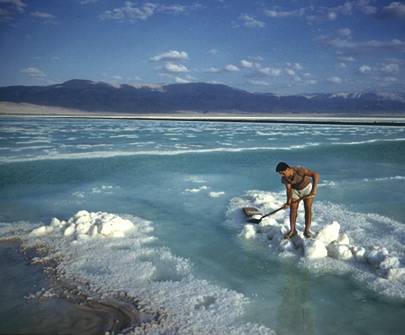
Thanks to gross misuse of the Jordan River and its headwaters over the past 50 years, the Dead Sea is shrinking at a rate of a metre per year; in other words, within your grandkids' lifetimes they will be able to walk across it without getting their feet wet.

The Dead Sea is more than a mawkish boon to the tourism industry; it comprises a delicate ecosystem of bacteria, algae and minerals that is governed by the extremely unique chemical composition of Dead-Sea geography. Nobody wants to see it emptied either of its water or its aura.

Right, but how does flooding the Dead Sea--the most saline, undrinkable water on the planet--with water from the Red Sea via the Gulf of Aqaba--which also, last time we checked, is salty water--rescue a country like Jordan (92% desert and the 11th driest country on Earth) from its drinking-water problems.

The Red-Dead canal, in theory, would power itself with a series of hydroelectric dams which would harness enough energy to compensate for that required to get the water out of the Red Sea in the first place. Energy surpluses from the dams would then be used to power a desalination plant or two for much-needed fresh water, whose salty runoff would flow right on into the saltwater paradise that is the Dead Sea.

The three-million year-old Dead Sea is almost dead, see?

Critics maintain that importing foreign saltwater (along with toxic metals picked up during the desal process) into the Dead Sea will have as negative an effect on that ecosystem (and, to make the point broader, on the mineral-mining industries in the region) as the current problem of the Jordan River's increasing failure to trickle down. Moreover, desalination plants are known to consume huge amounts of (fossil-fuel) energy in their construction and operation, more than hydroelectric dams could compensate for. Additionally, digging canals across the desert to transport saline water could affect, through seepage, the precious reserves of aquifer-based freshwater underneath the sand.

Who will win this debate? We might actually have to follow Jordanian news to find out. Step aside, Brangelina!

Sunday, September 20, 2009

Swine Flu fears put kybosh on Eid kissing

Well, it seems that no amount of spiritual rejuvenation can protect a faithful body from Swine Flu. Today is Eid al-Fitr, the feast that concludes Ramadan, but in anticipation of public celebrations across the Islamic world many governments are issuing precautions.

At the heart of the minor panic is the return of pilgrims from the Hajj, where the gathering of thousands of pilgrims from dozens of countries may have helped spread the feared disease. According to a widely circulated AFP story today:

"Jordanians have been urged to refrain from kissing each other in a bid to combat the contagious disease... 'People should not kiss at social events and gatherings. Instead, they should just shake hands,' the Amman government's fatwa (religious edict) department said in a statement ahead of Eid when families and friends gather in large groups...

"In Cairo, where two people have died from the A(H1N1) flu virus and nearly 900 cases have been reported, preachers suggested that worshippers perform the traditional Eid dawn prayer at home rather than in crowded mosques... Airport authorities have reinforced swine flu testing measures as the end of Ramadan means the return of thousands of pilgrims from Saudi Arabia...

"Indonesian officials fearful of swine flu spreading set up thermal scanners at the open house event [at the Presidential palace], which is part of a custom that sees people throughout the country ask for forgiveness from others for slights and offences..."

And, even though Saudi Arabia issued no precautions with respect to Swine Flu, "many Saudis were expected to stream into neighbouring Dubai and Bahrain for Eid. Both locations are popular for those seeking a break from the ultra-conservative kingdom's restrictions on movies, music and alcohol."

So, from the Tuque Souq to you, wherever you are hiding from the Swine Flu:
رمضان مبارك - كل عام و انتم بخير

Thursday, May 14, 2009

Pope flunks Facebook quiz, leadership in doubt

Pope Benedict XVI's 1.1 billion Facebook friends were stunned this morning to read a wall posting from the pontiff that blared: "Pope B-16 just took the Holy Land Trivia quiz and scored 56%. Can you do better?"

"OMFG," said one commenter. "I know more holy stuff than the pope."

Vatican officials say that Benedict was hoping for a little downtime after a long day standing in line at Israeli checkpoints in the West Bank, so he curled up at his Bethlehem hotel with his laptop and a virgin Bloody Mary and sank into Facebook.

His Holiness is already having a rough week in the religion department, ever since he arrived in the Holy Land having forgotten to pack his mea culpa. Muslim leaders in Jordan were hoping for an apology for the pontiff's 2006 remarks criticizing the prophet Muhammad. Jewish leaders in Israel wanted an apology for the Vatican's passive voice during the Holocaust. Christian leaders in Palestine were simply hoping the Pope and some of his friends would move in with them.

This week Benedict has also had to confront his Nazi past, deal with getting around Israel's Separation Wall in the West Bank, and restore hope to his flock in the Middle East. It's been, well, a crucifying ordeal.

According to a Vatican spokesperson, the pontiff was extremely tired, dehydrated and suffering from Jerusalem Syndrome when he logged on to his Facebook account, which may explain why he missed such quiz questions as Where is the Mount of Olives?; How many Stations of the Cross are there?; and What was Jesus's middle name?*

Vatican officials quickly moved to assure the world's 1.1 billion Catholics that the pope would do better next time. Meanwhile, they downplayed speculation that in the future pontiffs might be chosen based on how well they do on the quiz.**

The moral of this modern biblical story: Let he who is without sin try to deal with all that sh*t.

* OMG - JK :-)
** The Holy Land Trivia quiz on Facebook is a creation of the Israeli consulate in New York City, which hopes to entice American Christians to follow the pope's pilgrimmage to Israel and spend lots of money and love Israel blindly, etc, etc.

Monday, December 22, 2008

The Tuque Souq Year in Review


Reporters sans frontières (RSF) recently released its sixth annual World Press Freedom Index for 2008.

The World Press Freedom Index measures press freedom in countries around the world by assessing such factors as censorship, self-censorship, harassment of journalists (or worse), intervention by governmental or extra-governmental parties, and the legal infrastructure for protecting the freedom of the press.

And for the sixth year in a row, Iceland has the world's freest press. (Can ya spot him?) Canada rose to the 13th spot this year (not that we deserve it), highest among G8 countries, but aside from us and New Zealand, the top 20 spots are occupied by European nations, mostly of the Nordic and Baltic variety.

As for the Middle East, well, you won't find these countries hobnobbing with the likes of Jamaica (#21), Ghana (#31), or Cape Verde (#36). So as a way of wrapping up the year with a glimpse at all the countries in the region, the Tuque Souq presents:

THE MIDDLE EAST AND NORTH AFRICA PRESS UNFREEDOM INDEX
(listed in order from least unfree to most unfree)
(warning: may contain self-referencing links)

46. Israel (regular Israel*)
So, Israeli press that is reporting in Israel (not the Palestinian territories) is the freest press in the region. Not bad, but that's a pretty glaring asterisk, considering that "the territories" is what most of the news is generally concerned with.


61. Kuwait
69. United Arab Emirates

After remaining unchanged in the rankings for a couple of years, these 2 Gulf countries of similar size and demography have started to separate, with Kuwait rising 2 spots and U.A.E. falling 4 spots. This is probably because the Emirates suffer from what pressreference.com calls the "practice of self-censorship" by the media, whereby journalists willingly print just the happy news. Kuwaiti journalists, while apparently freer than Emiratis, are still not as free as us to poke fun at these pointy things.

66. Lebanon
Up an impressive 30 spots in the rankings after 2008 saw a huge drop in the number of high-profile killings of journalists and activists in Lebanon. Starting a food fight with Israel was also a step in the right direction.


74. Qatar
Home to gajillion-dollar media empire al-Jazeera, Qatar still ranks below Haiti and Burkina Faso in press freedom.

89. Comoros
Tiny archipelago nation with an Arab government nabs nondescript 89th place in the rankings, and this hereby fulfills the Tuque Souq's pledge to write something about Comoros before the year is up. Actually, according to the democracy watchgroup Freedom House, Comoros is the only real "electoral democracy" in the Arab world, although one of its islands, Anjouan, questionably re-elected its president recently.

96. Bahrain
Little island with big football dreams is up 22 spots this year
.

105. Mauritania
Having risen an impressive 88 spots between 2004-2007 to a high of #50 last year (which was highest among all Arab states), Mauritania plummeted 55 spots this year after a nasty coup put a plug in democratization in this Saharan nation.


121. Algeria
122. Morocco

123. Oman
Arch press-unfreedom rivals Algeria and Morocco battled to a near draw, with Algeria edging out its neighbour at the tape. The on-again, off-again Algerian civil war remains one of the deadliest for journalists in history. Monarchical Morocco doesn't always approve of journalists criticising the king. Meanwhile, Oman is debuting on the index this year, which can only mean that Omanis just got press this year.

128. Jordan
King Abdullah II of Jordan, fresh off his YouTube campaign, recently met with Jordan's media community to promise more reform and more freedom. We have to applaud His Excellency for once again circumventing the bureaucracy of democracy and simply decreeing more freedom.

134. Djibouti
The country whose appellation makes it an easy target for unquestionably urbane puns, Djibouti is always a tough call for World Press Index gamblers. From a high of 96 in 2002 to a low of 145 three years ago, there seems to be an awful lot of scrutiny for a country whose president likes to be referred to only by his initials.

135. Sudan
Sudan, a country with a north vs. south civil war and and east vs. west civil war (that one's more of a genocide), and a country consistently rated as having one of the world's most corrupt governments, is actually rising in the rankings. Sudan now ranks better than Mexico (#140).

149. Israel (extra-territorial)
Referring to Israeli press freedom in the Occupied Palestinian Territories, this 'second Israel' fell 46 spots from last year thanks to increased Israeli military harassment of journalists. Hmm, if only there were strings attached.


155. Yemen
Sure, having near-total state control over the media might seem blasé to some autocracies, but Yemen is known for being a bit retro.

143. Tunisia
159. Syria
160. Libya

161. Saudi Arabia

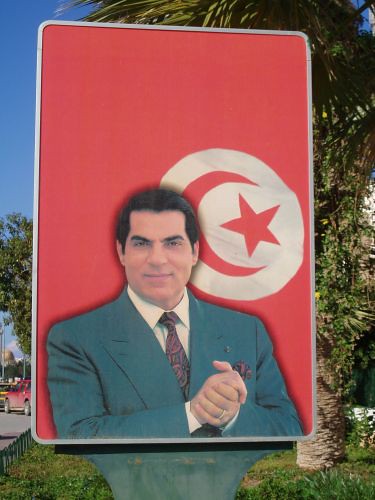
From the 2008 report: "In Zine el-Abidine Ben Ali’s Tunisia, Muammar Gaddafi’s Libya, [and] Bashar el-Assad’s Syria, the leader’s ubiquitous portrait on the streets and front pages of the newspapers is enough to dispel any doubt about the lack of press freedom. Other dictatorships do without a personality cult but are just as suffocating. Nothing is possible [for the press] in... Saudi Arabia if it does not accord with government policy."

146. Egypt
Egypt languished in 146th place as the report made special note of that country's crackdown on bloggers, including Kareem Amer, who was imprisoned for blogging negatively about Egyptian president Hosni Mubarak. Egyptian bloggers are an important part of the newsgathering in that country, while even high-profile editors are not immune from government crackdown.

153. Somalia
Unprecedented access to Somalia's pirate community probably contributed to this country's 6-point gain in the index.


158. Iraq
Iraq actually outranks a number of seemingly better-off countries. Though climbing to 158th place on the list, Iraq is singled out for the fact that over 200 journalists have been killed since the U.S.-led war and occupation began in 2003.

163. Palestine
About Palestine, last year's WPF index report had this to say: "The battle raging between Hamas and Fatah is the main cause of the large number of serious press freedom violations in the Palestinian Territories. Hostage-taking, arrests, physical attacks and ransacking of news organisations - the Palestinian media and the few visiting journalist are threatened from all sides." This year, with Hamas fully in control of Gaza, Palestine dropped another 5 spots, as journalists are harassed and accused of taking political sides or of being spies.

So that makes Palestine, which of course is not a country, the most unfree Arab country for the press. But we're still missing someone in the general area...

166. Iran
First off, the countries whose press is more unfree than Iran: China, Vietnam, Cuba, Burma, Turkmenistan, North Korea and Eritrea. Secondly, one must wonder why the Ahmedinejad government spends so much time harassing bloggers when Iran's own clerics are bloggers. Thirdly, you have to reserve some respect for the achievement of a government so cunning that it has succeeded in convincing much of its public to be wary of its own media.

Finally, shouldn't any country that bans The DaVinci Code get an automatic ten-point bump in the index?

Ladies and gentlemen, your 2008 Middle East and North Africa press!

See you in 2009.

Monday, December 8, 2008

King Abdullah II to smash You Tube record

Jordan's King Abdullah II is trying to break Paris Hilton's record for most individual frames of footage on YouTube. Here are some samples:

This video to the song al-urdan awalan ("Jordan First"), a popular nationalistic ditty, is mostly footage of Jordanian military exercises and sweeping views of Amman, but spliced with 57 different shots of King Abdullah II (kissing babies, slapping hands with the crowds, etc), but regrettably only 1 shot of Queen Rania (which is the same number of times we get to see Sultan Qaboos).


But wait, here's a photo montage featuring Jordan's national anthem and 73 different shots of the king.


But this one tops it all. In this video King Abdullah II is in every shot, continuously, and doesn't say a word.


Because Stephen Harper won't shut up!

Wednesday, November 26, 2008

Great moments in the History of Flags: the 1958 Jordan-Iraq Federation

2008 marks the 50th anniversary of the short-lived Jordanian-Iraqi union, known as the Arab Federation. On February 14, 1958 the kingdoms of Jordan and Iraq, whose kings were first cousins, merged to become a single country.

That's the flag of the Arab Federation above. It was flown alongside each country's individual flags for the 5 months that the Federation lasted. An identical design was previously the flag of Iraq from 1920-1924.

So many questions? Why did Jordan and Iraq merge? Why did the Federation last only 5 months? Why that flag? Doesn't that flag look like the nearly identical twin of the modern Palestinian flag? And wasn't the new federated country, as short as it lasted, the most bizarrely shaped entity on the world map?

Two weeks before the monarchies of Iraq and Jordan agreed to merge into a federated state, the Arab Republics of Egypt and Syria also merged into a single state, the United Arab Republic. The UAR's flag (left) was created based on Egyptian colours, with 2 stars representing the 2 republics. After the breakup of the union, Egypt returned to its older flag, while Syria kept this one. (More on UAR flags here.)

The UAR was envisioned to be the first step on a path to a single, united, pan-Arab (presumably headquartered in Cairo) country stretching from the Atlantic Ocean (Morocco) to the Arabian Gulf (Oman). But the idea - the brainchild of Egyptian President Gamal 'abd al-Nasser - never took root. Yemen also nominally joined the UAR, but that was it.

It only took 2 weeks, back in 1958, for Egypt's main rival at the time, Iraq, to create a bipolar pan-Arab world by hooking up with Syria's main rival, Jordan, to form the AF.

The Federation came to an abrupt end when King Faisal II of Iraq was deposed in a bloody nationalist coup on July 14, 1958. The UAR merger managed to last until 1961, until a coup in Syria ended the formal union with Egypt.

Interestingly, the leader of the Iraqi coup, Abdel Karim Qassim, later wished to join the UAR in 1961 (before the coup in Syria), and what became the new flag of Iraq (left) was the UAR flag, but with 3 stars (representing Iraq with Syria and Egypt). In 1991, in the wake of the Gulf War when most of the Arab World allied against Iraq, Saddam Hussein changed the Iraqi flag, adding in between the 3 stars the Arabic - الله اكبر - allahu akbar, or "God is great."

This flag, with the 3 stars deleted, was adopted earlier this year as the new flag of Iraq.

The AF's flag, meanwhile, was based on the Jordanian flag (left), simply with the seven-pointed star removed from the triangular red field. What had been the Iraqi flag until the merger was a similar design, with 2 stars instead of one.

The seven-pointed star, which was removed from Jordan's flag to create the Arab Federation's flag, is said to represent the first surah of the Qur'an, which has seven verses. The star found its way on to the new flag of the Hashemite Kingdom of Jordan in 1917 and later the Hashemite Kingdom of Iraq around 1924, so it is often thought to be the symbol of the Hashemite clan (the kings of Jordan and Iraq at the time were brothers). But in fact, the red triangle itself is the representative symbol of the Hashemites, and has a much older history in the Arab world.

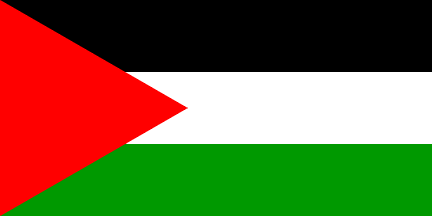
Which brings us to the Palestinian flag (left), which resembles the flag of the Arab Federation, excepting the different proportions of the triangle. To make a long story short, the Palestinian flag is, like many of these flags, based on the flag of the Arab Revolt against the Ottoman Turks during WWI. The revolt's leader was Sharif Hussein of the al-Hashemi (Hashemite) family of Mecca (hence the red triangle).

As for the black, white and green bars, which have been repeated throughout many of the flags in this article, they are the symbol of modern Arab unity. These "pan-Arab" colours, envisioned during the nascent era of pan-Arab nationalism just prior to the First World War, represent the 3 eras of medieval Arab caliphates: the Umayyads (660-750 C.E., based in Damascus) carried a white standard; the Abbasids (750-1258 C.E. based in Baghdad) had a black flag; and the Fatimids of Egypt (909-1171 C.E.) preferred green. In addition to being the colour of the Hashemites, red was the colour of the Arab rulers in Andalucia from the 8th-14th centuries C.E., and also of the Khawarji, who led a rebellion against the Abbasids in North Africa.

The Palestinan flag was formally adopted after 1948, based on the Jordanian flag (Jordan controlled the West Bank and the Old City of Jerusalem at the time), minus the star, and with a right triangle instead of an isosceles triangle. Why the triangle change? I don't know. If someone out there knows, please tell me.

Finally, we turn to the geography of the Arab Federation on the map. Jordan already looks funky, with its eastward-jutting panhandle the result of creative British cartography which wanted, after World War I, to connect the British mandates of Transjordan and Iraq and disallow French-controlled Syria from bordering Arabia. Back in the 1950s, Jordan also had a westward pimple on its map, what we now know as the West Bank.

The formal federation of Jordan and Iraq created this geographical ink blot (above), which resembles a coffee pot (Jordan) with a handle (West Bank); the coffee pot is emitting some sort of sprayed cloud (Iraq) towards Iran. If you imagine Israel holding the handle, we have perhaps a prescient metaphor for today's Middle East conflict.

Or, if you rotate the map 90 degrees clockwise, you get what appears to be a giraffe lunging its neck upwards above a low tree top.

A curious giraffe: the legacy of the Arab Federation.

(If you read Arabic, here's a whole lot more reading you could do on the evolution of Arab flags.)

Monday, November 24, 2008

"Historic" Egypt appoints first woman mayor

With that most overused and underwhelming of clichés, al-Arabiya reported that Eva Habil Kerolos has "made history" by becoming the first woman mayor in Egypt.

Ms. Kerolos, a Coptic Christian, was appointed mayor of the village of Kambuha, located along the Nile in central Egypt near the city of Asyut. Her father was once mayor, too - for 40 years.

A member of Egypt's ruling al-Watani party and long an advocate of women's issues, especially literacy, she has pledged to improve her village's infrastructure and the environment of the countryside.

It's a historic moment for Egypt, but Ms. Kerolos is not the first female executive in the modern Arab Middle East. Palestine has two. Fathiya Barghouti Rheime was the first woman mayor of a Palestinian municipality, chosen mayor of the village of Beit Rima in January 2005. Her win helped pave the way for Janet Mikhail, elected mayor of Ramallah later that same year. Ms. Mikhail is the first woman mayor of a major city in the Middle East. Lebanon has three woman mayors, and Jordan one.

Sunday, September 28, 2008

Israel Lobby to Harper: Do you still love us?

Prime Minister Stephen Harper had to engage in a bit of damage control when he scheduled our snap election on the major Jewish holiday of Sukkot.

Of course, not all Orthodox and proud, observant Jews are pro-Israel, and certainly not all in the pro-Israel camp are Jews (or even, um, pro-Semitic). But those who claim to speak for Israel's interests in Canada demanded clarification from the Prime Minister.

Luckily for Mr. Harper, his crush on Israel has a firm record.

Harper infamously called Israel's bombing of Lebanese civilians "measured."

Harper has enjoyed a "Toried Love" affair with the Asper family, the CanWest media moguls and staunch Israel supporters.

Harper has played Diaspora politics to appeal to Canada's pro-Israel electorate.

Harper has wooed Christian Zionists.

Harper accused his opponents of waving Hezbollah flags.

Harper was the first leader to denounce Palestinian democracy, and referred to Hamas as genocidal.

Harper agreed with the WMD threat from Iraq and supported America's war.

Harper doesn't like Ahmadinejad.

To be fair, Harper's Middle East policy is diverse. He did send his personal chef to Egypt in a "recipe sharing" exercise. And the man in the photograph shaking hands with Mr. Harper is King Abdullah II of Jordan (that's an Arab country).