tuque /tūk/ n Canadian English, var. toque [19th c. Canadian French, from the French toque, from the Basque tauka] 1 A close-fitting knitted cap, often with a long tapering end or tassel or pompom. 2 fig Something quintessentially Canadian.
souq /sūk/ n from the Arabic سوق var. souk 1 An open-air marketplace. 2 fig A central meeting place for the circulation of news and ideas.
Showing posts with label sudan. Show all posts

Saturday, June 20, 2009

Kafka and/or Kafkaesqueness help save Canadian in Sudan

Hear, hear!

The Globe and Mail was all up in the face of the Harper government yesterday after a federal court judge ordered that Abousfian Abdelrazik--the Canadian citizen imprisoned, tortured, and stranded in Sudan for the past 6 years--be returned home to Canada posthaste.

Kudos to Globe journalist Paul Koring for following the case so meticulously and outing the injustice at every turn. Cheers to Gerald Caplan for penning a scathing op-ed without referencing Kafka (everyone else did, including the judge, who likened Abdelrazik to the protagonist in The Trial). Grudging thumbs-up to cherry-picking human-rights guru and Liberal MP Irwin Cotler and celebrated Israeli writer David Grossman for their rebuke of Harper and CSIS.

Excerpts from the Globe's friday blitz of the Abdelrazik story:

"To the very end, the Harper government maintained a consistent attitude toward Abousfian Abdelrazik: mean-spirited, callous, destructive. Instead of announcing that they were willing at long last to allow this innocent Canadian citizen to return home from Sudan, instead of a hint of remorse for his ordeal, instead of explaining how our government intends to help him restore the life they stole from him six years ago, all he and we got was a begrudging eight words from the Minister of Justice."
--Gerald Caplan

"[Maher] Arar got an apology from Prime Minister Stephen Harper and $10-million in compensation for Canada's role in getting him shipped to Syria where he was tortured. In Mr. Abdelrazik's case, the involvement of Canadian governments lasted far longer and was more direct..."
--Paul Koring

"After such a judgment, our government has little moral choice. This case is no longer about legal arguments, if it ever was. It is about a Canadian citizen stranded in Sudan and a government that has shown wrongful resolve in keeping him there."
--Irwin Cotler and David Grossman

"The document, marked 'secret,' shows that the Bush administration knew Sudan was about to release Mr. Abdelrazik from prison in the summer of 2006, and wanted help from Canadian police and anti-terrorism agents to try to charge him."
--Paul Koring

"As well as the Conservative government, a previous Liberal government was involved in denying Mr. Abdelrazik the right to come home. But since the Liberals were in power, two major inquiries, including one into Canada's role in the Maher Arar affair, have criticized Canada for how it deals with torture states. The Conservative government had an obligation to learn something from all that."
--Globe editorial

Here, too, is the Globe's timeline of events in the Abdelrazik affair. Notable is what Conservative Foreign Minister Lawrence Cannon did personally to deny Abdelrazik his rights.

Related Tuque Souq post: Canadian in Khartoum celebrates year of squatting in embassy

Monday, April 20, 2009

Canadian in Khartoum celebrates year of squatting in embassy

It's been almost a year now since Abousfian Abdelrazik moved into the Canadian embassy in Khartoum. It wasn't because he missed his scrambled eggs with ketchup and peameal bacon. It's because George W. Bush once called him a "turrrist."

On April 28, 2008, Mr. Abdelrazik--a Canadian citizen born in Sudan--took refuge in the embassy because he could not secure a flight home to Canada, and because he was a wee bit tired of the Sudanese security services abusing him. Days before, he'd been given permission to fly only to have that promise broken last-minute by Canada. So he had no other choice but to move in with the ambassador.

Briefly, Mr. Abdelrazik flew from Montreal to Khartoum in August 2003 to visit his ailing mother. Sudanese authorities arrested him on American and Canadian suspicion that he had ties to al-Qaeda because of his prior association with Ahmed Ressam, the so-called Millenium Bomber.

While spending the better part of 3 years imprisoned, interrogated and tortured under the auspices of the FBI, Mr. Abdelrazik's Canadian passport expired (that's his passport photo). He can't get home, although he's been cleared of all accusations (and was never charged in the first place).

He's on the U.S. No-Fly list, so he can't get on a commerical airline that ever operates in the U.S. He found one airline willing to take him, but because he's still on a U.N. al-Qaeda list, Canada won't issue him travel documents, even though he's been cleared by CSIS and the RCMP of any ties to international terrorism.

Ottawa said last month it would push to get him home if Mr. Abdelrazik got himself a ticket, the fare for which (from Khartoum to Montreal) is over $1000. Mr. Abdelrazik is short of cash owing to his insurmountable legal expenses, so a bunch of supporters got together and paid the airfare.

Ottawa balked, invoking a U.N. rule that suggests that in order to fly a named No-Flier through the skies the airplane must receive authorization from every single country whose airspace it occupies along the way. However, Ottawa could apply to the U.N. for an exemption; Britain did it successfully just the other day. But no.

So life goes on at the embassy in Khartoum, where Mr. Abdelrazik gets $100 per month to live in the lobby. (Um, let's see: $100 per month times 12 months = 1 plane ticket home + peameal-bacon breakfasts for everyone in Prime Minister Harper's cabinet. I don't see how anyone loses in this situation.)

Alas, Mr. Abdelrazik remains stranded, sort of like Tom Hanks in that film I never saw because the premise looked entirely preposterous. I guess there's yoke on my face.

Wednesday, March 4, 2009

Omar al-Bashir to ICC: "Eat it!"

The hordes of judges, lawyers and bureaucrats of the International Criminal Court sat down at their breakfast tables this morning and discovered via the local news a helpful message from indicted Sudanese President Omar al-Bashir: "Eat it!"*

"I think he meant the Eggs Benedict," said one lawyer, "which I was thinking of ordering anyway."

"I wasn't even hungry yet," said another ICC official, "but Mr. al-Bashir is right: a healthy breakfast is the most important part of a good day."

And what a day it is, as the ICC will formally issue an arrest warrant for the Sudanese president on charges of war crimes for the ongoing Darfur thingy. A defiant Omar al-Bashir is preparing to dodge the summons, readying the Sudanese military to act against any domestic support for the ICC ruling.

For example, Sudanese officials told Doctors Without Borders operating in Sudan to find a border quickly and cross it.

Refugees and aid groups in Darfur fear a surge in attacks if the ruling is handed down against al-Bashir today. Will the ICC eat its words?

*What al-Bashir really said was "immerse it [the arrest warrant] in water and drink it," which is a common Arabic derision; whereas "eat it" is obviously an idiomatic translation for the benefit of those Westerners who, unlike the Sudanese, are accustomed to having plenty to eat.

[Update: The arrest warrant has just been formally announced.]

Monday, March 2, 2009

George Clooney saves Darfur, might run for President of Sudan

George Clooney, quite dashing
The dramatic, psycho-thriller rivalry between actor George Clooney and Sudanese President Omar al-Bashir took a Soderberghian twist recently as the International Criminal Court issued an arrest warrant for al-Bashir--the alleged mastermind of the 6-year-long genocide in Darfur--after Clooney met U.S. President Barack Obama at the White House to discuss the ongoing conflict.

Coincidence? We think not. To wit:

TIMELINE OF RELEVANT EVENTS IN THE DARFUR GENOCIDE

June 2003 - Government of Sudan begins arming and deploying Janjaweed militias against rebel factions in the Darfur region.

June 2003-February 2009 - Janjaweed and other government-backed militias attack and destroy hundreds of villages, displacing as many as 2.5 million people. At least 300,000 civilians (and some say the number might be over 1 million) in Darfur are killed either by the militias directly or from starvation due to displacement and famine. Meanwhile, the international community is powerless to stop the massacre and ease the suffering of millions of lives.

Omar Bashir,  quite confused
February 2009 - Actor George Clooney returns from Darfur and meets with U.S. President Barack Obama to discuss the situation in Sudan, urging immediate action to stop the genocide.

March 2009 - International Criminal Court issues controversial indictment and arrest warrant for Sudanese President Omar al-Bashir on allegations of committing war crimes and genocide.

See? Actors do matter.

(The actual news: After formalizing the indictment last week, the ICC is expected to officially issue the arrest warrant for al-Bashir this Wednesday: a historic moment as no sitting head of government has ever been summoned for arrest by the ICC.)

Friday, February 20, 2009

Tayeb Saleh passes away at 80

"Everyone starts at the beginning of the road, and the world is in an endless state of childhood."
--Tayeb Saleh, Season of Migration to the North

Critically acclaimed Sudanese writer, journalist and novelist Tayeb Saleh passed away this week at the age of 80.

Famous for illuminating the intersections between cultures and modernity, Saleh is especially acclaimed (or sometimes disliked) in the Arab world for depicting the contradictions inherent in cultural struggles on both sides of the modern East/West divide, which is a major theme of his work.

Obits & bios on Tayeb Saleh:
Tayeb Saleh's masterpiece was a short novel called Season of Migration to the North (Arabic موسم الهجرة إلى الشمال) published in 1966, an all-time favourite of mine. It is sometimes referred to as an Arabian Nights in reverse, and has been called the best Arabic-language novel of all time.

In 2001, the Arab Literary Academy named Season of Migration to the North the most important Arabic-language novel of the 20th century, and a year later an international literary panel included this novel on a list of the 100 best works of all time.

[Season of Migration to the North on Google Books.]

Monday, December 22, 2008

The Tuque Souq Year in Review


Reporters sans frontières (RSF) recently released its sixth annual World Press Freedom Index for 2008.

The World Press Freedom Index measures press freedom in countries around the world by assessing such factors as censorship, self-censorship, harassment of journalists (or worse), intervention by governmental or extra-governmental parties, and the legal infrastructure for protecting the freedom of the press.

And for the sixth year in a row, Iceland has the world's freest press. (Can ya spot him?) Canada rose to the 13th spot this year (not that we deserve it), highest among G8 countries, but aside from us and New Zealand, the top 20 spots are occupied by European nations, mostly of the Nordic and Baltic variety.

As for the Middle East, well, you won't find these countries hobnobbing with the likes of Jamaica (#21), Ghana (#31), or Cape Verde (#36). So as a way of wrapping up the year with a glimpse at all the countries in the region, the Tuque Souq presents:

THE MIDDLE EAST AND NORTH AFRICA PRESS UNFREEDOM INDEX
(listed in order from least unfree to most unfree)
(warning: may contain self-referencing links)

46. Israel (regular Israel*)
So, Israeli press that is reporting in Israel (not the Palestinian territories) is the freest press in the region. Not bad, but that's a pretty glaring asterisk, considering that "the territories" is what most of the news is generally concerned with.


61. Kuwait
69. United Arab Emirates

After remaining unchanged in the rankings for a couple of years, these 2 Gulf countries of similar size and demography have started to separate, with Kuwait rising 2 spots and U.A.E. falling 4 spots. This is probably because the Emirates suffer from what pressreference.com calls the "practice of self-censorship" by the media, whereby journalists willingly print just the happy news. Kuwaiti journalists, while apparently freer than Emiratis, are still not as free as us to poke fun at these pointy things.

66. Lebanon
Up an impressive 30 spots in the rankings after 2008 saw a huge drop in the number of high-profile killings of journalists and activists in Lebanon. Starting a food fight with Israel was also a step in the right direction.


74. Qatar
Home to gajillion-dollar media empire al-Jazeera, Qatar still ranks below Haiti and Burkina Faso in press freedom.

89. Comoros
Tiny archipelago nation with an Arab government nabs nondescript 89th place in the rankings, and this hereby fulfills the Tuque Souq's pledge to write something about Comoros before the year is up. Actually, according to the democracy watchgroup Freedom House, Comoros is the only real "electoral democracy" in the Arab world, although one of its islands, Anjouan, questionably re-elected its president recently.

96. Bahrain
Little island with big football dreams is up 22 spots this year
.

105. Mauritania
Having risen an impressive 88 spots between 2004-2007 to a high of #50 last year (which was highest among all Arab states), Mauritania plummeted 55 spots this year after a nasty coup put a plug in democratization in this Saharan nation.


121. Algeria
122. Morocco

123. Oman
Arch press-unfreedom rivals Algeria and Morocco battled to a near draw, with Algeria edging out its neighbour at the tape. The on-again, off-again Algerian civil war remains one of the deadliest for journalists in history. Monarchical Morocco doesn't always approve of journalists criticising the king. Meanwhile, Oman is debuting on the index this year, which can only mean that Omanis just got press this year.

128. Jordan
King Abdullah II of Jordan, fresh off his YouTube campaign, recently met with Jordan's media community to promise more reform and more freedom. We have to applaud His Excellency for once again circumventing the bureaucracy of democracy and simply decreeing more freedom.

134. Djibouti
The country whose appellation makes it an easy target for unquestionably urbane puns, Djibouti is always a tough call for World Press Index gamblers. From a high of 96 in 2002 to a low of 145 three years ago, there seems to be an awful lot of scrutiny for a country whose president likes to be referred to only by his initials.

135. Sudan
Sudan, a country with a north vs. south civil war and and east vs. west civil war (that one's more of a genocide), and a country consistently rated as having one of the world's most corrupt governments, is actually rising in the rankings. Sudan now ranks better than Mexico (#140).

149. Israel (extra-territorial)
Referring to Israeli press freedom in the Occupied Palestinian Territories, this 'second Israel' fell 46 spots from last year thanks to increased Israeli military harassment of journalists. Hmm, if only there were strings attached.


155. Yemen
Sure, having near-total state control over the media might seem blasé to some autocracies, but Yemen is known for being a bit retro.

143. Tunisia
159. Syria
160. Libya

161. Saudi Arabia

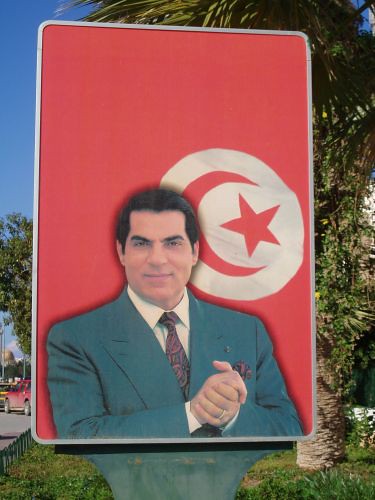
From the 2008 report: "In Zine el-Abidine Ben Ali’s Tunisia, Muammar Gaddafi’s Libya, [and] Bashar el-Assad’s Syria, the leader’s ubiquitous portrait on the streets and front pages of the newspapers is enough to dispel any doubt about the lack of press freedom. Other dictatorships do without a personality cult but are just as suffocating. Nothing is possible [for the press] in... Saudi Arabia if it does not accord with government policy."

146. Egypt
Egypt languished in 146th place as the report made special note of that country's crackdown on bloggers, including Kareem Amer, who was imprisoned for blogging negatively about Egyptian president Hosni Mubarak. Egyptian bloggers are an important part of the newsgathering in that country, while even high-profile editors are not immune from government crackdown.

153. Somalia
Unprecedented access to Somalia's pirate community probably contributed to this country's 6-point gain in the index.


158. Iraq
Iraq actually outranks a number of seemingly better-off countries. Though climbing to 158th place on the list, Iraq is singled out for the fact that over 200 journalists have been killed since the U.S.-led war and occupation began in 2003.

163. Palestine
About Palestine, last year's WPF index report had this to say: "The battle raging between Hamas and Fatah is the main cause of the large number of serious press freedom violations in the Palestinian Territories. Hostage-taking, arrests, physical attacks and ransacking of news organisations - the Palestinian media and the few visiting journalist are threatened from all sides." This year, with Hamas fully in control of Gaza, Palestine dropped another 5 spots, as journalists are harassed and accused of taking political sides or of being spies.

So that makes Palestine, which of course is not a country, the most unfree Arab country for the press. But we're still missing someone in the general area...

166. Iran
First off, the countries whose press is more unfree than Iran: China, Vietnam, Cuba, Burma, Turkmenistan, North Korea and Eritrea. Secondly, one must wonder why the Ahmedinejad government spends so much time harassing bloggers when Iran's own clerics are bloggers. Thirdly, you have to reserve some respect for the achievement of a government so cunning that it has succeeded in convincing much of its public to be wary of its own media.

Finally, shouldn't any country that bans The DaVinci Code get an automatic ten-point bump in the index?

Ladies and gentlemen, your 2008 Middle East and North Africa press!

See you in 2009.

Tuesday, January 22, 2008

Canada mum on Darfur militant in Sudanese government

There’s been no official word yet from the Government of Canada in response to the Sudanese Arab government naming Musa Hilal – a janjaweed militia leader with known ties to the atrocities in Darfur – as a special advisor to the government in the Ministry of Federal (i.e. internal) Affairs.

First reported by the London-based Arabic daily asharq alawsat January 19, Musa Hilal’s official position in the government remains ambiguous, but his very presence underscores the level of commitment (or lack thereof) that Sudanese President Omar al-Bashir has toward resolving a conflict that has left more than 200,000 people dead in an ethnic cleansing in Darfur since 2003.

Human Rights Watch and international observers in Darfur accuse Musa Hilal of organizing raids on civilians and refugees in Darfur, and there is proof from eyewitness accounts that Hilal has been present at the scene of Darfur atrocities, as reported in the New York Times.

Hilal has also been implicated by the International Criminal Court (ICC) in the atrocities in Darfur, though not formally charged with war crimes.

According to the online edition of the English Sudan Tribune, Musa Hilal is a convicted felon (armed robbery, 1998) who was released from prison in 2003 by top Sudanese government officials, apparently (one may only infer) to provide his services to the government in suppressing the uprising by the Sudanese Liberation Movement and the Justice and Equality Movement, both non-Arab parties from the Darfur region struggling for more autonomy in western Sudan.

The last official word from Canada about Sudan came only two weeks ago, when Foreign Minister Maxime Bernier commented (“Canada urges all parties to negotiate in a spirit of compromise conducive to ongoing dialogue and reconciliation…”) on the third anniversary of the Naivasha Agreement, which ended the 20-year Second Civil War between Sudan’s Arab government and the black-African (ethnic Dinkas and others) Sudan People's Liberation Movement in the south of the country.

The anniversary, January 9, came a day after suspected janjaweed units attacked a UN supply convoy in western Darfur.

Should someone with Darfur’s blood on his hands be advising the Sudanese government about its policy toward, er, Darfur?