tuque /tūk/ n Canadian English, var. toque [19th c. Canadian French, from the French toque, from the Basque tauka] 1 A close-fitting knitted cap, often with a long tapering end or tassel or pompom. 2 fig Something quintessentially Canadian.
souq /sūk/ n from the Arabic سوق var. souk 1 An open-air marketplace. 2 fig A central meeting place for the circulation of news and ideas.
Showing posts with label UAE. Show all posts

Monday, November 23, 2009

Dubai scion gets degree in dadology

Sheikh Majed bin Mohammed bin Rashid al Maktoum is the heir to the throne of Dubai. His father, the emir of the city-state and the prime minister (a campy term) of the United Arab Emirates, is the famous Sheikh Mo of Dubai lore, the man who has given us all those fake islands in the shape of a palm tree, the world's first seven-star hotel, and the world's tallest building.

Sheikh Majed, or "Mini-Mo" as he has just been called for the first time, hopes to be just like dad some day. To wit, he engages in a lot of emir-y things:

Here he is opening the 2009 Desalination World Congress; There he is cutting the ribbon on the Dubai Airport Expo; Over there he is inspecting Dubai's newest golf course, the "Earth course" ahead of the Dubai World Championships, which took place this past weekend.

Here is his facebook page. (You'll notice he has only about 100,000 fewer fans than Queen Rania.)

Here is his official website. (It seems to offer no function whatsoever.)

And here is his new Master's degree.

Sheikh Majed bin Mohammed bin Rashid al Maktoum, scion of Dubai, just received a Master's degree in Police Studies for a thesis* entitled "The Genius of Crisis Management in the Vision of Sheikh Mohammed Bin Rashid al Maktoum" (his daddy).

According to the report [ عربي ], Sheikh Mini-Mo wrote about how Dubai has a long history of crises both internal and external, and only by the grace and wisdom of great leadership has the emirate been able to overcome adversity.

And nobody's got grace and wisdom like Majed's own papa Sheikh Mo, who has (with his $28-billion net worth from the oil wells) lifted Dubai out of perpetual threat by building a gleaming, shimmering, ostentatious police state.

To his credit, Majed also credits his earlier ancestors in the hereditary line of the Dubai emirate, as though to underscore the point that genes play a role in determining greatness, lest we fear for the future when Mini-Mo is ruling Dubai.

* In Arabic: بعبقرية إدارة الأزمات في رؤية الشيخ محمد بن راشد آل مكتوم

Friday, May 29, 2009

Middle East wipes itself off the map

Once upon a time, Iran's president said he wanted to wipe Israel off the map. Last month, British budget airline BMI beat him to it; the low-cost, no-frills airline caused a stir among London-Tel Aviv passengers who noticed that the map in the plane's in-flight brochure had omitted their country of destination. In its place: "Mecca."

Well, Israel is no stranger to massive relaliation: last week the Israeli ministry of tourism launched an advertising campaign in Britain whose accompanying maps do not delineate the occupied Palestinian territories, but rather show a bright yellow Israel from sea to Dead Sea.

Poof! Israel, gone. Palestine, gone.

So with both Israel and Palestine wiped off the map, the political geography of the Middle East is undergoing a transformation not seen since the Sykes-Picot conspiracy drew wide arcing lines all over the sand in 1916.

First, a group of development investors from Dubai swooped in on the now-wiped Holy Land and claimed it; they plan to call it "Dubai West" and fill in the Dead Sea with islands in the shapes of an olive tree and a Magen David.

Iran, vexed at missing the opportunity to wipe Israel off the map itself, had to settle for wiping the Sinai off the map instead. As an upside, this now settles the debate about whether Egypt is African or Asian.

Kuwait settled its old score with Iraq, wiping it off the map and replacing it with the glib "Kuwait II".

The United States, seeing the chaos ensue in its favourite oil garden, quickly moved to annex Saudi Arabia as the 51st state; they had to tweak the name a bit so it sounded more Native American.

Oman sold out to the highest corporate bidder, wiping itself off the map. And Lebanon finally threw in the towel versus its rival Syria; if you can't beat 'em, join 'em.

Ladies and gentlemen, here it is: your new Middle East map.


Unless there's more map-wiping to come.

Monday, December 22, 2008

The Tuque Souq Year in Review


Reporters sans frontières (RSF) recently released its sixth annual World Press Freedom Index for 2008.

The World Press Freedom Index measures press freedom in countries around the world by assessing such factors as censorship, self-censorship, harassment of journalists (or worse), intervention by governmental or extra-governmental parties, and the legal infrastructure for protecting the freedom of the press.

And for the sixth year in a row, Iceland has the world's freest press. (Can ya spot him?) Canada rose to the 13th spot this year (not that we deserve it), highest among G8 countries, but aside from us and New Zealand, the top 20 spots are occupied by European nations, mostly of the Nordic and Baltic variety.

As for the Middle East, well, you won't find these countries hobnobbing with the likes of Jamaica (#21), Ghana (#31), or Cape Verde (#36). So as a way of wrapping up the year with a glimpse at all the countries in the region, the Tuque Souq presents:

THE MIDDLE EAST AND NORTH AFRICA PRESS UNFREEDOM INDEX
(listed in order from least unfree to most unfree)
(warning: may contain self-referencing links)

46. Israel (regular Israel*)
So, Israeli press that is reporting in Israel (not the Palestinian territories) is the freest press in the region. Not bad, but that's a pretty glaring asterisk, considering that "the territories" is what most of the news is generally concerned with.


61. Kuwait
69. United Arab Emirates

After remaining unchanged in the rankings for a couple of years, these 2 Gulf countries of similar size and demography have started to separate, with Kuwait rising 2 spots and U.A.E. falling 4 spots. This is probably because the Emirates suffer from what pressreference.com calls the "practice of self-censorship" by the media, whereby journalists willingly print just the happy news. Kuwaiti journalists, while apparently freer than Emiratis, are still not as free as us to poke fun at these pointy things.

66. Lebanon
Up an impressive 30 spots in the rankings after 2008 saw a huge drop in the number of high-profile killings of journalists and activists in Lebanon. Starting a food fight with Israel was also a step in the right direction.


74. Qatar
Home to gajillion-dollar media empire al-Jazeera, Qatar still ranks below Haiti and Burkina Faso in press freedom.

89. Comoros
Tiny archipelago nation with an Arab government nabs nondescript 89th place in the rankings, and this hereby fulfills the Tuque Souq's pledge to write something about Comoros before the year is up. Actually, according to the democracy watchgroup Freedom House, Comoros is the only real "electoral democracy" in the Arab world, although one of its islands, Anjouan, questionably re-elected its president recently.

96. Bahrain
Little island with big football dreams is up 22 spots this year
.

105. Mauritania
Having risen an impressive 88 spots between 2004-2007 to a high of #50 last year (which was highest among all Arab states), Mauritania plummeted 55 spots this year after a nasty coup put a plug in democratization in this Saharan nation.


121. Algeria
122. Morocco

123. Oman
Arch press-unfreedom rivals Algeria and Morocco battled to a near draw, with Algeria edging out its neighbour at the tape. The on-again, off-again Algerian civil war remains one of the deadliest for journalists in history. Monarchical Morocco doesn't always approve of journalists criticising the king. Meanwhile, Oman is debuting on the index this year, which can only mean that Omanis just got press this year.

128. Jordan
King Abdullah II of Jordan, fresh off his YouTube campaign, recently met with Jordan's media community to promise more reform and more freedom. We have to applaud His Excellency for once again circumventing the bureaucracy of democracy and simply decreeing more freedom.

134. Djibouti
The country whose appellation makes it an easy target for unquestionably urbane puns, Djibouti is always a tough call for World Press Index gamblers. From a high of 96 in 2002 to a low of 145 three years ago, there seems to be an awful lot of scrutiny for a country whose president likes to be referred to only by his initials.

135. Sudan
Sudan, a country with a north vs. south civil war and and east vs. west civil war (that one's more of a genocide), and a country consistently rated as having one of the world's most corrupt governments, is actually rising in the rankings. Sudan now ranks better than Mexico (#140).

149. Israel (extra-territorial)
Referring to Israeli press freedom in the Occupied Palestinian Territories, this 'second Israel' fell 46 spots from last year thanks to increased Israeli military harassment of journalists. Hmm, if only there were strings attached.


155. Yemen
Sure, having near-total state control over the media might seem blasé to some autocracies, but Yemen is known for being a bit retro.

143. Tunisia
159. Syria
160. Libya

161. Saudi Arabia

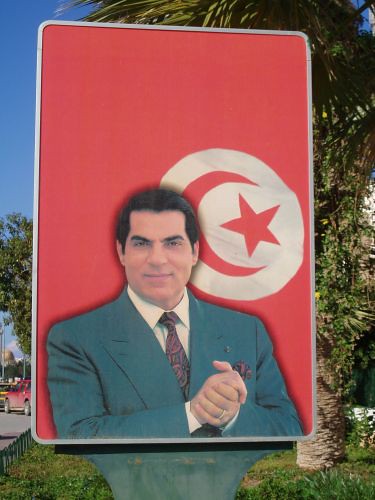
From the 2008 report: "In Zine el-Abidine Ben Ali’s Tunisia, Muammar Gaddafi’s Libya, [and] Bashar el-Assad’s Syria, the leader’s ubiquitous portrait on the streets and front pages of the newspapers is enough to dispel any doubt about the lack of press freedom. Other dictatorships do without a personality cult but are just as suffocating. Nothing is possible [for the press] in... Saudi Arabia if it does not accord with government policy."

146. Egypt
Egypt languished in 146th place as the report made special note of that country's crackdown on bloggers, including Kareem Amer, who was imprisoned for blogging negatively about Egyptian president Hosni Mubarak. Egyptian bloggers are an important part of the newsgathering in that country, while even high-profile editors are not immune from government crackdown.

153. Somalia
Unprecedented access to Somalia's pirate community probably contributed to this country's 6-point gain in the index.


158. Iraq
Iraq actually outranks a number of seemingly better-off countries. Though climbing to 158th place on the list, Iraq is singled out for the fact that over 200 journalists have been killed since the U.S.-led war and occupation began in 2003.

163. Palestine
About Palestine, last year's WPF index report had this to say: "The battle raging between Hamas and Fatah is the main cause of the large number of serious press freedom violations in the Palestinian Territories. Hostage-taking, arrests, physical attacks and ransacking of news organisations - the Palestinian media and the few visiting journalist are threatened from all sides." This year, with Hamas fully in control of Gaza, Palestine dropped another 5 spots, as journalists are harassed and accused of taking political sides or of being spies.

So that makes Palestine, which of course is not a country, the most unfree Arab country for the press. But we're still missing someone in the general area...

166. Iran
First off, the countries whose press is more unfree than Iran: China, Vietnam, Cuba, Burma, Turkmenistan, North Korea and Eritrea. Secondly, one must wonder why the Ahmedinejad government spends so much time harassing bloggers when Iran's own clerics are bloggers. Thirdly, you have to reserve some respect for the achievement of a government so cunning that it has succeeded in convincing much of its public to be wary of its own media.

Finally, shouldn't any country that bans The DaVinci Code get an automatic ten-point bump in the index?

Ladies and gentlemen, your 2008 Middle East and North Africa press!

See you in 2009.

Friday, November 14, 2008

Gulf countries vie for World Cup qualification

The Asia regional World Cup qualifying has entered the final round; 2 groups of 5 teams are competing for 4 automatic berths to South Africa 2010 (the top 2 teams in each group qualify). The 3rd place teams in each group will play a home-and-away playoff to determine the 5th place team overall, and that team will then play a home-and-away playoff against Oceania regional champs New Zealand for an at-large berth to the World Cup.

In Group 1, the Arab reps are Bahrain and Qatar, who are matched up with runaway co-favourites Australia and Japan, as well as minnowy Uzbekistan, in what is sure to be a heated battle for 3rd place.
Qatar and Bahrain are natural rivals, staring at each other from across the narrow Gulf of Bahrain, owners of a testy border/island dispute, trying to mend fences with bridges, and similarly inspired in flag-making.

Both national squads feature foreign-born stars. Qatar are led by Uruguayan-born midfielder Sebastian Quintana, while one of Bahrain's top young players is Nigerian-born Jaycee Okwunwanee.

Fittingly, the 2 teams opened this final group qualifying stage by playing each other to a 1-1 draw in Doha. The return leg won't be until April 1 in Manama, at which time the game will likely determine 3rd place in the standings and a playoff position.

Both squads have tough home matches this week against the Group 1 powerhouses, with Qatar hosting Japan and Bahrain Australia.

Over in Group 2, the battle for automatic qualification figures to be a three-horse race between South Korea, Iran and Saudia Arabia, which currently all sit tied for first after just 2 matches.
The Saudis have made 4 straight World Cups, managing a combined 2-2-9 record (with both of those wins coming during the 1994 World Cup when they reached the quarterfinals). A balanced team known for stingy defence, Saudi Arabia are still climbing back from their all-time worst FIFA ranking of 81, just after their goalless '06 WC. Despite their pedigree, the Saudis are no shoe-ins to make it to South Africa.

The United Arab Emirates, reigning Arabian Gulf Cup champions but considered long shots to qualify, sit fifth in the Group 2 table at 0-0-3 (including a tough loss to Saudi Arabia to open the final round). Wednesday's home clash with Iran is therefore a must-win game. But hope remains, especially with their talisman striker Ismael Matar (check out this sweet goal of his from the AGC tourney) in fine form with 5 goals so far.

The UAE have one World Cup finals on their resume, qualifying for the 1990 Italy WC where they finished 0-0-3.

Other Gulf and Middle Eastern states (not counting North Africa) to qualify for the World Cup in the past: Iraq in 1986 (finished 0-0-3); and Kuwait in 1982 (actually managed a draw against Czechoslovakia).

How did the other Middle Eastern countries - Syria, Jordan, Oman et al - fare in the earlier qualification rounds? Check it out here.

In other Middle East football news, we congratulate Palestine for recently playing its first-ever international soccer game on home soil, drawing 1-1 with Jordan.

The Tuque Souq will keep tabs on the World Cup qualifying in the months ahead, including a preview of the Africa region showdown involving hopefuls Egypt, Tunisia and Morocco. And we'll check in with the European qualifying, where Israel have a favourable group draw that could see them in their first World Cup finals.

Monday, October 6, 2008

Dubai ex-pat Hockey League laces up for new season

The Tuque Souq is primed and ready for another NHL season, and the crisp, cool October air filling the room at night has us dreaming of Luongo's butterfly, Phaneuf's crushing checks, Heatley's wrist shots and Kovalev's antics (yes, and even the Leafs).

The air must be similar over in the United Arab Emirates, because another season of the Dubai Mighty Camels - the common nickname for the UAE Ice Hockey League - is on its way soon.

The defending champs are the ECFT "Canadians" [that's their logo pictured] who took home last year's Dubai Mighty Camel Cup after an 18-5-1 season that saw them score a league-high 157 goals.

(ECFT stands for Emirates CAE Flight Training; CAE stands for Canadian Aviation Electronics, a Montreal company founded in 1947 that provides civilian and military flight training.)

ECFT captain Ron Murphy was surely the season MVP last year, leading all players with 61 goals and 58 assists. [Click here for full standings and stats from last season.]

The 7-"herd" league is made up of mostly Canadian and American ex-pats living in Dubai, which is also home to a recreational hockey club for ex-pats.

The Tuque Souq will keep you posted on the season.