tuque /tūk/ n Canadian English, var. toque [19th c. Canadian French, from the French toque, from the Basque tauka] 1 A close-fitting knitted cap, often with a long tapering end or tassel or pompom. 2 fig Something quintessentially Canadian.
souq /sūk/ n from the Arabic سوق var. souk 1 An open-air marketplace. 2 fig A central meeting place for the circulation of news and ideas.
Showing posts with label Iraq. Show all posts

Thursday, January 21, 2010

Jesus sees you... and now he will blow your head off

The American military, still involved in two land wars in Asia despite credible advice to the contrary, recently upgraded a crucial part of its arsenal with a little help from the man upstairs.

Jesus--that tireless humanitarian still plugging away at his job despite 2000 years of "Dear Jesus, if you get me outta this jam I promise I'll go to church every Sunday"--has been enlisted to help the American military shoot bad guys, most of whom are reportedly Muslim.

The military contractor Trijicon (possibly a front for Dr. Evil) has produced thousands of rifle scopes for the US and allied infantry, scopes etched with what appears to be serial numbers that all end with JN8:12.


Bible thumpers and fans of the film Shawshank Redemption will recognize this nomenclature as John chapter 8 verse 12: "And Jesus said to them, I am the light of the world; he that follows me shall not walk in darkness but have the light of life."

The rationale for baptizing guns in the sweet water of Jesus' creed: The scope is "designed to function in low light or no light conditions... [and] is ideal for combat due to its high degree of discrimination even among moving targets," said a statement by the manufacturer.

In other words, people who shoot other people are often in the dark and therefore could use a bit of light, light only they and not their enemies can see.

Jesus: better than night-vision goggles, and a whole lot cheaper.

So the American military via its orthodox contractor is hoping to embolden its infantrymen mired in unending, unwinnable wars in Muslim countries by arming them with guns blessed by a deity whose singular message was Love.

Reached for comment, a Pentagon spokesperson was reportedly "disturbed."

Reached for further comment, a Jesus spokesperson was reportedly "not f*cking surprised."

Monday, December 7, 2009

Shoeless shoe thrower throws shoe at ex-shoe thrower

Oh irony, you backstabbing rapscallion,
You devilish hairpin turn,
You are the shoe on the other foot,
You are the eternal guarantor of chaos.

Tuque Souq hero and Iraqi journalist Muntazer al-Zaidi, the man who launched a global movement when he launched his shoe at distantly remembered former US president George W. Bush one year ago, has been hit with a shoe.

What went around has, er, come around.

Mr. al-Zaidi was speaking at a conference in Paris when another Iraqi journalist, identified only as Khayat, threw a shoe at him, apparently in protest of Mr. al-Zaidi's anti-US presentation. The mysterious Mr. Khayat had spoken earlier in support of the US-led occupation of Iraq and accused al-Zaidi of advocating dictatorship.

The assailant was slapped and tackled after his shoe barely missed the head of its target. Then, as he was being escorted out of the room, another person--possibly al-Zaidi's brother--threw a shoe at him.


It is not known what will become of Khayat. After his attack last year, Mr. al-Zaidi spent nine months in prison for assault. After being attacked last year, Mr. Bush fled to Afghanistan. Whatever happens, you can be sure the press will tell us. The Tuque Souq tried to reach Mr. Bush for comment, but the former president is not aware of irony.

Thursday, November 12, 2009

Brangelina aid Iraqi refugees by adopting a Syrian

Breaking news reports out of Syria indicate that the movie-star child-addict duo Angeline Jolie and Brad Pitt are planning to adopt an Arab child into their brood, which would bring to a baker's half dozen the number of rugrats in the family.

The megastars were recently spotted in Syria visiting Iraqi refugees on what was deemed a humanitarian mission, in that Ms Jolie and Mr Pitt bear some resemblance to actual humans.

There are estimated to be over a million Iraqi refugees in Syria, most of whom made a dangerous journey across desert and mountain to flee violence in their home country. (Brangelina also made a harrowing journey, forced to ride business class on Royal Jordanian rather than fly in their own private jet.)

Humanitarian relief efforts for refugees in Syria have fallen way short of adequate, says an Amnesty International report, and the government of Syria is encouraging refugees to accept relocation programs to ease the burden on the country.

But Brangelina are taking relief work to the next level: by relieving Syria of a Syrian, there will be room for one more Iraqi. "Every little bit helps," said Ms Jolie, after attending a state dinner with Syrian president Bashar al-Assad, who according to rumours told the actress that she could have the "pick of the litter," so long as "Brad films his next movie here."

While Ms Jolie is reportedly thrilled to add another photoshopable face to her multi-million-dollar family album, Mr Pitt is believed to have reservations about adding another mouth to understand. According to a thoroughly fact-checked story in Britain's OK! magazine, Mr Pitt is preparing for a showdown with his oft-estranged wife over further additions to their "rainbow family."

Therefore, that lucky Syrian boy or girl, whoever it is, may not be packing for a life of excess, neglect, top-of-the-line psychoanalysis, Reality-TV hosting and tell-all-book writing just yet.

Tuesday, September 22, 2009

Rise in Iraqi art theft sees Picasso drafted into War on Terror

Iraqi security forces have thwarted what they believe to be an attempt by dissidents to finance a new rebellion by stealing ancient treasures and speculating in the global art market.

After Iraqi police recovered three stolen, ancient Sumerian artifacts* valued at several hundred thousand dollars, high-ranking Iraqi security officials concluded that the conspiracy underlying the wave of art and artifact theft in Iraq is a clandestine cartel of terrorists who are planning to open their own art museum whose exorbitant entry fees will finance terrorist projects in perpetuity.

It's a sign of the times that freedom fighters and guerrilla groups aren't confining their fundraising endeavors to smuggling drugs, hijacking boats off the coast of Somalia, and sucking up to Osama. These days, say Iraqi authorities and their American overlords, you are as likely to find a terrorist at Sotheby's as you are a tuxedo-clad, Oxford-educated art thief at Sotheby's.

The recovery of 3 of Iraq's ancient treasures comes on the heels of the reclamation of a Picasso painting, valued at a slight $10-million, believed to have been stolen by Saddam Hussein during his 1990 invasion of Kuwait. (The stamp "Property of Kuwait" next to Picasso's signature was the give-away.) A suspected terrorist was trying to off-load it for a bargain $450,000.

Iraqi archaeologists and antiquities experts face an uphill battle to recover the many thousands of historical artifacts looted since the beginning of the American occupation, as well as to preserve and defend the hundreds of archaeological sites in Iraq from future looters. The dusty earth of the "Cradle of Civilization" has yielded priceless treasures from the ancient worlds of Sumerians, Babylonians, Assyrians and Persians, including the world's earliest-known woven baskets, writing tablets, and wheels--all things known to be of use to terrorists.

Some experts fear that the terrorists are trying to recover all the seeds from the Hanging Gardens of Babylon--one of the seven wonders of the ancient world--which if rebuilt in the wrong hands could provide millions in tourist revenues for the coffers of evil-doers, which could then lead to terrorists buying up even more Picassos and becoming major players in a new, hyper-inflated global art market.

To be on the safe side of possibly supporting terrorists, American military officials are advising everyone in the world to stop going to museums until terrorism is destroyed completely.

* - The Sumerian statues in the photograph are not among those stolen... yet.

Wednesday, September 16, 2009

Freed Iraqi Shoe-Thrower laments global lag in shoe throwing

The shoe is still on the same foot!

That's what Iraqi journalist Muntazer al-Zaidi--the man who famously threw his shoes at George W. Bush last December--had to say to the world and especially his former captors when he was released from incarceration yesterday.

Mr. al-Zaidi was released after serving nine months of a three-year sentence for assaulting the former U.S. president. He says he was tortured in prison, and not with shoes--a fact which has led Mr. al-Zaidi to wonder, What was it all for?

Indeed, although Mr. al-Zaidi's unique act of defiance against the occupation of his country initially touched off a fledgling worldwide movement of shoe-throwing demonstrations (which the Tuque Souq has punfully chronicled here and here), research shows that this non-violent form of protest still lags behind other methods.

As the above chart clearly indicates, while it's true that shoe-throwing demonstrations have taken on a global character, the anticipated universal adoption of hurling one's shoes as a leading means of protest has failed despite Mr. al-Zaidi's best efforts.

In related news, the United Nations is slated to hold a series of conferences next month on combating piracy. Coffee will be served promptly at 9a.m.

Wednesday, March 11, 2009

Shoe Intifada heads to court

The trial of Muntazer al-Zaidi, the Iraqi journalist who threw his shoes at former U.S. president George W. Bush last December, resumes on Thursday after adjourning last month.

The shoe hurler is charged with assault and could face up to 15 years in prison if convicted. The trial was postponed in February so the panel of three judges could determine if Bush's visit to Iraq was really an official state visit, which could affect the severity of al-Zaidi's punishment.

Mr. al-Zaidi remains unapologetic, which of course maintains his immense popularity, evidenced by the throngs who turn out just to see him go in and out of the courthouse in Baghdad.

[UPDATE MARCH 12: al-Zaidi was sentenced to 3 years in prison]

Meanwhile...

THE SHOE INTIFADA SPREADS AROUND THE WORLD
Hilary Clinton--or at least her mug--got a shoe in the face at a protest in Indonesia, as the new U.S. Secretary of State was making an official visit.

3 protesters tossed shoes at a former Israeli Defense Force (IDF) officer after he gave a lecture at an Amsterdam Hotel. A witness noted that they threw only left shoes (how deliciously appropriate!).

A judge dropped the case against a man who threatened a New York City transit official with a shoe after becoming enraged at a fare hike. [See earlier Tuque Souq post]

Brazil's president joked to reporters that he would not abide any shoe-throwing from the press.

Latvians protested their country's economic crisis by hurling shoes at photos of government officials and parliament.

Taiwanese commemorators of the infamous 228 Massacre planned to throw shoes as part of their memorial service.

The Chicago Tribune advocated the unlacing of shoes to protest the fallen pride of the Illinois state government.

The UK's Secretary for Scotland Jim Murphy faced a shoe-throwing protest from Scottish nationalists.

As always, keep up with all the coverage of the Shoe Intifada right here at the Tuque Souq.

Monday, January 12, 2009

'Shoe Intifada' update: Not just the sole means of protest

Since last month's aerial bombardment of George W. Bush by an Iraqi journalist, both shoe-throwing and shoe-related puns have taken on global proportions not seen since little Nikita Krushchev bared his sole at the United Nations in 1960.

For starters, here are some photos of demonstrators in Montreal throwing shoes at a picture of George W. Bush (and an article about the protest, complete with unavoidable puns).

Protesters threw shoes at the Egyptian embassy in Beirut protesting Egypt's lack of assistance to Palestinians during the Israeli assault of Gaza. Egypt was willing to lend a hand, but apparently not...

A shoe-throwing bonanza was underway in Iran, as demonstrators threw shoes at caricatures of Bush. Was that the sole means of protest?

Shoe-throwing was planned at a peace rally in Johannesburg, South Africa: A crowd was planning to throw shoes at a picture of George W. Bush to celebrate his forthcoming retirement, but then someone burned the picture before the shoe-ing could commence.

A member of the Turkish parliament declared that Israeli PM Ehud Olmert deserved a pair of shoes hurled at his mug after what Israel did to Gaza. Turkish shoes? (Actually, a Turkish company claims it made the shoes that Iraqi journalist Muntazir al-Zaidi threw at Bush).

A man in New York City threatened a city official with a shoe in a protest over the high cost of transit fare. Guess he's tired of hoofing it.

A Seattle blogger is trying to encourage demonstrators to donate their shoes to charity after throwing them; apparently there's a move afoot to throw shoes at the Federal Building on Obama's inauguration day.

In Los Angeles, a celebrity shoe-throwing drive is being organized. Bush has been invited and might participate, but certainly Paris Hilton is a shoe-in.

An op-ed from Africa proposes testing all future world leaders for their shoe-ducking acumen. (Or perhaps sandal-ducking, for this former Senate candidate.)

A retail shoe store in China was giving a discount to customers who could hit an image of Bush with a shoe. Hey, if the shoe fits...

Some of the political cartoons satirizing the event [d'oh, the link is gone] have met with angry letters from pro-Bush readers, such as this guy and this gal. Well, we've all got to follow our own sole.

And finally, the website Sockandawe.com offers you, the blogreader, a chance to throw your own virtual shoe at Bush. More than 78 million have hit him so far.

Monday, December 22, 2008

The Tuque Souq Year in Review


Reporters sans frontières (RSF) recently released its sixth annual World Press Freedom Index for 2008.

The World Press Freedom Index measures press freedom in countries around the world by assessing such factors as censorship, self-censorship, harassment of journalists (or worse), intervention by governmental or extra-governmental parties, and the legal infrastructure for protecting the freedom of the press.

And for the sixth year in a row, Iceland has the world's freest press. (Can ya spot him?) Canada rose to the 13th spot this year (not that we deserve it), highest among G8 countries, but aside from us and New Zealand, the top 20 spots are occupied by European nations, mostly of the Nordic and Baltic variety.

As for the Middle East, well, you won't find these countries hobnobbing with the likes of Jamaica (#21), Ghana (#31), or Cape Verde (#36). So as a way of wrapping up the year with a glimpse at all the countries in the region, the Tuque Souq presents:

THE MIDDLE EAST AND NORTH AFRICA PRESS UNFREEDOM INDEX
(listed in order from least unfree to most unfree)
(warning: may contain self-referencing links)

46. Israel (regular Israel*)
So, Israeli press that is reporting in Israel (not the Palestinian territories) is the freest press in the region. Not bad, but that's a pretty glaring asterisk, considering that "the territories" is what most of the news is generally concerned with.


61. Kuwait
69. United Arab Emirates

After remaining unchanged in the rankings for a couple of years, these 2 Gulf countries of similar size and demography have started to separate, with Kuwait rising 2 spots and U.A.E. falling 4 spots. This is probably because the Emirates suffer from what pressreference.com calls the "practice of self-censorship" by the media, whereby journalists willingly print just the happy news. Kuwaiti journalists, while apparently freer than Emiratis, are still not as free as us to poke fun at these pointy things.

66. Lebanon
Up an impressive 30 spots in the rankings after 2008 saw a huge drop in the number of high-profile killings of journalists and activists in Lebanon. Starting a food fight with Israel was also a step in the right direction.


74. Qatar
Home to gajillion-dollar media empire al-Jazeera, Qatar still ranks below Haiti and Burkina Faso in press freedom.

89. Comoros
Tiny archipelago nation with an Arab government nabs nondescript 89th place in the rankings, and this hereby fulfills the Tuque Souq's pledge to write something about Comoros before the year is up. Actually, according to the democracy watchgroup Freedom House, Comoros is the only real "electoral democracy" in the Arab world, although one of its islands, Anjouan, questionably re-elected its president recently.

96. Bahrain
Little island with big football dreams is up 22 spots this year
.

105. Mauritania
Having risen an impressive 88 spots between 2004-2007 to a high of #50 last year (which was highest among all Arab states), Mauritania plummeted 55 spots this year after a nasty coup put a plug in democratization in this Saharan nation.


121. Algeria
122. Morocco

123. Oman
Arch press-unfreedom rivals Algeria and Morocco battled to a near draw, with Algeria edging out its neighbour at the tape. The on-again, off-again Algerian civil war remains one of the deadliest for journalists in history. Monarchical Morocco doesn't always approve of journalists criticising the king. Meanwhile, Oman is debuting on the index this year, which can only mean that Omanis just got press this year.

128. Jordan
King Abdullah II of Jordan, fresh off his YouTube campaign, recently met with Jordan's media community to promise more reform and more freedom. We have to applaud His Excellency for once again circumventing the bureaucracy of democracy and simply decreeing more freedom.

134. Djibouti
The country whose appellation makes it an easy target for unquestionably urbane puns, Djibouti is always a tough call for World Press Index gamblers. From a high of 96 in 2002 to a low of 145 three years ago, there seems to be an awful lot of scrutiny for a country whose president likes to be referred to only by his initials.

135. Sudan
Sudan, a country with a north vs. south civil war and and east vs. west civil war (that one's more of a genocide), and a country consistently rated as having one of the world's most corrupt governments, is actually rising in the rankings. Sudan now ranks better than Mexico (#140).

149. Israel (extra-territorial)
Referring to Israeli press freedom in the Occupied Palestinian Territories, this 'second Israel' fell 46 spots from last year thanks to increased Israeli military harassment of journalists. Hmm, if only there were strings attached.


155. Yemen
Sure, having near-total state control over the media might seem blasé to some autocracies, but Yemen is known for being a bit retro.

143. Tunisia
159. Syria
160. Libya

161. Saudi Arabia

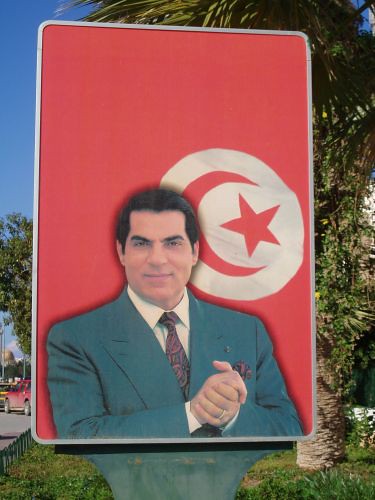
From the 2008 report: "In Zine el-Abidine Ben Ali’s Tunisia, Muammar Gaddafi’s Libya, [and] Bashar el-Assad’s Syria, the leader’s ubiquitous portrait on the streets and front pages of the newspapers is enough to dispel any doubt about the lack of press freedom. Other dictatorships do without a personality cult but are just as suffocating. Nothing is possible [for the press] in... Saudi Arabia if it does not accord with government policy."

146. Egypt
Egypt languished in 146th place as the report made special note of that country's crackdown on bloggers, including Kareem Amer, who was imprisoned for blogging negatively about Egyptian president Hosni Mubarak. Egyptian bloggers are an important part of the newsgathering in that country, while even high-profile editors are not immune from government crackdown.

153. Somalia
Unprecedented access to Somalia's pirate community probably contributed to this country's 6-point gain in the index.


158. Iraq
Iraq actually outranks a number of seemingly better-off countries. Though climbing to 158th place on the list, Iraq is singled out for the fact that over 200 journalists have been killed since the U.S.-led war and occupation began in 2003.

163. Palestine
About Palestine, last year's WPF index report had this to say: "The battle raging between Hamas and Fatah is the main cause of the large number of serious press freedom violations in the Palestinian Territories. Hostage-taking, arrests, physical attacks and ransacking of news organisations - the Palestinian media and the few visiting journalist are threatened from all sides." This year, with Hamas fully in control of Gaza, Palestine dropped another 5 spots, as journalists are harassed and accused of taking political sides or of being spies.

So that makes Palestine, which of course is not a country, the most unfree Arab country for the press. But we're still missing someone in the general area...

166. Iran
First off, the countries whose press is more unfree than Iran: China, Vietnam, Cuba, Burma, Turkmenistan, North Korea and Eritrea. Secondly, one must wonder why the Ahmedinejad government spends so much time harassing bloggers when Iran's own clerics are bloggers. Thirdly, you have to reserve some respect for the achievement of a government so cunning that it has succeeded in convincing much of its public to be wary of its own media.

Finally, shouldn't any country that bans The DaVinci Code get an automatic ten-point bump in the index?

Ladies and gentlemen, your 2008 Middle East and North Africa press!

See you in 2009.

Monday, December 15, 2008

'Shoe Intifada' sweeps Iraq; Bush flees to safety in Afghanistan


A day after receiving the first blow in the Shoe Intifada now sweeping Iraq, U.S. President George W. Bush fled to Afghanistan where he is reportedly safe and taking refuge in the company of that country's one-time hope for a successful president, Hamid Karzai.

Back in Iraq, that country is ablaze in a firestorm of flying shoes, as Iraqis react to Sunday's incident in which Iraqi journalist Muntazer al-Zaidi through his shoes at Dubya while the latter was giving a press conference with Iraqi PM Nouri al-Maliki.

Expressing a version of free speech with a gesture known to be a terrible insult in Islamic culture - being the target of a shoe missile means one is lower than the dirt beneath one's feet - al-Zaidi shouted invective at Bush on behalf of the many thousands of Iraqis killed since the U.S.-led occupation began in 2003. He was quickly wrestled away from the press conference and jailed.

While reaction across Iraq was mixed - some Iraqis felt the incident brought shame on the country by disrespecting a guest, while others called it a modest gesture of frustration directed at the man who plunged Iraq into 5+ years of chaos - the experts felt the attack was prudent.

The AFP caught up with one such expert - a Cairo shoe-shiner named Ahmad Ali - who noted: "As far as I'm concerned, as he long as he hit him using a shoe it's perfect."

Meanwhile, Khalil al-Dulaimi, one of the lawyers who defended Saddam Hussein, has agreed to represent al-Zaidi as defence counsel in what is sure to be nothing more than a farcical Shoe Trial.

Sunday, December 7, 2008

Next stop on the Prorogation Tour '08 - Iraq?

Now that Canada's innovative democracy has found a trump card for a no-confidence motion - Prorogation - there may be a market for its export.

Rumours are swirling that Iraqi Prime Minister Nouri al-Maliki (pictured) may be facing a confidence motion from Parliament soon, as a result of his controversial plan to establish tribal councils which could significantly boost the local power of Shia parties at the expense of Sunnis and Kurds.

(By the way, the Arabic for 'prorogation' is تعطيل (ta'tiil), from the root عـطـل ('atala), meaning 'to be idle or not working' - another strike for the 1500-page al-mawrid al-waseet dictionary!)

As our friend at the Talisman blog explains so well, Kurdish parliamentary support is vital to al-Maliki keeping his ruling Da'wa party (a Shia bloc) in power. But it seems that al-Maliki's brazenness at trying to centralize his party's control over the regions of Iraq through these pro-Da'wa tribal councils is tantamount to Stephen Harper's pulling the plug on public funds for political parties: it's uniting everyone against him.

Even other Shia groups, such as the supporters of Muqtada al-Sadr and blocs in Iraq's mostly Shi'ite south who want to carve more autonomy for their region like the Kurds have up north, may be opposing al-Maliki on this one. The result: there is a move afoot to force out al-Maliki as prime minister and replace him with someone more pliable.

Iraq's president, Jalal Talabani, a Kurd, says al-Maliki has the confidence of Parliament. But the backbenchers are murmuring.

Free xmas list idea for Harper: re-gift prorogation and send c/o Nouri al-Maliki, Government of Occupied Iraq.

Wednesday, November 26, 2008

Great moments in the History of Flags: the 1958 Jordan-Iraq Federation

2008 marks the 50th anniversary of the short-lived Jordanian-Iraqi union, known as the Arab Federation. On February 14, 1958 the kingdoms of Jordan and Iraq, whose kings were first cousins, merged to become a single country.

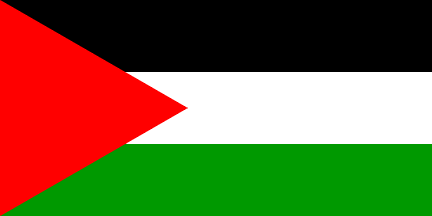
That's the flag of the Arab Federation above. It was flown alongside each country's individual flags for the 5 months that the Federation lasted. An identical design was previously the flag of Iraq from 1920-1924.

So many questions? Why did Jordan and Iraq merge? Why did the Federation last only 5 months? Why that flag? Doesn't that flag look like the nearly identical twin of the modern Palestinian flag? And wasn't the new federated country, as short as it lasted, the most bizarrely shaped entity on the world map?

Two weeks before the monarchies of Iraq and Jordan agreed to merge into a federated state, the Arab Republics of Egypt and Syria also merged into a single state, the United Arab Republic. The UAR's flag (left) was created based on Egyptian colours, with 2 stars representing the 2 republics. After the breakup of the union, Egypt returned to its older flag, while Syria kept this one. (More on UAR flags here.)

The UAR was envisioned to be the first step on a path to a single, united, pan-Arab (presumably headquartered in Cairo) country stretching from the Atlantic Ocean (Morocco) to the Arabian Gulf (Oman). But the idea - the brainchild of Egyptian President Gamal 'abd al-Nasser - never took root. Yemen also nominally joined the UAR, but that was it.

It only took 2 weeks, back in 1958, for Egypt's main rival at the time, Iraq, to create a bipolar pan-Arab world by hooking up with Syria's main rival, Jordan, to form the AF.

The Federation came to an abrupt end when King Faisal II of Iraq was deposed in a bloody nationalist coup on July 14, 1958. The UAR merger managed to last until 1961, until a coup in Syria ended the formal union with Egypt.

Interestingly, the leader of the Iraqi coup, Abdel Karim Qassim, later wished to join the UAR in 1961 (before the coup in Syria), and what became the new flag of Iraq (left) was the UAR flag, but with 3 stars (representing Iraq with Syria and Egypt). In 1991, in the wake of the Gulf War when most of the Arab World allied against Iraq, Saddam Hussein changed the Iraqi flag, adding in between the 3 stars the Arabic - الله اكبر - allahu akbar, or "God is great."

This flag, with the 3 stars deleted, was adopted earlier this year as the new flag of Iraq.

The AF's flag, meanwhile, was based on the Jordanian flag (left), simply with the seven-pointed star removed from the triangular red field. What had been the Iraqi flag until the merger was a similar design, with 2 stars instead of one.

The seven-pointed star, which was removed from Jordan's flag to create the Arab Federation's flag, is said to represent the first surah of the Qur'an, which has seven verses. The star found its way on to the new flag of the Hashemite Kingdom of Jordan in 1917 and later the Hashemite Kingdom of Iraq around 1924, so it is often thought to be the symbol of the Hashemite clan (the kings of Jordan and Iraq at the time were brothers). But in fact, the red triangle itself is the representative symbol of the Hashemites, and has a much older history in the Arab world.

Which brings us to the Palestinian flag (left), which resembles the flag of the Arab Federation, excepting the different proportions of the triangle. To make a long story short, the Palestinian flag is, like many of these flags, based on the flag of the Arab Revolt against the Ottoman Turks during WWI. The revolt's leader was Sharif Hussein of the al-Hashemi (Hashemite) family of Mecca (hence the red triangle).

As for the black, white and green bars, which have been repeated throughout many of the flags in this article, they are the symbol of modern Arab unity. These "pan-Arab" colours, envisioned during the nascent era of pan-Arab nationalism just prior to the First World War, represent the 3 eras of medieval Arab caliphates: the Umayyads (660-750 C.E., based in Damascus) carried a white standard; the Abbasids (750-1258 C.E. based in Baghdad) had a black flag; and the Fatimids of Egypt (909-1171 C.E.) preferred green. In addition to being the colour of the Hashemites, red was the colour of the Arab rulers in Andalucia from the 8th-14th centuries C.E., and also of the Khawarji, who led a rebellion against the Abbasids in North Africa.

The Palestinan flag was formally adopted after 1948, based on the Jordanian flag (Jordan controlled the West Bank and the Old City of Jerusalem at the time), minus the star, and with a right triangle instead of an isosceles triangle. Why the triangle change? I don't know. If someone out there knows, please tell me.

Finally, we turn to the geography of the Arab Federation on the map. Jordan already looks funky, with its eastward-jutting panhandle the result of creative British cartography which wanted, after World War I, to connect the British mandates of Transjordan and Iraq and disallow French-controlled Syria from bordering Arabia. Back in the 1950s, Jordan also had a westward pimple on its map, what we now know as the West Bank.

The formal federation of Jordan and Iraq created this geographical ink blot (above), which resembles a coffee pot (Jordan) with a handle (West Bank); the coffee pot is emitting some sort of sprayed cloud (Iraq) towards Iran. If you imagine Israel holding the handle, we have perhaps a prescient metaphor for today's Middle East conflict.

Or, if you rotate the map 90 degrees clockwise, you get what appears to be a giraffe lunging its neck upwards above a low tree top.

A curious giraffe: the legacy of the Arab Federation.

(If you read Arabic, here's a whole lot more reading you could do on the evolution of Arab flags.)

Sunday, September 28, 2008

Israel Lobby to Harper: Do you still love us?

Prime Minister Stephen Harper had to engage in a bit of damage control when he scheduled our snap election on the major Jewish holiday of Sukkot.

Of course, not all Orthodox and proud, observant Jews are pro-Israel, and certainly not all in the pro-Israel camp are Jews (or even, um, pro-Semitic). But those who claim to speak for Israel's interests in Canada demanded clarification from the Prime Minister.

Luckily for Mr. Harper, his crush on Israel has a firm record.

Harper infamously called Israel's bombing of Lebanese civilians "measured."

Harper has enjoyed a "Toried Love" affair with the Asper family, the CanWest media moguls and staunch Israel supporters.

Harper has played Diaspora politics to appeal to Canada's pro-Israel electorate.

Harper has wooed Christian Zionists.

Harper accused his opponents of waving Hezbollah flags.

Harper was the first leader to denounce Palestinian democracy, and referred to Hamas as genocidal.

Harper agreed with the WMD threat from Iraq and supported America's war.

Harper doesn't like Ahmadinejad.

To be fair, Harper's Middle East policy is diverse. He did send his personal chef to Egypt in a "recipe sharing" exercise. And the man in the photograph shaking hands with Mr. Harper is King Abdullah II of Jordan (that's an Arab country).